Pork Bone Gravy
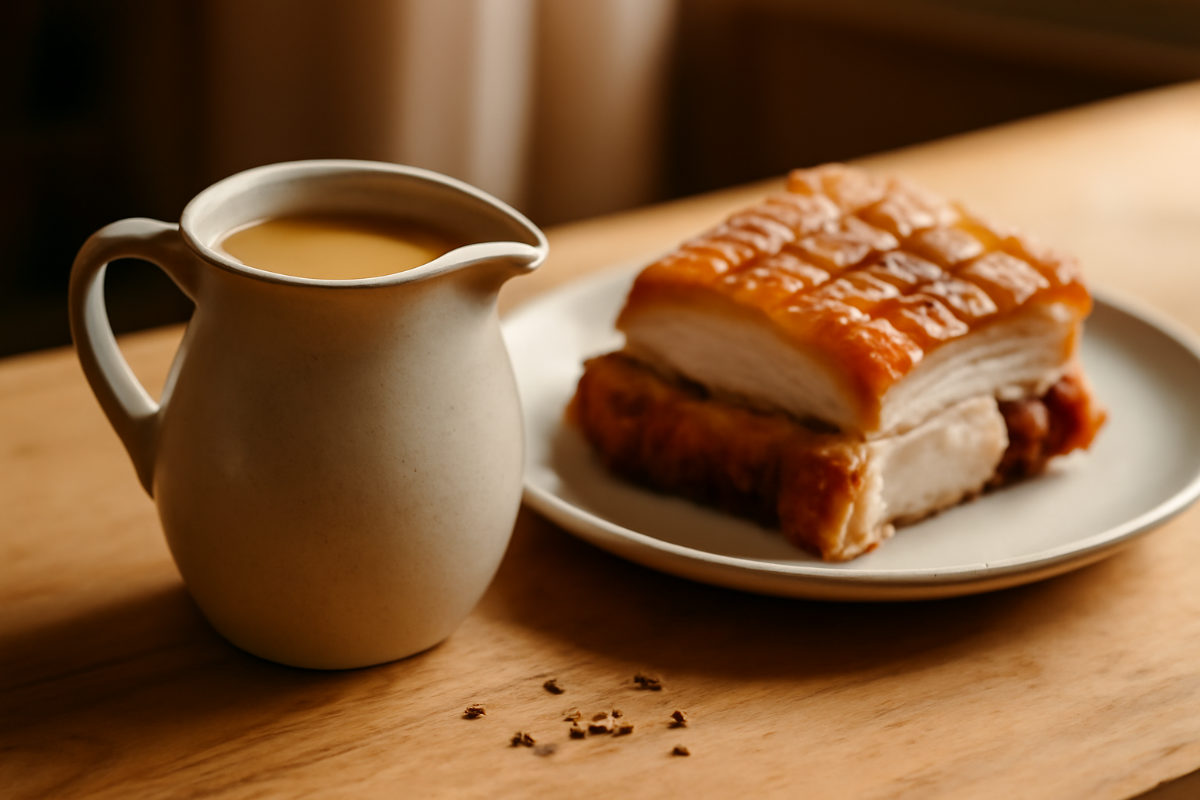
Pork ribs and a trotter for body, simmered with fennel seed and a splash of cider vinegar, for a gravy with real backbone.
- Contains meat
- pork
- trotter
- bone stock
- fennel
- roast dinner
- Prep
- 20 min
- Cook
- 5 hr 30 min
- Total
- 5 hr 50 min
- Serves
- 6
- Difficulty
- Medium
Pork stock does not get made nearly enough in this country, which is odd given how good it is. The trick is a trotter in the pot for gelatine and something acidic to cut through, because pork on its own can taste a bit flat and sweet. This is the gravy for belly, chops or a roast loin.
Ingredients
Makes about 600ml
Scaled amounts are rounded to something you can actually measure. Season at the end and trust your mouth over the maths.
Kit
- Roasting tin
- Large saucepan
- Fine sieve
- Whisk
Method
Heat the oven to 220C fan (240C conventional, gas 9). Roast the pork bones for 40 minutes until well coloured. Leave the trotter out of the roasting, it goes in raw so it stays pale and gives clean gelatine rather than roasted flavour.
Add the onions, carrot and celery for the last 15 minutes so they take on some colour without burning.
Put the trotter in the saucepan, cover with cold water, bring to the boil for 2 minutes and drain. This blanching step removes the scum before it gets into your stock and makes a real difference to clarity with pork.
Return the blanched trotter to the pan with the roasted bones and vegetables, deglaze the tin with water into the pan, then cover with 3 litres of cold water.
Bring slowly to a simmer, skim, then add the fennel seeds, peppercorns and bay. Hold at a gentle tremble for 4 to 5 hours. The trotter will collapse and the liquid will feel slightly tacky between finger and thumb, which is the gelatine doing its job.
Strain and chill. Lift the fat off, keeping 2 tablespoons of it for the roux. The stock underneath will set very firm indeed thanks to the trotter.
Melt the reserved pork fat in a pan, stir in the flour and cook for 2 minutes to a light golden roux. Whisk in 800ml of the warmed stock a ladle at a time and simmer for 6 to 8 minutes until it just coats a spoon.
Add the cider vinegar and the mustard, then season. Pork gravy needs more salt than beef or lamb, so taste twice before you stop.
Tips worth knowing
- Blanch the trotter, always. Skip it and you get a grey scum that never fully clears no matter how much you skim.
- Fennel seed is the classic partner for pork but a teaspoon is plenty. Any more and the gravy starts tasting like sausage.
- Pork stock sets harder than any other. If yours comes out like rubber, just thin it with a little more water when you make the gravy.
- The vinegar goes in at the end, off the boil. Boiling it hard cooks off the sharpness you added it for.
Change it up
- Add a peeled and quartered Bramley apple to the pot for the last hour for a gravy that leans towards apple sauce territory without being sweet.
- Use 200ml of dry cider in place of some of the water for a West Country version, or unsweetened cloudy apple juice with an extra splash of vinegar if you are avoiding alcohol.
- Stir a teaspoon of caraway and a spoon of soured cream into the finished gravy for something more central European.
Keeping and reheating
Keeps five days in the fridge as a set jelly and four months frozen. Reheat gently, whisking, and loosen with water as it thickens a lot on standing.
Questions people ask
Why add a pig trotter to stock?
A trotter is almost pure collagen and skin, so it turns a thin stock into one that sets like jelly. That gelatine is what gives gravy its mouthfeel and glossy coating quality without any need for extra thickener. One trotter is enough for three litres of water.
Can I use bacon or ham bones instead?
You can, but they are heavily salted and cured, which changes the whole thing. The stock will taste smoky and you must not salt it at all until the very end. Use half cured bones and half fresh pork bones for the best of both.
Does pork stock need roasting for gravy?
For brown gravy, yes. Roasted pork bones give the colour and the toasted flavour. If you want a pale, delicate pork stock for a creamy sauce, skip the roasting and blanch everything instead, which gives a white pork stock.