Chicken and Bacon Bone Gravy
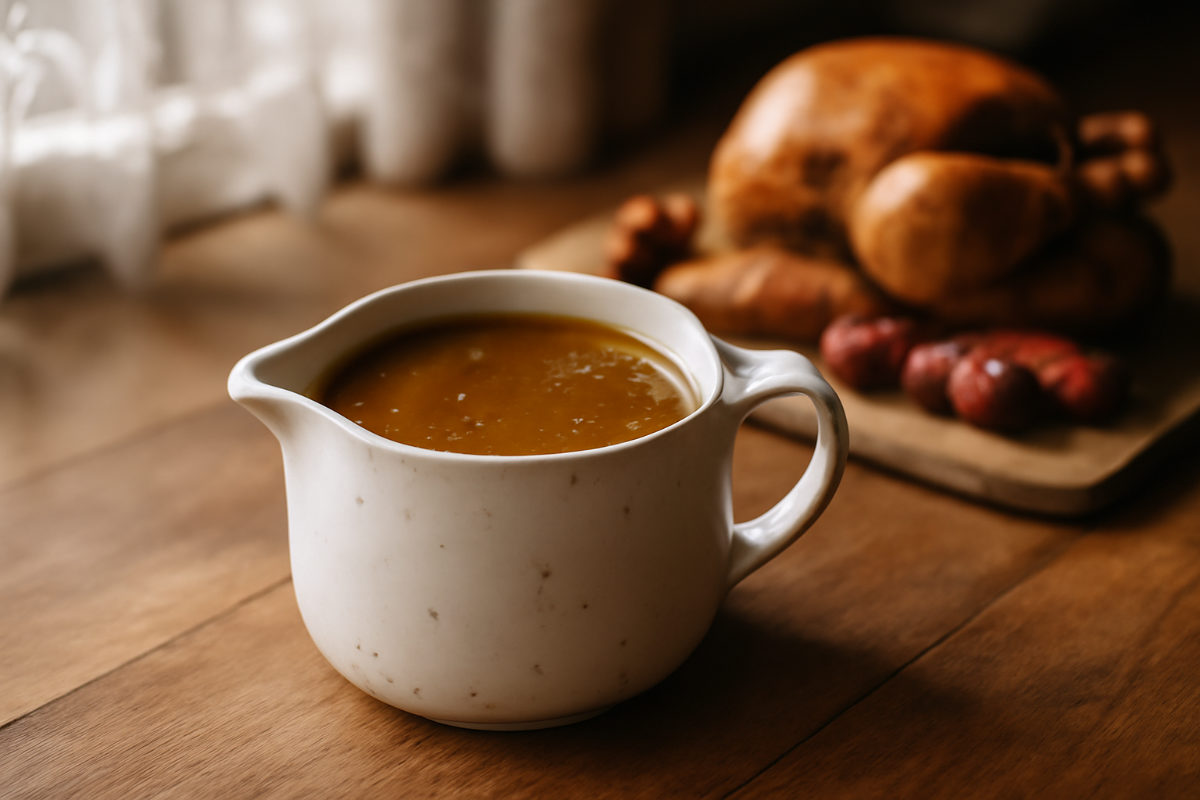
Chicken bones and a smoked bacon hock in the same pot, so the gravy comes out savoury and lightly smoky without needing much else.
- Contains meat
- chicken
- bacon
- smoked
- savoury
- roast dinner
- Prep
- 15 min
- Cook
- 3 hr 15 min
- Total
- 3 hr 30 min
- Serves
- 6
- Difficulty
- Medium
Chicken stock is lovely but polite. Add a smoked bacon hock and it grows teeth. The smoke and cure give a savoury depth you would otherwise be chasing with yeast extract, and the two flavours sit together naturally because they always have done. Watch the salt and this is a very hard gravy to beat.
Ingredients
Makes about 600ml
Scaled amounts are rounded to something you can actually measure. Season at the end and trust your mouth over the maths.
Kit
- Roasting tin
- Large saucepan
- Fine sieve
- Whisk
Method
Cover the bacon hock with cold water in a pan, bring to the boil for 3 minutes, then drain and discard the water. This takes the sharp edge off the cure and stops the finished stock being too salty to use.
Heat the oven to 210C fan (230C conventional, gas 8). Toss the chicken bones with the oil and roast for 40 minutes, adding the onions, carrot and celery for the last 15, until everything is well browned.
Put the blanched hock in a large saucepan with the roasted bones and vegetables. Deglaze the roasting tin with a mug of water and add that in.
Cover with 2.5 litres of cold water, bring slowly to a simmer and skim. Add the leek tops, bay and peppercorns.
Simmer at a bare tremble for 3 hours. The hock needs the full time to soften and give up its smoke, while the chicken bones will have finished after two, which is a fair compromise.
Lift out the hock, strip the meat off and shred it for a pie or a soup. Strain the stock and taste it. Dilute with a little water if the cure has made it too salty.
Reduce 1 litre of the tasted stock to 800ml in a wide pan, but only if it is not already salty. Reduction is not automatic here, salt decides.
Make a roux with the butter and flour, cook it for 2 minutes to golden, whisk in the hot stock and simmer 5 minutes. Stir in the parsley and plenty of black pepper. Taste before adding any salt at all, and often you will find it needs none.
Tips worth knowing
- Blanch the hock first, every time. A smoked hock straight into the pot gives a stock you cannot reduce and can barely use.
- Taste before reducing. This is the one recipe in the section where boiling it down can ruin it rather than improve it.
- The shredded hock meat is worth more than the gravy to some people. It makes an excellent chicken and bacon pie with a splash of this gravy stirred through.
- Green leek tops give body and a mild sweetness for nothing. Do not throw them away.
Change it up
- Add 100ml of double cream and a handful of tarragon at the end for a creamy chicken and bacon sauce for pasta.
- Use unsmoked gammon instead of a smoked hock for a cleaner, saltier gravy without the smoke.
- Deglaze with 150ml of dry cider for a sharper version, or use cloudy apple juice with a splash of cider vinegar if avoiding alcohol.
Keeping and reheating
Stock keeps four days chilled and four months frozen. Gravy keeps three days. Label the stock as salty so you do not use it blind in something else.
Questions people ask
Can you make stock with chicken and bacon bones together?
Yes, it is a classic combination and the flavours sit together well. The important thing is to blanch the bacon hock first to draw off some of the cure, otherwise the salt from a single hock can dominate two and a half litres of stock.
Will chicken and bacon gravy be too salty?
It can be if you skip the blanch or reduce it without tasting. Boil the hock in fresh water for three minutes and throw that water away, then taste the finished stock before you reduce anything. Nine times out of ten it needs no added salt at all.
What goes with chicken and bacon gravy?
Roast chicken obviously, but also over mash with sausages, poured into a chicken pie, on a jacket potato, or over roast leeks and greens. The smoke makes it a bit more versatile than a plain chicken gravy.