Classic British Onion Gravy
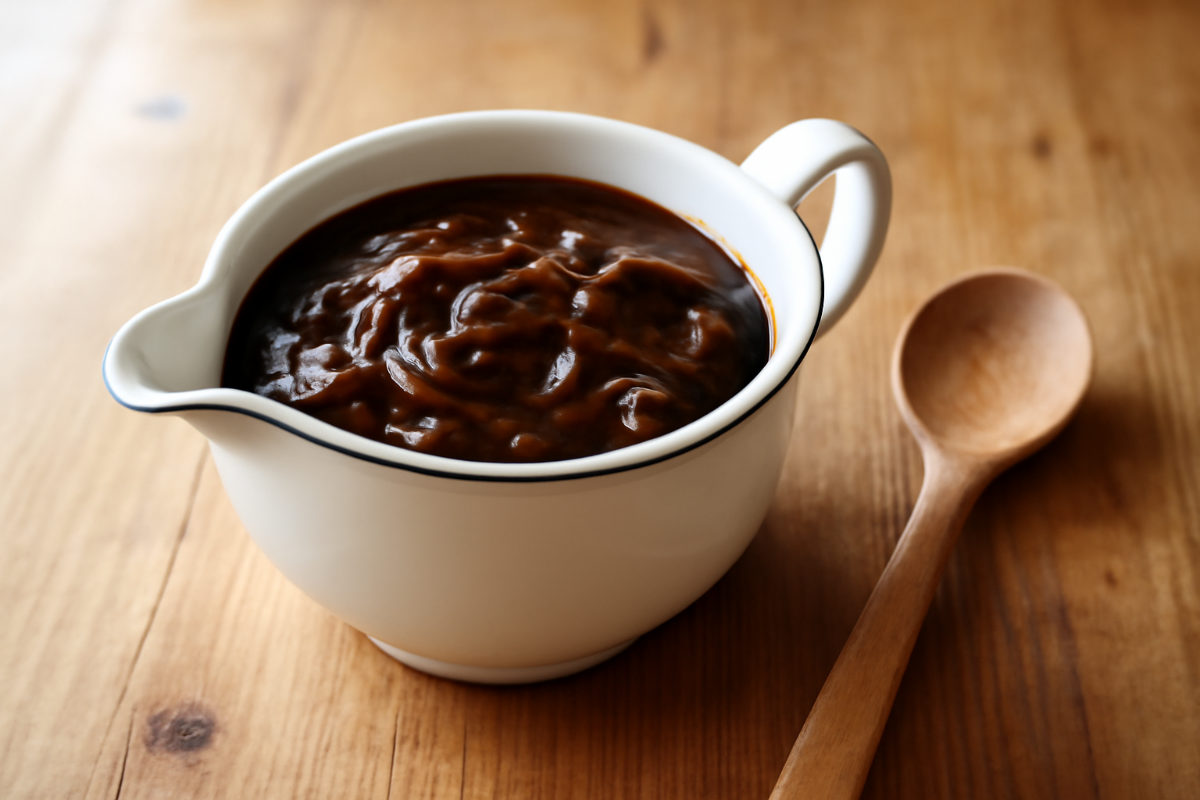
Three brown onions cooked down slowly in butter and oil, built into a flour thickened beef gravy that stays glossy and keeps the onions in.
- Contains meat
- classic
- bangers and mash
- brown onion
- roux
- everyday
- Prep
- 10 min
- Cook
- 50 min
- Total
- 1 hr
- Serves
- 6
- Difficulty
- Easy
This is the one to learn first. Everything else in this section is a variation on it. The only real skill is patience, because onions do not caramelise in ten minutes no matter what anyone tells you, and the difference between fifteen minutes and forty is the difference between a pale oniony sauce and something with proper depth.
Ingredients
Makes about 600ml, enough for six plates
Scaled amounts are rounded to something you can actually measure. Season at the end and trust your mouth over the maths.
Kit
- Heavy based saucepan or deep frying pan
- Wooden spoon
- Whisk
Method
Melt the butter with the oil in a heavy based pan over a medium low heat. Tip in the onions with a good pinch of salt and stir to coat them. The salt pulls water out, which is what stops them burning while they soften.
Cook uncovered for 10 minutes, stirring every couple of minutes, until the onions have collapsed and gone floppy and translucent. They should be sizzling gently, not spitting. If they are browning at the edges already, the heat is too high.
Turn the heat down a notch, add the sugar and carry on for another 25 to 30 minutes. Stir every few minutes and scrape the base. The onions go from pale, to gold, to a proper tobacco brown, and the pan builds up a sticky brown film. That film is the flavour, so keep working it back into the onions.
Scatter the flour over and stir it in. Cook it for a full 2 minutes so it loses its raw taste, and expect the mixture to look dry and pasty at this point. That is correct.
Pour in about a third of the hot stock and whisk hard until it is smooth and thick, almost like a paste. Adding it in stages like this is the whole trick to a lump free gravy. Then add the rest in two more goes, whisking each time.
Bring it up to a gentle simmer and let it bubble for 10 minutes, stirring now and then, until it coats the back of a spoon and leaves a clean line when you drag a finger through it.
Stir in the Worcestershire sauce, taste, then season with salt and plenty of black pepper. Stock cubes vary wildly in saltiness so always season at the end, never at the start.
Tips worth knowing
- Slice the onions with the grain, from root to tip, rather than across. They hold their shape better through a long cook and you get strands rather than mush.
- If the pan looks like it is about to catch during the caramelising, throw in a tablespoon of water and scrape. It buys you two minutes and lifts the good stuff off the base.
- Gravy thickens as it cools and thins again when reheated. Judge the consistency hot, and always slightly looser than you think you want.
- A splash of the water your potatoes or veg were boiled in is a free way to loosen it and add a little body.
Change it up
- Swap the beef stock for chicken stock and add a bay leaf for a lighter gravy that suits roast chicken and pork.
- Stir a teaspoon of English mustard in at the end for a sharper edge that cuts through fatty sausages.
- Add a peeled and quartered onion to the pan at the start and fish it out before serving, for extra sweetness without more texture.
Keeping and reheating
Keeps for 4 days in a sealed container in the fridge and freezes well for 3 months. Reheat gently in a pan with a splash of water or stock, whisking as it comes back together.
Questions people ask
Why is my onion gravy not brown enough?
Almost always because the onions were not cooked long enough. Real caramelisation takes 30 to 45 minutes over a low heat, and there is no shortcut that gives the same flavour. A teaspoon of dark brown sugar or a dash of gravy browning will fix the colour, but only time fixes the taste.
Can I make onion gravy without flour?
Yes. Skip the flour entirely, let the stock reduce by about a third for a thinner but more concentrated gravy, or slacken a tablespoon of cornflour with cold water and stir it in at the end. The cornflour version is also gluten free if your stock is.
How do I stop onion gravy going lumpy?
Add the stock in three stages and whisk hard after each one, rather than tipping it all in at once. If lumps do form, a stick blender or a quick push through a sieve sorts it in seconds.