Classic Beef Roast Gravy
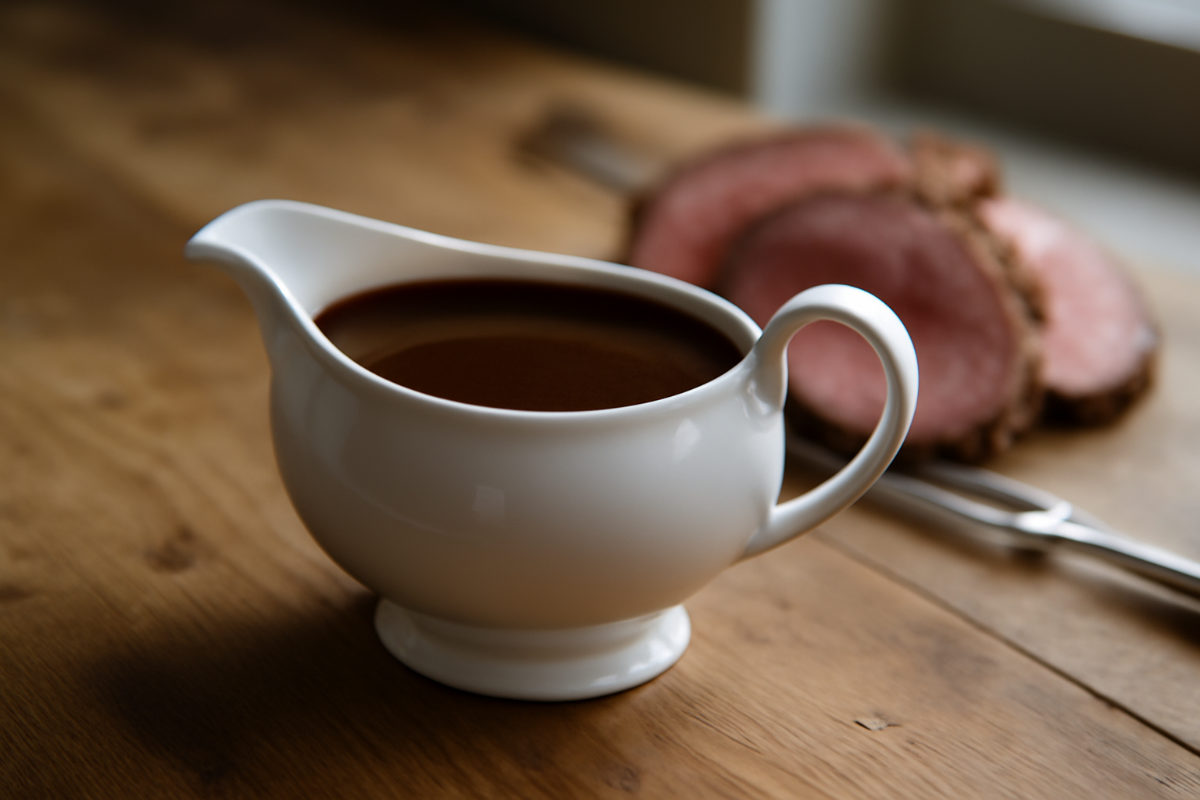
A proper beef gravy built straight in the roasting tin, thickened with a little flour and loosened with hot beef stock until it coats the back of a spoon.
- Contains meat
- beef
- pan gravy
- roast dinner
- sunday lunch
- Prep
- 5 min
- Cook
- 15 min
- Total
- 20 min
- Serves
- 6
- Difficulty
- Easy
This is the gravy most people are actually after when they say they want gravy. Nothing clever in it, just beef fat, flour, the burnt-on bits from under the joint and enough stock to make it pourable. Get this one right and you will never buy granules again.
Ingredients
Makes about 600ml, enough for six generous plates
Scaled amounts are rounded to something you can actually measure. Season at the end and trust your mouth over the maths.
Kit
- Roasting tin
- Balloon whisk
- Fine sieve
- Jug
Method
Lift the beef onto a warm plate or board, cover loosely with foil and leave it to rest for at least twenty minutes. Everything that pools out of it while it rests goes into the gravy at the end, so rest it somewhere it can be poured from.
Tilt the roasting tin and spoon off the clear fat that rises to one corner. You want to leave about three tablespoons of fat and every scrap of the dark sticky residue stuck to the base. If you take too much off the gravy will taste thin, if you leave too much it will sit greasy on top.
Put the tin over two hob rings on a medium heat. When the fat starts to shimmer, scatter in the flour and whisk or stir it hard into the fat until you have a smooth paste the colour of wet sand.
Cook the flour for a full two minutes, keeping it moving so it does not catch. It should smell biscuity rather than raw and darken a shade. This is the step people skip and it is why home gravy sometimes tastes of flour.
Pour in about a quarter of the hot stock and whisk immediately and firmly. It will seize into a thick lump for a few seconds, which is normal. Keep whisking until it is smooth, then add the rest of the stock in two goes, whisking each in before the next.
Scrape the base and corners of the tin with the whisk or a flat wooden spoon as it comes up to a simmer. The dark crust should lift off and dissolve into the liquid, taking the colour from beige to proper brown.
Simmer for eight to ten minutes, stirring now and then, until it coats the back of a spoon and you can draw a clean line through it with your finger. Add the Worcestershire sauce and the redcurrant jelly and let the jelly melt.
Pour through a fine sieve into a warm jug, pressing the solids with a ladle. Stir in any juices from the resting board, taste, then season with salt and plenty of coarse black pepper. Roasting tins carry a lot of salt already so taste before you reach for the pot.
Tips worth knowing
- Use two hob rings if the tin is big. One ring under a long tin gives you a burnt patch in the middle and raw flour at both ends.
- Hot stock into a hot roux, cold stock into a cold roux. Mixing the temperatures is the fastest route to lumps.
- If the gravy tastes flat rather than under seasoned, it usually needs acid, not more salt. A teaspoon of vinegar or a squeeze of lemon wakes the whole thing up.
- Keep a stub of beef dripping in the fridge for lean joints. A very trimmed topside can give you almost no fat at all.
Change it up
- Swap 150ml of the stock for red wine, added straight after the flour and boiled down by half before the stock goes in. Leave it out and use extra stock with a teaspoon of balsamic if you would rather not cook with alcohol.
- Add a peeled and halved shallot and a bay leaf to the simmering gravy, then fish them out before straining for a rounder, sweeter finish.
- Stir a teaspoon of English mustard in at the end for a sharper gravy that suits rare beef.
Keeping and reheating
Cool quickly, then keep covered in the fridge for up to three days or freeze for three months. Reheat gently in a pan with a splash of water and whisk as it comes back up, as it will have set to a jelly.
Questions people ask
Why is my beef gravy pale?
Either the tin residue was not properly caramelised or you did not scrape it up. Roast the beef on a bed of halved onions next time so there is more browning to work with, and let the gravy bubble hard for a minute to darken it.
Can I make beef gravy the day before?
Yes, and it is often better for it. Make it with stock rather than pan juices, cool it fast and refrigerate. On the day, reheat it in the roasting tin so it picks up the fresh residue and the resting juices.
How do I fix greasy gravy?
Let it settle for two minutes off the heat and the fat will rise. Skim it with a spoon, or drag a folded sheet of kitchen paper across the surface. A couple of ice cubes dropped in briefly will also gather the fat so you can lift it out.