Yorkshire Pudding Gravy
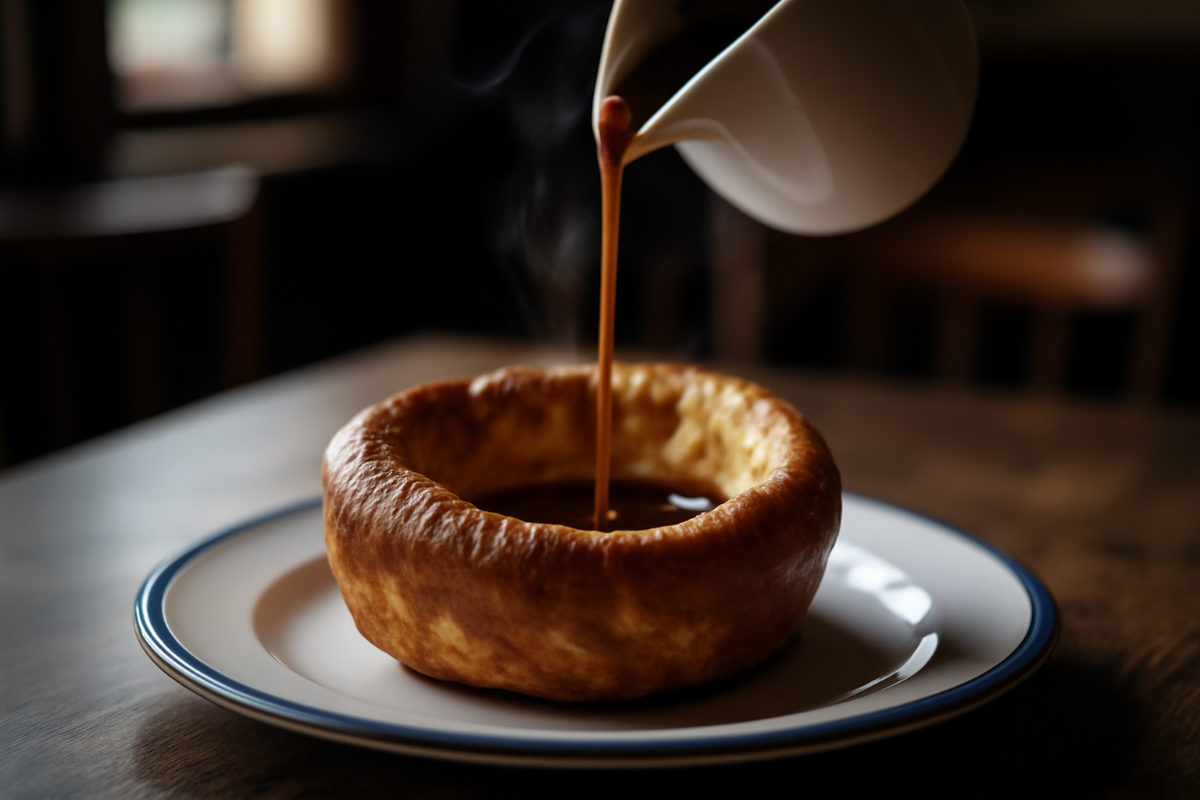
A deliberately thinner, darker gravy made to be poured into a Yorkshire pudding and soaked up rather than sit on the surface.
- Contains meat
- yorkshire pudding
- beef
- thin gravy
- sunday lunch
- Prep
- 5 min
- Cook
- 25 min
- Total
- 30 min
- Serves
- 6
- Difficulty
- Easy
A gravy that clings to a slice of beef is the wrong gravy for a Yorkshire. You want something looser and more strongly flavoured, so it runs into the batter and turns the inside soft while the walls stay crisp. This is that gravy, thickened lightly and reduced hard for colour.
Ingredients
Makes about 700ml, deliberately generous
Scaled amounts are rounded to something you can actually measure. Season at the end and trust your mouth over the maths.
Kit
- Roasting tin or wide saucepan
- Whisk
- Sieve
Method
Melt the dripping in a wide pan or the beef tin over a medium heat and fry the onion for twelve to fifteen minutes until it is deeply browned. Wide is better than deep here, the extra surface area speeds up the colour.
Sprinkle over the single tablespoon of flour and stir it through. Cook for two minutes. Resist adding more, this gravy is thickened by reduction rather than by starch.
Pour in the hot stock in three goes, whisking as you do. Bring it to a brisk simmer, not a gentle one.
Let it bubble away uncovered for twelve to fifteen minutes, until it has reduced by around a quarter and darkened noticeably. Stir every few minutes and scrape the sides where it dries on.
Whisk in the Marmite and the Worcestershire sauce and simmer for two minutes more. The Marmite is doing colour and savour at once, which matters because there is so little flour to carry flavour.
Strain into a jug, pressing hard on the onion to get every bit of liquid out. You are after the consistency of single cream, something that will run into a pudding rather than pool on it.
Season with salt and an unfashionable amount of black pepper, then keep it hot. If it thickens as it stands, thin it with a splash of boiling water rather than letting it set.
Tips worth knowing
- Serve it hotter than you think. A lukewarm gravy makes a crisp Yorkshire go leathery instead of soft.
- If you are doing pudding first as a starter, make double. It is the one course where nobody complains about too much gravy.
- Do not thicken it to a coating consistency out of habit. A thick gravy sits in the well and never soaks in, which is the whole point of the dish.
- Marmite is salty, so hold the salt until the very end and taste properly.
Change it up
- Add 200ml of dark ale with the stock and reduce a little longer for a Yorkshire pudding gravy with more bite. Use extra beef stock and a teaspoon of black treacle for a version without alcohol.
- Use lamb or chicken stock to match whatever the roast is, keeping the same loose consistency.
- Stir in a spoon of horseradish sauce at the end for a version to go with rare beef.
Keeping and reheating
Three days in the fridge, three months frozen. It reheats better than a thicker gravy because there is little starch in it. Loosen with water and bring back to a proper simmer.
Questions people ask
Should gravy for Yorkshire puddings be thin or thick?
Thin. In Yorkshire the pudding is traditionally served first with gravy poured into it, and a loose gravy soaks into the base while the sides stay crisp. A thick gravy just sits there.
Can I make Yorkshire pudding gravy without any beef?
Yes. Brown the onions in dripping or oil, use a strong beef stock or a mushroom stock, and lean harder on the Marmite and Worcestershire sauce for depth. Use a vegetarian Worcestershire sauce if that matters.
Why does my gravy make the Yorkshires go soggy?
Either it is not hot enough or the puddings sat around before serving. Get both out at the same time, and pour the gravy in at the table rather than in the kitchen.