Crispy Roast Potato Pan Gravy
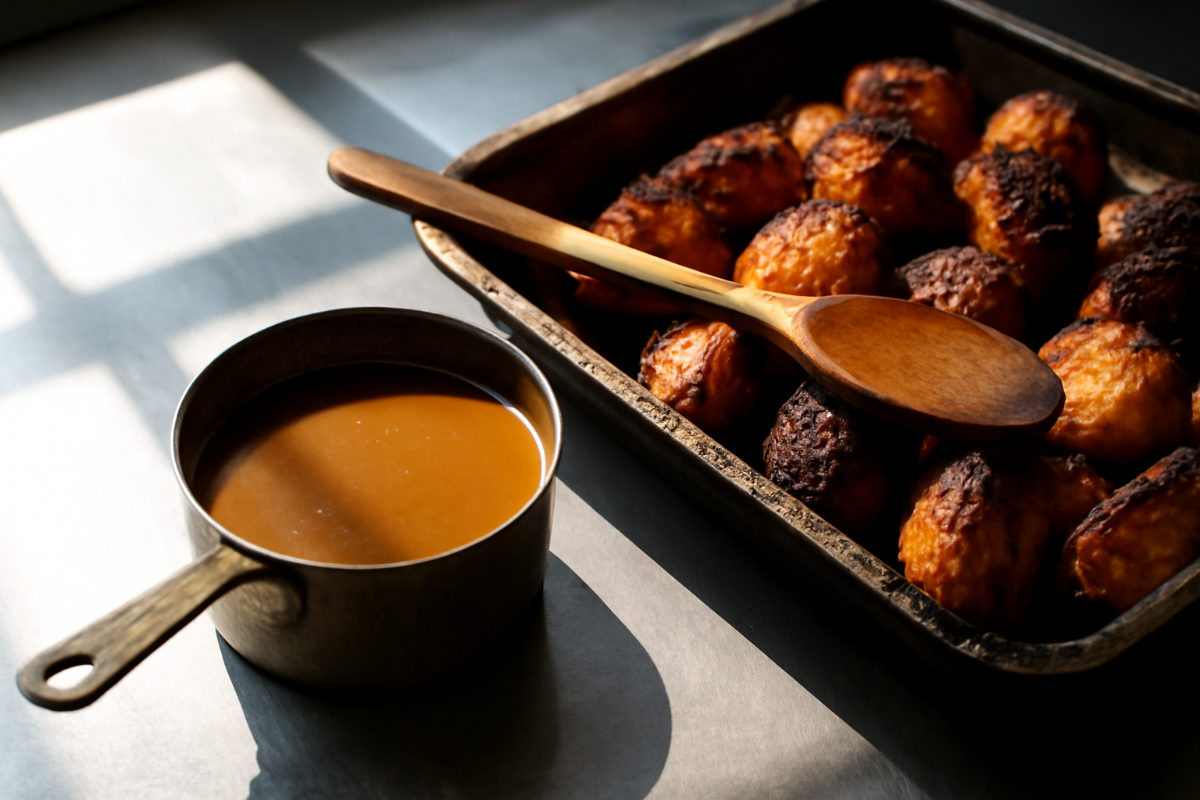
Gravy made in the potato tin rather than the meat tin, using the goose fat and the crusty potato bits stuck to the base.
- Contains meat
- roast potatoes
- goose fat
- thrifty
- sunday lunch
- Prep
- 5 min
- Cook
- 20 min
- Total
- 25 min
- Serves
- 6
- Difficulty
- Easy
Everyone deglazes the meat tin and nobody deglazes the potato one, which is a waste, because a tin of roast potatoes leaves behind fat, salt and a layer of caramelised starch that makes a surprisingly good gravy. This is the one to make when the meat is cooked on a rack or when there simply is not much in the joint's tin.
Ingredients
Makes about 550ml, enough for six plates
Scaled amounts are rounded to something you can actually measure. Season at the end and trust your mouth over the maths.
Kit
- Potato roasting tin
- Wooden spoon
- Whisk
- Sieve
Method
Tip the potatoes out of their tin into a warm serving dish and put them somewhere hot. Do not wash the tin. Those crusty pale gold patches welded to the base are toasted potato starch and they dissolve into gravy beautifully.
Pour off all but two tablespoons of the fat, keeping every bit of the stuck-on crust. If you roasted in goose fat, the excess is worth saving in a jar.
Put the tin over a medium heat on the hob and add the onion, garlic and rosemary. Fry for six or seven minutes, using the wooden spoon to work at the crust as the onions release moisture.
Stir in the flour and cook for two minutes. The mixture will look dry and lumpy because of the potato bits, which is fine, they break down once the liquid goes in.
Add a third of the hot stock and stir hard, scraping in long strokes across the base. You will see the pale crust lift and the liquid go cloudy, which is exactly what you want. Add the rest of the stock in two goes.
Bring to a simmer and cook for ten minutes. The potato starch gives this gravy a slightly softer, rounder texture than a flour-only one, and it will thicken more than you expect, so keep some hot stock at hand.
Whisk in the Marmite for depth and colour, since a potato tin gives you savour but not much darkness.
Strain through a sieve into a warm jug, pressing the onion through, and discard the garlic and rosemary. Season with pepper and taste before adding any salt at all.
Tips worth knowing
- Salt the potatoes before roasting, as usual, but remember that salt ends up in the tin and therefore in the gravy. Taste before seasoning.
- A tin that is black and burnt in patches will make bitter gravy. If the bottom looks like charcoal rather than caramel, use a saucepan instead.
- Parboiled and roughed up potatoes leave far more starch behind than smooth ones, which makes for better gravy as well as better spuds.
- This works with a tin of roast parsnips or carrots too, and those give a sweeter gravy that suits pork.
Change it up
- Add 150ml of dry cider with the stock and reduce a little longer for a version that suits roast pork.
- Fry a chopped rasher of streaky bacon with the onions for a smokier gravy.
- Use vegetable stock and rapeseed oil in place of goose fat for a vegetarian version, adding a teaspoon of soy sauce for depth.
Keeping and reheating
Three days in the fridge, three months frozen. The potato starch means it thickens a lot on chilling, so reheat gently with an extra splash of stock and whisk it smooth.
Questions people ask
Can you make gravy in the roast potato tin?
Yes, and it is one of the most underused tricks in a Sunday kitchen. The stuck-on starch and seasoned fat dissolve into the stock and give the gravy a savoury, slightly nutty depth.
Will the gravy taste of potato?
Only faintly, and in a good way. What you mostly taste is caramelised starch, which is closer to toast than to boiled potato, plus whatever fat you roasted in.
Is goose fat better than oil for this?
For flavour, yes. Goose and duck fat both carry more savour than a neutral oil, and beef dripping is better still if you are serving beef. Any of them will make a decent gravy.