Sunday Roast Gravy from Frozen Stock
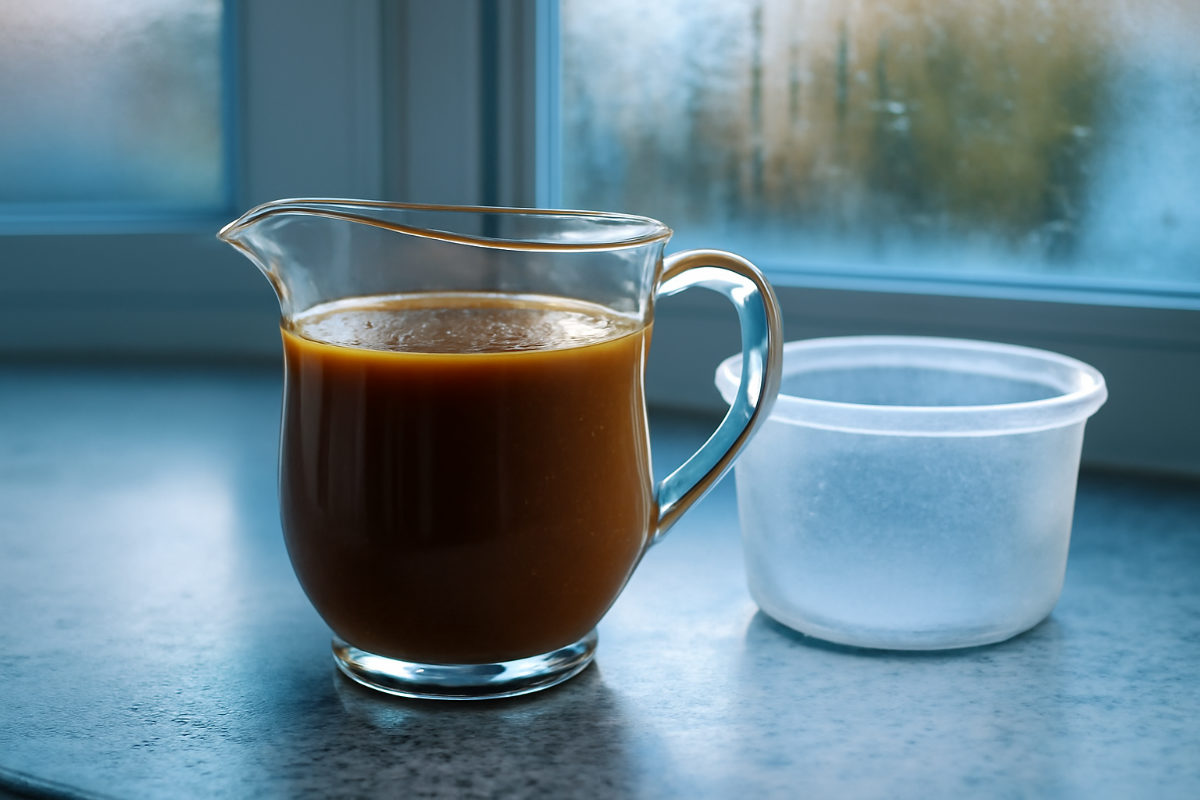
A gravy made from a block of homemade stock straight out of the freezer, melted down, reduced and finished in the roasting tin.
- Contains meat
- make ahead
- freezer
- batch cooking
- thrifty
- Prep
- 5 min
- Cook
- 25 min
- Total
- 30 min
- Serves
- 6
- Difficulty
- Easy
If you freeze stock in tubs after every roast, Sunday gravy is already half made. The only real skill is handling the stock properly, which means melting it gently, checking how strong it actually is and adjusting rather than blindly following a quantity. This method suits any meat you happen to be roasting.
Ingredients
Makes about 600ml, enough for six plates
Scaled amounts are rounded to something you can actually measure. Season at the end and trust your mouth over the maths.
Kit
- Saucepan
- Roasting tin
- Whisk
- Sieve
Method
Get the stock out of the freezer first thing and stand the tub in a bowl of warm water, or tip the frozen block into a pan with a splash of water over a low heat. Never blast it on full heat, as the base scorches while the middle is still solid and the whole lot picks up a burnt note.
Once it is liquid, bring it to a simmer and taste it. Homemade stock varies enormously in strength. If it is thin, boil it hard for ten minutes to concentrate it. If it is a firm jelly straight from the tub, it is probably strong enough to be let down with a splash of water.
Skim any fat that rises as it heats, and keep the stock hot on a back ring while you deal with the tin.
Pour off all but three tablespoons of fat from the roasting tin, put it over a medium heat and soften the shallot in the fat for four minutes, scraping the base as you go.
Stir in the flour and cook it out for two minutes until it is golden and coats the shallot. Because homemade stock has body of its own, you need slightly less flour than you would with a cube, so do not be tempted to add more.
Ladle in the hot stock a bit at a time, whisking to keep it smooth, and drop in the bay leaf. Bring it up to a simmer, scraping every last bit of residue off the tin.
Simmer for ten minutes. Gelatine rich stock thickens noticeably as it reduces, so check the consistency at eight minutes and stop early if it is already coating the spoon.
Remove the bay, strain into a warm jug, add the vinegar and season. Home stock is usually unsalted, so this gravy will need more salt than one made from a cube.
Tips worth knowing
- Freeze stock in 500ml tubs rather than one big block. A single portion melts in fifteen minutes and you can take out exactly what you need.
- Label the tubs with the meat and the date. Lamb stock in a chicken gravy is not a disaster but it is not what you planned either.
- Reduce stock right down to a syrup before freezing if space is tight. Two ice cube trays of that will make gravy for a whole winter, just add water.
- Homemade stock sets to a wobbly jelly when it is good. If yours is watery when chilled, roast the bones next time and simmer them longer.
Change it up
- Melt the stock with a handful of dried mushrooms in it for twenty minutes for extra depth, then strain them out.
- Add 100ml of the wine you are drinking to the tin before the stock and reduce it hard. Skip it and add a teaspoon of balsamic instead if you would rather not.
- Whisk a teaspoon of miso paste into the finished gravy if the stock turned out weaker than you hoped.
Keeping and reheating
Keeps four days in the fridge and can go straight back in the freezer for three months, since the gravy has only been through one freeze as stock. Reheat gently with a splash of water.
Questions people ask
Can you freeze gravy as well as stock?
Yes, flour thickened gravy freezes for about three months. It can look slightly grainy on thawing but a hard whisk over a low heat brings it back. Gravy finished with cream or butter freezes less well.
How long does homemade stock keep in the freezer?
Six months for good quality, and it is safe well beyond that but starts to taste flat and freezer stale. Use it within six months and keep the tubs sealed tightly.
Do I need to defrost stock before making gravy?
It helps but it is not essential. You can add the frozen block straight to a pan over a low heat with a splash of water, just do not walk away, and stir it as it melts to stop the bottom catching.