Roast Chicken Pan Gravy
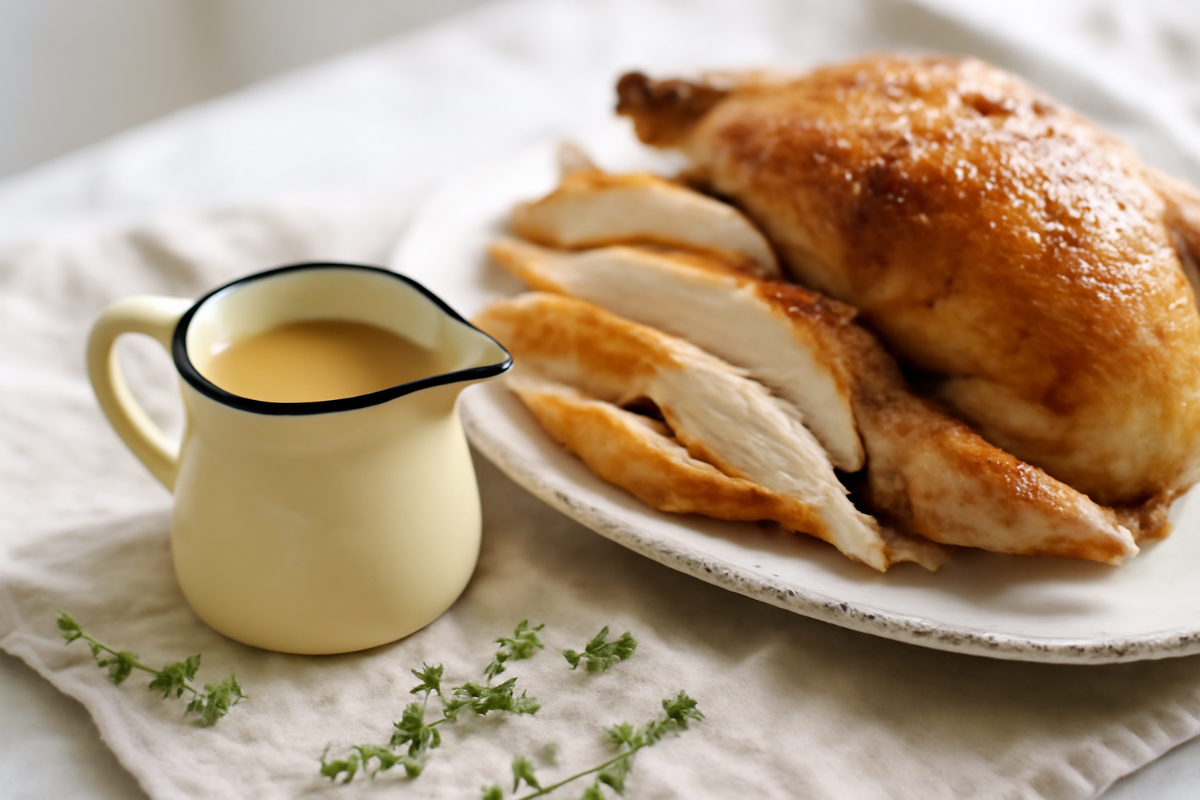
A light, golden gravy made in the tin under a roast chicken, thickened just enough and lifted with lemon and thyme.
- Contains meat
- chicken
- pan gravy
- roast dinner
- weeknight
- Prep
- 5 min
- Cook
- 15 min
- Total
- 20 min
- Serves
- 4
- Difficulty
- Easy
Chicken gives you less fat and a paler residue than beef, so this gravy is built to be delicate rather than dark. The trick is to roast the bird on a few vegetables so there is something in the tin worth scraping, and to keep the thickening light so you can still taste the chicken.
Ingredients
Makes about 400ml, enough for four plates
Scaled amounts are rounded to something you can actually measure. Season at the end and trust your mouth over the maths.
Kit
- Roasting tin
- Small whisk
- Sieve
- Jug
Method
Move the chicken to a board or warm dish and cover it loosely with foil. Tip the tin so the juices run into one corner and let it sit for a minute so the clear fat separates from the darker liquor underneath.
Spoon off the fat, keeping two tablespoons in the tin and all of the brown juices. Chicken fat is worth saving, so tip the excess into a small jar for roast potatoes another day.
Squash the roasted onion halves against the base of the tin with a fork to release their sweetness, then set the tin over a low to medium heat.
Stir in the flour and cook it in the fat for ninety seconds, scraping constantly. Chicken gravy should stay golden, so do not push the roux past a light hazelnut colour.
Add the hot stock a ladle at a time, whisking each addition smooth before the next. Drop in the thyme sprigs and bring it to a gentle simmer, scraping the base to lift the sticky bits.
Simmer for six to eight minutes. You are after a gravy that just clings to a spoon rather than one that stands up, since chicken cannot carry a heavy sauce.
Strain into a warm jug through a sieve, pushing the onion through with a ladle for body. Stir in the juices that have collected under the resting bird.
Off the heat, whisk in the cold butter until it disappears and the gravy turns glossy. Add the lemon juice, then season with salt and a little white pepper so you do not fleck a pale gravy with black.
Tips worth knowing
- Roast the chicken on a rough bed of onion, carrot and a celery stick. A bird sitting straight on the tin gives you almost no fond and a weak gravy.
- Save the carcass. Simmered for an hour with the vegetables it makes the stock for next week's gravy and costs nothing.
- The butter at the end is not decoration, it emulsifies the gravy and stops it looking dull in the jug. Add it off the heat or it will split.
- If the bird was brined or shop seasoned, hold back on salt entirely until the very last taste.
Change it up
- Add a tablespoon of double cream and a teaspoon of tarragon for a creamy chicken gravy that suits a poached leek side.
- Deglaze with 100ml dry white wine before the stock, boiling it down until the raw alcohol smell is gone. Use extra stock and a squeeze of lemon if you would rather not use wine.
- Fry 100g sliced mushrooms in the chicken fat before adding the flour for a mushroom chicken gravy.
Keeping and reheating
Keeps three days covered in the fridge and freezes for three months. Reheat slowly, whisking, and add a splash of water if it has thickened too far.
Questions people ask
How do I make chicken gravy without a roux?
Skim the fat off completely, bring the juices and stock to a simmer, then whisk in a slurry of two teaspoons of cornflour mixed with a tablespoon of cold water. Simmer for two minutes so the cornflour loses its chalky edge.
Why does my chicken gravy taste of nothing?
Usually the stock. A weak cube in a lot of water dilutes what little chicken flavour is in the tin. Use less liquid, reduce it harder, and finish with lemon and butter to give it definition.
Can I use the juices if I roasted the chicken in a bag or covered?
You can, but there will be a lot of watery liquor and no browning. Pour it into a pan and boil it down by half before you thicken it, and brown the flour a little more to make up for the missing colour.