Lamb Bone Gravy
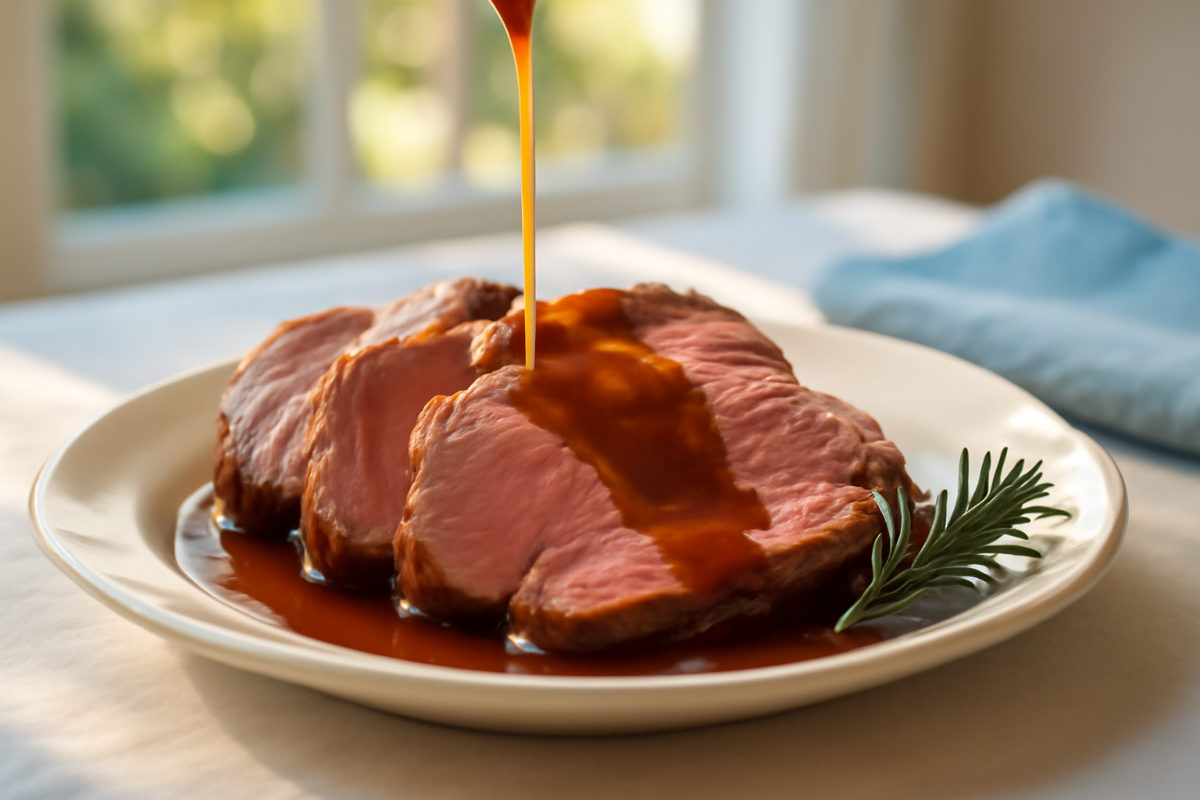
Roasted lamb bones with rosemary and garlic, simmered down and finished with a spoon of redcurrant jelly to balance the fat.
- Contains meat
- Dairy free
- lamb
- bone stock
- rosemary
- redcurrant
- easter
- Prep
- 20 min
- Cook
- 5 hrs
- Total
- 5 hr 20 min
- Serves
- 6
- Difficulty
- Medium
Lamb makes the most distinctive stock of the lot, which is a blessing and a curse. It needs a firm hand with the fat and something sharp or sweet to balance it, or it can turn cloying. Get that right and lamb bone gravy is the best thing to pour over a shoulder that has been in the oven half the day.
Ingredients
Makes about 550ml, enough for six with seconds
Scaled amounts are rounded to something you can actually measure. Season at the end and trust your mouth over the maths.
Kit
- Roasting tin
- Large saucepan
- Fine sieve
- Fat separator or a jug
Method
Heat the oven to 220C fan (240C conventional, gas 9). Roast the lamb bones in a dry tin for 45 minutes, turning once, until dark brown and the tin is coated in sticky brown residue. Lamb bones carry a lot of their own fat so you do not need oil.
Tip the rendered fat out into a bowl and keep it, that is your roux fat. Add the onions, carrot, celery and garlic to the tin and roast for a further 20 minutes.
Move everything to a saucepan, deglaze the tin with a splash of water and scrape it clean, then cover with 3 litres of cold water.
Bring slowly to a simmer, skimming steadily. Lamb throws up more scum than most so be patient and keep lifting it off. Once it runs clear, add the rosemary and bay and hold at a bare tremble for 4 hours.
Strain, then chill for at least three hours or overnight. Lamb fat sets hard and white and lifts off in one piece, which is the easiest defatting job in cooking. Take it all off, because leftover lamb fat coats the mouth and dulls everything.
Reduce 1.2 litres of the defatted stock in a wide pan to about 700ml over 20 minutes, which sharpens the flavour considerably.
In another pan, heat 2 tablespoons of the reserved lamb fat, stir in the flour and cook for 2 minutes to a light brown roux. Whisk in the hot stock gradually and simmer for 5 minutes.
Stir in the redcurrant jelly until it melts, add the vinegar, then taste. It should be savoury first with the sweetness only showing up at the back. Season and serve very hot, because lamb gravy congeals faster than most.
Tips worth knowing
- Defatting lamb stock is not optional. Warm lamb fat is pleasant, cold lamb fat on a plate is not, and there is always more of it than you expect.
- Neck bones give the best lamb stock. They are cheap, full of connective tissue and the meat left on them adds real flavour.
- Warm the gravy boat with boiling water before you pour. Lamb gravy sets a skin faster than beef or chicken.
- If the rosemary starts to dominate, pull it out after two hours. It keeps giving long after other herbs have finished.
Change it up
- Swap the redcurrant for a teaspoon of mint sauce stirred in at the end for a sharper, more traditional Easter version.
- Add a strip of anchovy melted into the roux. It disappears completely and makes the gravy taste more of lamb, not of fish.
- Use 150ml of red wine to deglaze the roasting tin instead of water for a heavier gravy, or a splash of pomegranate juice if you are avoiding alcohol.
Keeping and reheating
Fridge for four days, freezer for four months. Reheat in a pan and whisk well, adding a little water, as it thickens noticeably on standing.
Questions people ask
Does lamb stock taste too strong for gravy?
Only if you leave the fat in. The fat carries most of the muttony flavour, so chilling and lifting the cap off transforms it. After that, a little acidity from vinegar or redcurrant keeps it balanced and it tastes clearly of lamb without being heavy.
Can I use the bones from a leg after Sunday lunch?
Yes, and it works well. Re-roast them for 20 minutes first to get the colour back, since a carved leg has lost most of its browned surface. One leg bone will not give as much as 1.5kg of raw bones, so use less water and expect a smaller batch.
How long should lamb bones simmer?
Four hours is about right. Lamb bones are smaller and more porous than beef and they give up everything worth having by then. Push much past five and the stock starts picking up a slightly greasy, sheepy edge.