Proper Beef Bone Gravy from Scratch
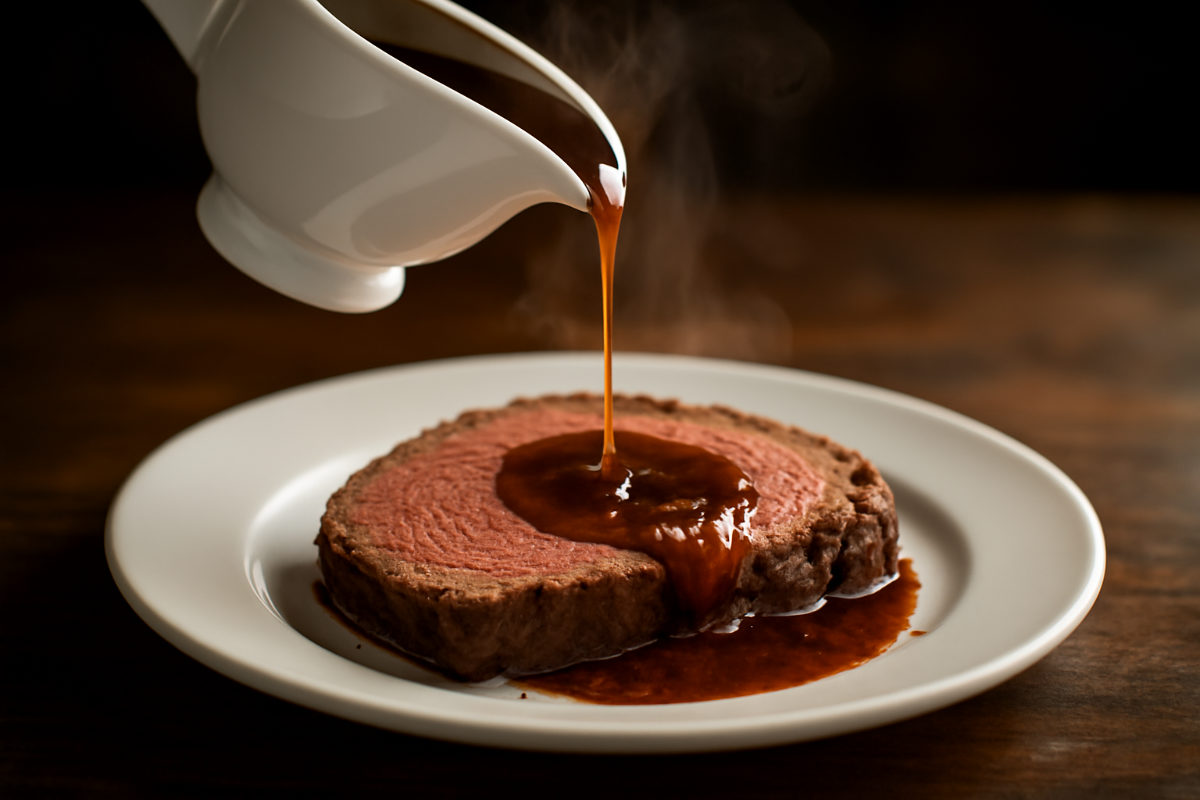
Beef bones roasted dark, simmered gently for the best part of a day, then reduced into a gravy with the sort of body you cannot fake.
- Contains meat
- beef
- bone stock
- reduction
- make ahead
- sunday roast
- Prep
- 30 min
- Cook
- 8 hrs
- Total
- 8 hr 30 min
- Serves
- 8
- Difficulty
- Hard
This is the long way round and it is worth doing once so you know what gravy can actually taste like. You roast the bones properly, you simmer rather than boil, and you skim. What you get at the end coats the back of a spoon and sets to a wobble in the fridge, which is the sign you did it right.
Ingredients
Makes about 700ml of finished gravy from roughly 2 litres of stock
Scaled amounts are rounded to something you can actually measure. Season at the end and trust your mouth over the maths.
Kit
- Large roasting tin
- Stockpot of at least 8 litres
- Ladle
- Fine sieve
- Muslin or a clean j-cloth
Method
Heat the oven to 220C fan (240C conventional, gas 9). Spread the bones and any meat trim in a single layer in a big roasting tin, rub with the dripping and roast for 45 to 55 minutes, turning once. You want them properly dark brown all over, the colour of strong tea, not black. Burnt bones make bitter stock and there is no rescuing it.
Add the onions, carrots and celery to the tin, smear the tomato purée over the bones and roast for another 20 minutes. The purée wants to lose its raw edge and go brick red, which is where a lot of the colour and savoury depth comes from.
Tip everything into the stockpot. Put the roasting tin over a low hob burner, pour in the 250ml of water and scrape hard with a wooden spoon until every stuck brown patch has lifted. Pour that into the pot too, because that is the best flavour in the whole recipe.
Cover with 4 litres of cold water, starting cold so the proteins draw out slowly and rise as scum rather than clouding the liquid. Bring it up to a bare shiver over medium heat, which takes 30 to 40 minutes, and skim the grey foam off the top with a ladle as it appears.
Drop the heat until the surface is barely moving, one lazy bubble every couple of seconds. Add the bay, peppercorns and thyme. Simmer uncovered for 6 to 8 hours, topping up with hot water if the bones ever poke above the surface and skimming every hour or so. A rolling boil at any point will emulsify the fat back in and give you a cloudy, greasy stock.
Strain through a fine sieve lined with muslin into a clean pan or bowl. Do not press the solids, just let it drip. Chill overnight if you can, then lift the set fat off the top in one disc. The stock underneath should be firm enough to hold a spoon mark, which is the gelatine you worked all day for.
For the gravy, pour 1.5 litres of the stock into a wide pan and boil hard until it has reduced to about 700ml, roughly 25 to 35 minutes. Taste as you go, because the reduction concentrates everything including any salt already in there.
Mash the butter and flour together into a smooth paste, then whisk it into the simmering stock a lump at a time. Let it bubble for 3 to 4 minutes to cook out the flour. You are only after a light coating consistency, not wallpaper paste, so stop while it still runs off the spoon.
Season with salt at this point and not before. Strain once more if you want it glassy and serve very hot.
Tips worth knowing
- Ask the butcher to saw the marrow bones into 5cm lengths. More cut surface means more gelatine and better colour off the roast.
- Cold water at the start is not fussiness. Hot water sets the proteins instantly and they stay suspended, which is why some homemade stock comes out looking like dishwater.
- If the finished stock does not set in the fridge, you were short on knuckle and joint bones. Add a couple of chicken feet or a pig trotter next time and it will wobble.
- Freeze whatever stock you do not turn into gravy in 500ml portions. It is the most useful thing in the freezer.
Change it up
- Swap the beurre manié for a straight reduction and carry on boiling until the stock naps a spoon on its own, which gives you a glossy jus and keeps it gluten free.
- Add 200ml of red wine to the roasting tin when you deglaze it for a darker, slightly sharper gravy that suits rib of beef, or use a strong black tea and a spoon of balsamic if you would rather skip the alcohol.
- Throw a dried shiitake or two into the pot for the last hour if you want more savoury weight without more meat.
Keeping and reheating
The strained stock keeps five days in the fridge under its fat cap, or six months frozen. Finished gravy keeps three days chilled and reheats best in a pan over low heat with a splash of water to loosen it.
Questions people ask
Why is my beef stock cloudy?
Almost always because it boiled. Once the liquid is rolling, fat and fine protein get whipped into the stock and stay there. Keep it at a bare shiver where you can count the bubbles, and skim the foam off rather than stirring it back in.
How long should you simmer beef bones for?
Six to eight hours is the sweet spot for flavour and gelatine. You can push to twelve, but past that the collagen has done its work and you start pulling bitter mineral notes out of the bone itself.
Do I have to roast the bones first?
Only if you want brown gravy. Unroasted bones give you a pale white stock, which is lovely for creamy sauces but will never give you the colour or the roasted depth this recipe is built on.