Classic Brown Stock Gravy
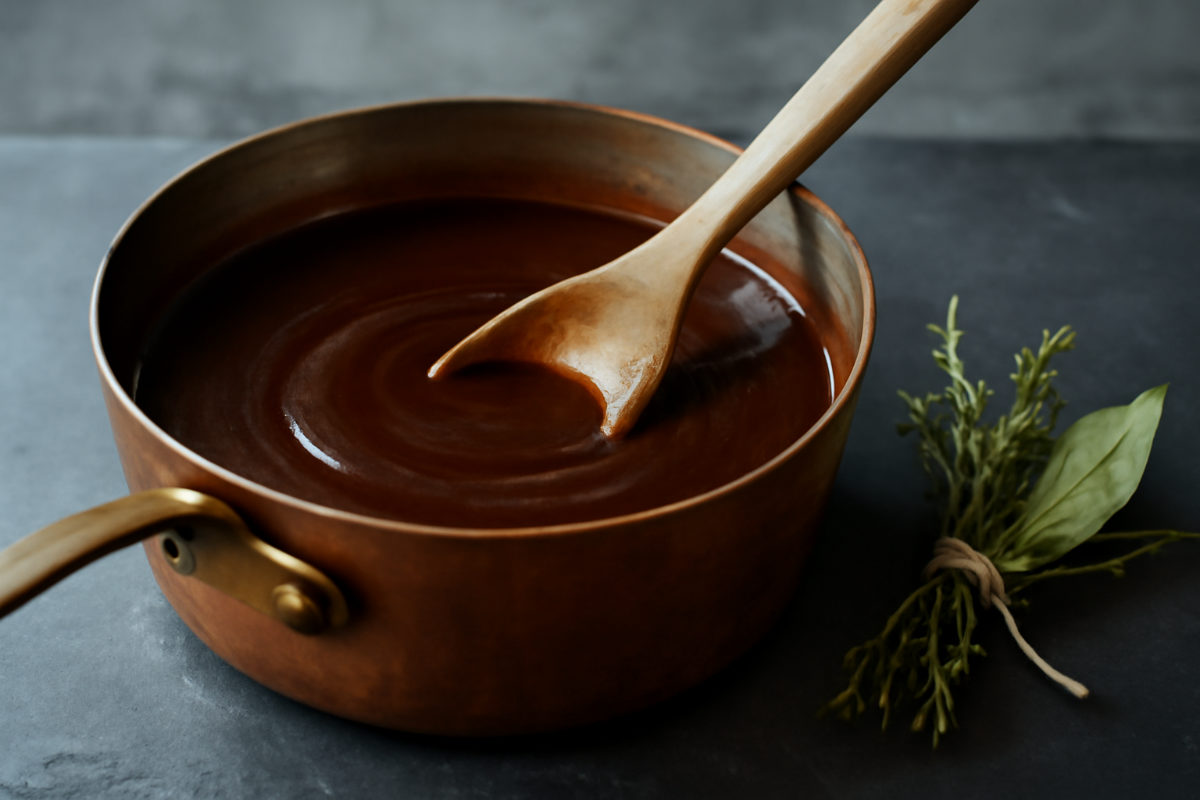
The textbook brown stock, mirepoix at the proper ratio and all, turned into a clean, deeply savoury gravy with a blond roux.
- Contains meat
- brown stock
- classical
- beef
- base sauce
- make ahead
- Prep
- 25 min
- Cook
- 7 hrs
- Total
- 7 hr 25 min
- Serves
- 8
- Difficulty
- Hard
If you only learn one stock, make it this one. Brown stock is the base of half the sauces in a classical kitchen and once you have it in the freezer your gravy problems are over. The ratios here are the traditional ones, two parts onion to one part carrot to one part celery, and they are worth sticking to.
Ingredients
Makes about 800ml of gravy from 3 litres of brown stock
Scaled amounts are rounded to something you can actually measure. Season at the end and trust your mouth over the maths.
Kit
- Deep roasting tin
- Stockpot
- Skimming ladle
- Chinois or fine sieve
- Wide reduction pan
Method
Heat the oven to 220C fan (240C conventional, gas 9). Toss the bones in the oil, spread them out with room around each piece and roast for 50 minutes, turning at the halfway point. Crowding the tin steams the bones instead of browning them, so use two tins if you need to.
Cut the mirepoix into 2cm dice so it browns at the same rate as the bones. Add it to the tin along with the tomato purée and roast for 20 more minutes until the purée has darkened and gone slightly sticky. This is called pincage and it is the difference between a decent brown stock and a great one.
Move everything to the stockpot. Deglaze the tin on the hob with a mug of water, scraping until it is clean, and add that liquid to the pot.
Cover with 5 litres of cold water and bring to a bare simmer over 40 minutes or so. Skim persistently in the first half hour, when almost all the scum comes up. Add the bouquet garni and peppercorns.
Hold it at 90C or thereabouts, a surface that trembles but does not bubble properly, for 6 to 7 hours. Do not stir it, do not cover it, do not salt it. Salting now means a ruined stock after you reduce it later.
Strain through a chinois or a fine sieve, cool it quickly by standing the pan in cold water, then chill so the fat sets and lifts off cleanly.
To make the gravy, reduce 1.2 litres of the brown stock in a wide pan down to around 800ml, which takes about 20 minutes at a strong simmer. A wide pan gives more surface area and reduces faster without stewing the flavour.
In a separate pan, make a blond roux with the butter and flour, cooking it for 3 minutes over medium heat until it smells nutty. Whisk in the hot reduced stock in stages, simmer for 5 minutes, skim any skin off the top and season with salt.
Tips worth knowing
- Weigh the mirepoix at least once so you learn what two to one to one looks like by eye. Too much carrot makes stock sweet, too much celery makes it taste like soup.
- Never salt a stock you intend to reduce. You cannot take it back out and reduction doubles the concentration.
- A stock kept between 85C and 92C stays clear. If you have a probe thermometer, use it for the first hour until you learn the look of the surface.
- Cool the strained stock fast. Sitting warm for hours is how stock goes sour in the fridge two days later.
Change it up
- Leave out the flour and reduce the stock by three quarters instead for a classical jus lié finished with a knob of cold butter.
- Use the same method with roasted lamb bones and a couple of garlic cloves for a brown lamb stock that suits Easter dinner.
- Stir a tablespoon of Madeira into the finished gravy for a rounder, slightly sweet edge, or use a splash of grape juice and a drop of sherry vinegar if you would rather skip the alcohol.
Keeping and reheating
Brown stock keeps five days in the fridge and freezes for six months. Reduced further to a syrup it keeps a month in the fridge and dissolves back into gravy with hot water.
Questions people ask
What is the difference between brown stock and white stock?
Brown stock uses roasted bones and vegetables, sometimes with tomato purée, which gives colour, roasted flavour and a heavier body. White stock uses raw or blanched bones simmered without colour, so it stays pale and clean and is used for cream sauces, veloutés and light soups.
Why do you add tomato purée to brown stock?
Acidity from the tomato helps break down connective tissue, and roasting the purée until it darkens adds a deep savoury note and a reddish brown colour. Raw purée added to the pot instead just tastes of tinned tomato, so always roast it out first.
Can I make brown stock in the oven instead of on the hob?
Yes and it is easier to control. Put the covered pot in a 120C fan oven and leave it for the same six or seven hours. The gentle all round heat keeps it below boiling with no fiddling, which is exactly what you want.