Gravy from Leftover Roast Bones
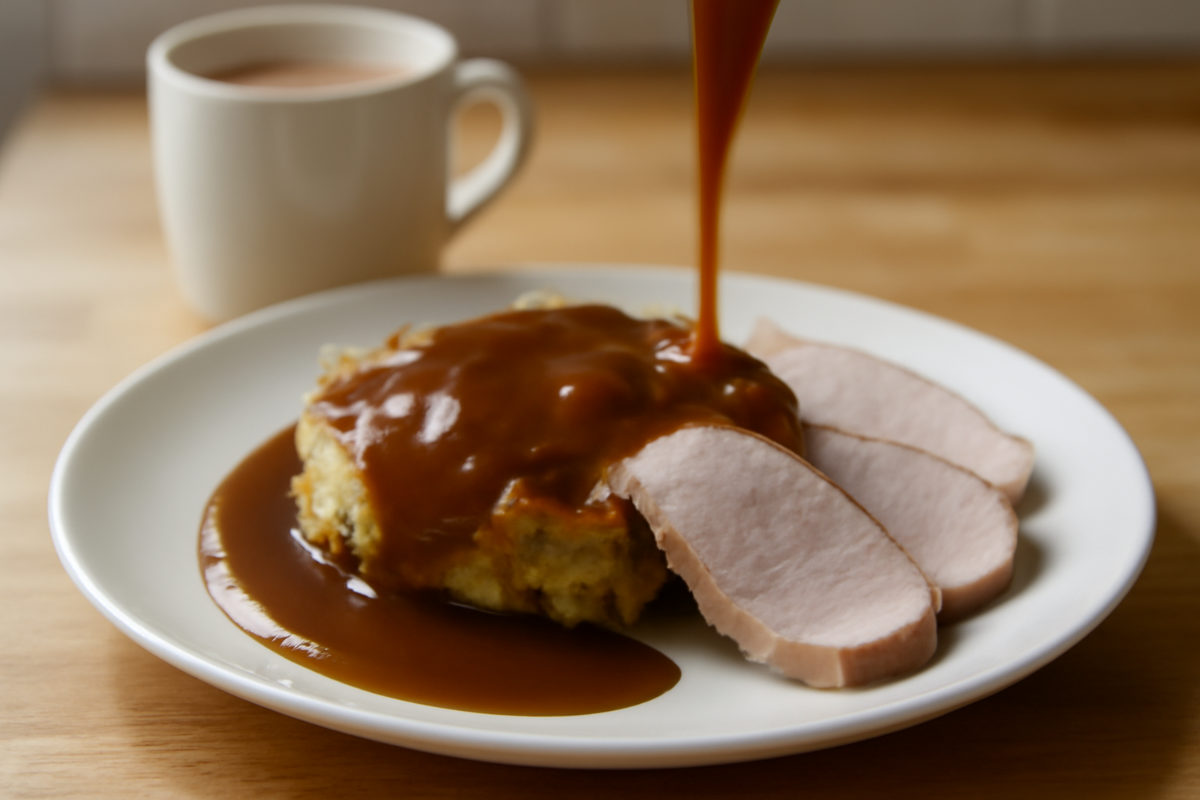
The bones off Sunday's plates, re-roasted to bring the colour back, simmered short and turned into Monday's gravy for next to nothing.
- Contains meat
- leftovers
- thrifty
- monday
- bone stock
- zero waste
- Prep
- 15 min
- Cook
- 3 hr 20 min
- Total
- 3 hr 35 min
- Serves
- 6
- Difficulty
- Easy
Carved bones look spent but they are not. What they have lost is surface colour, and twenty minutes in a hot oven puts that straight back. Because the bones are already cooked they give up what is left quite quickly, so this is a three hour job rather than an all day one.
Ingredients
Makes about 500ml
Scaled amounts are rounded to something you can actually measure. Season at the end and trust your mouth over the maths.
Kit
- Roasting tin
- Saucepan
- Sieve
- Whisk
Method
Heat the oven to 220C fan (240C conventional, gas 9). Break the bones up as small as you can with a heavy knife or a rolling pin, which exposes fresh surface and cut marrow that has not already given up its flavour.
Spread them in a tin with the onion, carrot and celery and roast for 20 to 25 minutes. Carved bones have gone dull and grey on the outside, and this puts the browning back where it does the most good.
Tip into a saucepan along with any leftover roast vegetables and every scrap of jelly from the fridge. Deglaze the tin with a mug of water and add that too.
Cover with 1.5 litres of cold water, bring slowly to a simmer, skim once and add the bay and peppercorns.
Simmer gently for 2.5 hours, uncovered. Already cooked bones have less to give than raw ones, so there is no benefit in going longer and it will just taste tired.
Strain and taste. If your original roast was well seasoned this stock may already be quite salty, so do not add any salt until the end.
Reduce it to about 700ml in a wide pan, roughly 15 minutes, which lifts a thin stock into gravy territory.
Melt the butter or roast fat, stir in the flour, cook 2 minutes to golden, then whisk in the hot stock in stages and simmer for 5 minutes. Add the Worcestershire sauce, season and serve over cold cuts, bubble and squeak or a pie.
Tips worth knowing
- Break the bones up. Whole carved bones sitting in water give you a very weak stock, whereas smashed ones give you a decent one.
- Do not mix strongly flavoured bones you would not eat together. Lamb and chicken in one pot mostly tastes of lamb and slightly confused.
- Bones freeze fine. Bag them up after Sunday lunch and make this whenever you have an evening spare.
- Watch the salt. Roast bones carry the seasoning from the joint and it concentrates when you reduce.
Change it up
- Add a tablespoon of tomato purée to the roasting tin for a darker, slightly sharper gravy for a pie filling.
- Throw in a handful of leftover roast potatoes at the simmer stage and blend a few in at the end for a thicker gravy with no flour.
- Stir a spoon of leftover cranberry sauce or redcurrant jelly into the finished gravy after a festive roast.
Keeping and reheating
Keeps three days in the fridge and three months frozen. Because the bones were already cooked, use it up faster than a fresh stock.
Questions people ask
Can you make stock from bones that have already been cooked?
Yes, though it will be lighter than one from raw bones since some flavour and gelatine has already gone into the roast. Smashing them up and giving them another twenty minutes in a hot oven makes a big difference to what you get out.
How long should you simmer already roasted bones?
Two and a half hours is plenty for most, and up to three for beef. Cooked bones have less left to give, so a longer simmer does not add depth, it just makes the stock taste flat and slightly stewed.
Can I freeze Sunday's bones and make gravy later?
Absolutely, and it is the sensible thing to do. Bag them straight after the meal, freeze for up to three months, and roast them from frozen with an extra ten minutes in the oven. No defrosting needed.