Fish Bone Gravy for Roast Fish
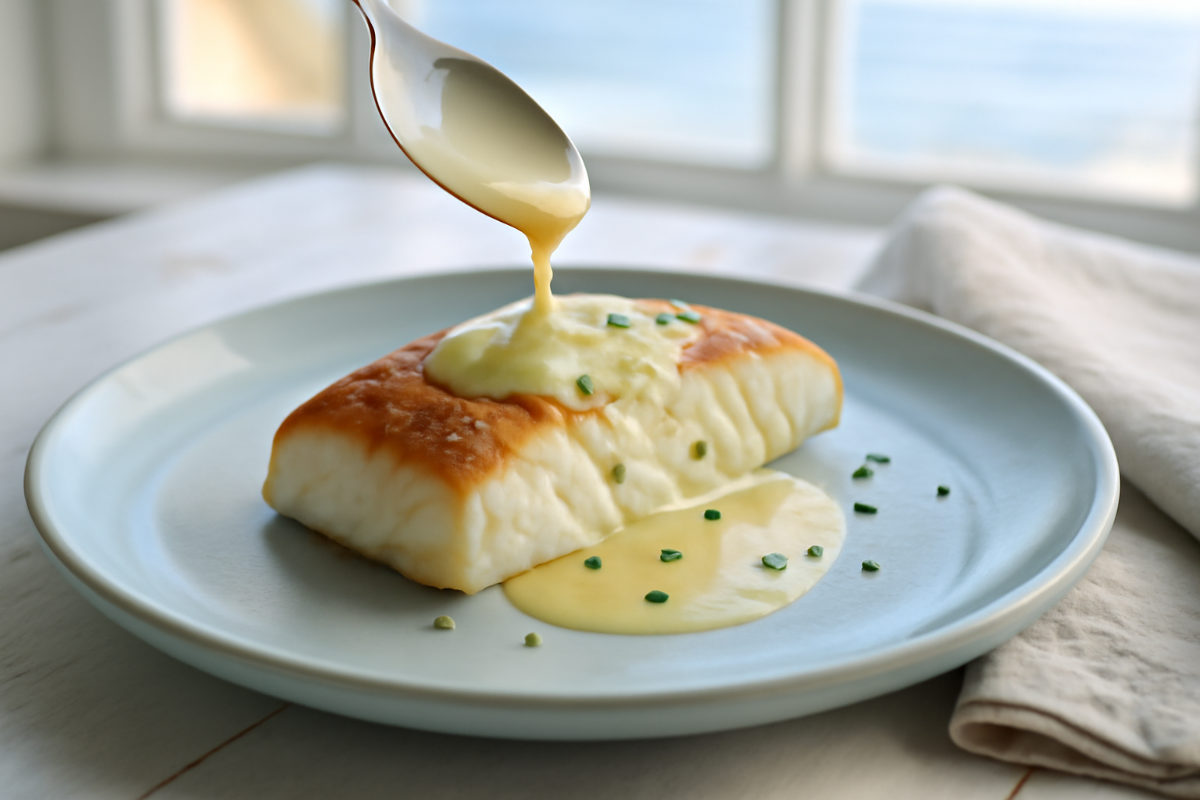
A twenty minute fumet from flat fish bones, reduced with white wine and shallots then mounted with butter into a proper sauce for roast fish.
- Contains fish
- Gluten free
- fish
- fumet
- butter sauce
- gluten free
- dinner party
- Prep
- 20 min
- Cook
- 45 min
- Total
- 1 hr 5 min
- Serves
- 4
- Difficulty
- Medium
Fish stock breaks every rule the meat ones follow. Twenty minutes and no longer, never any colour on the bones, and absolutely no boiling. Done right it is delicate and clean, and reduced with wine and finished with cold butter it makes a gravy good enough for a whole roast turbot.
Ingredients
Makes about 300ml, a generous ladle each
Scaled amounts are rounded to something you can actually measure. Season at the end and trust your mouth over the maths.
Kit
- Wide saucepan
- Fine sieve
- Muslin
- Whisk
- Small ladle
Method
Wash the bones under cold running water for a couple of minutes until no blood runs off, and cut the gills out of any heads. Blood and gills are the two things that make fish stock bitter and grey, and both take thirty seconds to deal with.
Chop the bones so they fit the pan flat. Melt the 30g of butter in a wide pan and sweat the shallots, celery and leek over low heat for 5 minutes without letting them colour at all. A fish stock must stay pale, so if you hear any real sizzling turn it down.
Add the bones and stir for 3 minutes until they turn opaque and start to smell sweet rather than raw.
Pour in the wine and let it bubble for 2 minutes to cook off the harsh alcohol, then add the cold water and the parsley stalks and peppercorns.
Bring to just below a simmer and hold it there for exactly 20 minutes, skimming the white scum off. Twenty minutes is the limit. Beyond that fish bones release bitter compounds and the delicacy is gone for good. This is the opposite of every meat stock in this section.
Strain through a sieve lined with muslin without pressing on the bones at all. Pressing pushes fine particles through and clouds it.
Pour the strained stock into a wide pan and reduce hard to about 250ml, roughly 15 minutes. It should smell sweet and concentrated. Add the cream now if you want a richer sauce and bubble for 2 minutes.
Take the pan off the direct heat so the sauce is hot but not boiling, then whisk in the cold butter a few cubes at a time until it is glossy and slightly thickened. Add the lemon juice, season with sea salt and white pepper and serve immediately. It will not hold for long, so time it to the fish.
Tips worth knowing
- Flat fish bones are best. Turbot, brill, sole and plaice give a clean sweet stock. Oily fish like mackerel and salmon make a strong, greasy stock that overwhelms everything.
- Ask the fishmonger to bag the frames when they fillet for you. They usually cost nothing and they freeze well.
- Twenty minutes, timed. Set a timer, because it is genuinely the difference between elegant and bitter.
- Mounting with butter is a temperature game. Too hot and the emulsion splits, too cool and it will not come together. Aim for around 70C, just below a simmer.
Change it up
- Leave out the butter and cream entirely and reduce the fumet further for a clean, dairy free fish jus.
- Add a pinch of saffron and a strip of orange peel to the reduction for a sauce with a Mediterranean lean.
- Replace the wine with unsweetened white grape juice and an extra teaspoon of lemon juice if you would rather not use alcohol.
Keeping and reheating
Fumet keeps two days in the fridge and three months frozen. The finished butter sauce does not keep and will split on reheating, so make it to order.
Questions people ask
How long do you simmer fish bones for stock?
Twenty minutes and no longer. Fish bones are thin and give up their flavour and gelatine very quickly, and after about half an hour they start releasing bitter and slightly ammoniac compounds. This is the one stock where longer is definitively worse.
Which fish bones are best for stock?
Flat white fish, so turbot, brill, sole, plaice and John Dory. They are gelatinous and mild. Avoid oily fish such as salmon, mackerel and sardines, which make a strong fishy stock that fights with whatever you serve it on.
Why is my fish stock bitter?
Usually the gills, which must be cut out before the heads go in the pot, or blood left in the bones, which needs rinsing off under cold water. The third cause is simmering too long, which turns even a well prepared stock bitter after half an hour.