Prosecco Gravy for Chicken
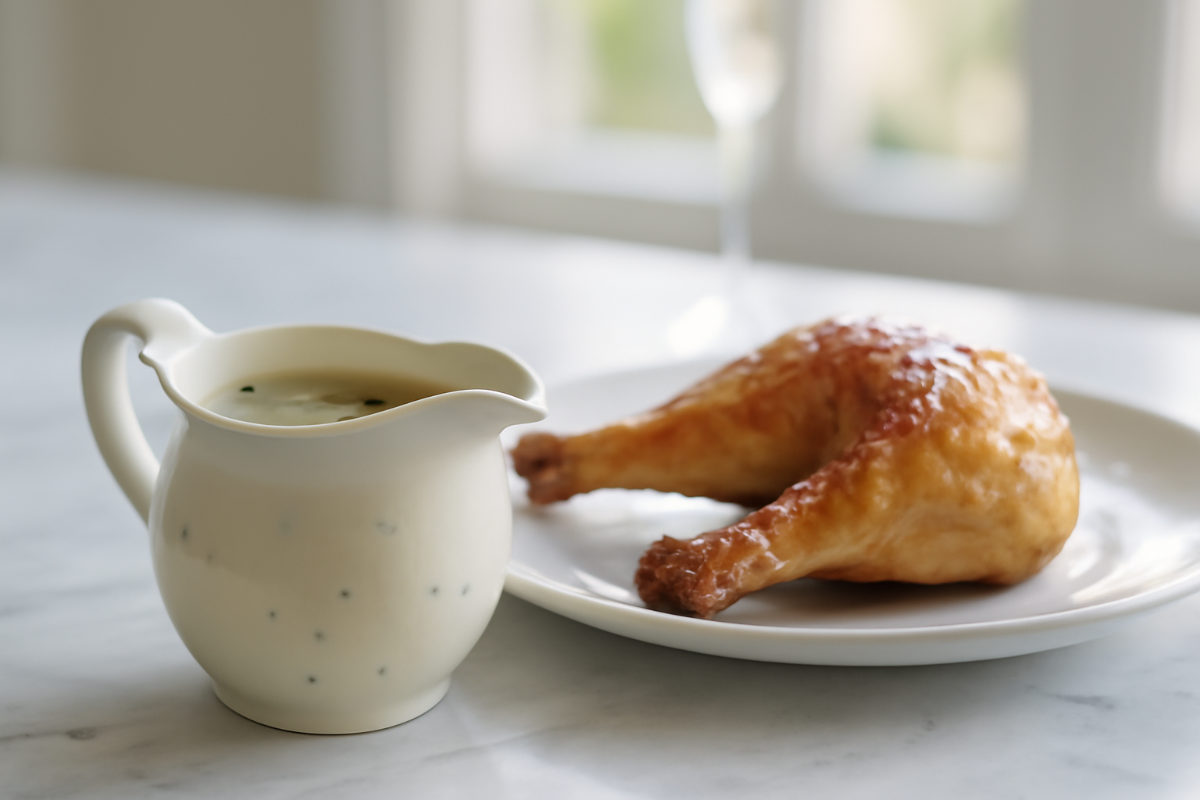
A light, faintly floral gravy that makes good use of the flat end of a bottle, reduced hard with shallots and finished with lemon and chives.
- Contains meat
- Prosecco
- sparkling wine
- chicken
- light
- Prep
- 5 min
- Cook
- 22 min
- Total
- 27 min
- Serves
- 4
- Difficulty
- Easy
Sparkling wine is not an obvious gravy ingredient, but Prosecco has pear and apple blossom notes that suit roast chicken very well. The bubbles are irrelevant once it hits the pan, so this is the perfect job for the half bottle nobody finished last night. It does need a firmer reduction than still white wine because Prosecco is quite acidic.
Ingredients
Makes about 400ml, enough for four plates
Scaled amounts are rounded to something you can actually measure. Season at the end and trust your mouth over the maths.
Kit
- Roasting tin or frying pan
- Whisk
- Sieve
Method
Set the tin or pan over a medium heat with the chicken fat and cook the shallots for five minutes until soft and glassy, without browning them.
Stir in the flour and cook for a minute and a half, keeping it pale.
Pour in the Prosecco carefully. If it is still fizzy it will foam right up the sides, so add a third at a time and let it settle before the next.
Boil it hard for eight to ten minutes until reduced by two thirds. Prosecco has high acidity and not much body, so it needs a firmer reduction than a still white wine or the gravy tastes like sharp lemonade.
Whisk in the hot stock and simmer for eight minutes until the gravy lightly coats a spoon.
Stir in the honey. Brut Prosecco is bone dry once reduced and that single teaspoon rounds off the acidity without making it sweet.
Strain into a warm jug, whisk in the cold butter off the heat, then add the lemon juice and chives. Season with salt and white pepper and serve immediately over roast chicken.
Tips worth knowing
- Flat Prosecco is genuinely better here. Fizz just makes the pan foam over and there is no benefit to it in a cooked sauce.
- Do not use a sweet Asti or a demi sec sparkling wine. The residual sugar concentrates and you end up with something closer to a dessert sauce.
- For a non-alcoholic version, use 300ml of a good alcohol free sparkling wine, or 250ml of white grape juice with 50ml of water and 1 tbsp of white wine vinegar. The vinegar matters, because acidity is the main thing Prosecco brings.
- Cava and Champagne both work identically. Champagne is a waste of money in a gravy but it does taste very good.
Change it up
- Add 100g of quartered green grapes at the end and warm them through for a chicken veronique style dish.
- Finish with 3 tbsp of double cream instead of the butter for a richer sauce over chicken breasts.
- Add a teaspoon of chopped fresh tarragon with the chives and use it over poached chicken.
Keeping and reheating
Three days in the fridge. It freezes for three months but the delicate aroma fades, so this is one to eat fresh if you can. Reheat gently and add the lemon and chives after warming.
Questions people ask
Can I use leftover Prosecco for cooking?
Yes, that is exactly what this recipe is for. Sparkling wine keeps its flavour for a couple of days in the fridge with a stopper even after it has gone flat, and the bubbles serve no purpose in a sauce anyway.
Does Prosecco gravy taste sweet?
Not if you use brut or extra dry. Reduced Prosecco is quite tart, which is why the recipe adds a teaspoon of honey to balance it. Asti and moscato style sparkling wines are much sweeter and are not suitable.
What is the difference between using sparkling and still white wine?
Sparkling wine is usually higher in acidity and lighter in body, so it needs a longer reduction and a touch of sweetness to balance. Still white wine gives a rounder gravy with less work.