Sherry Gravy
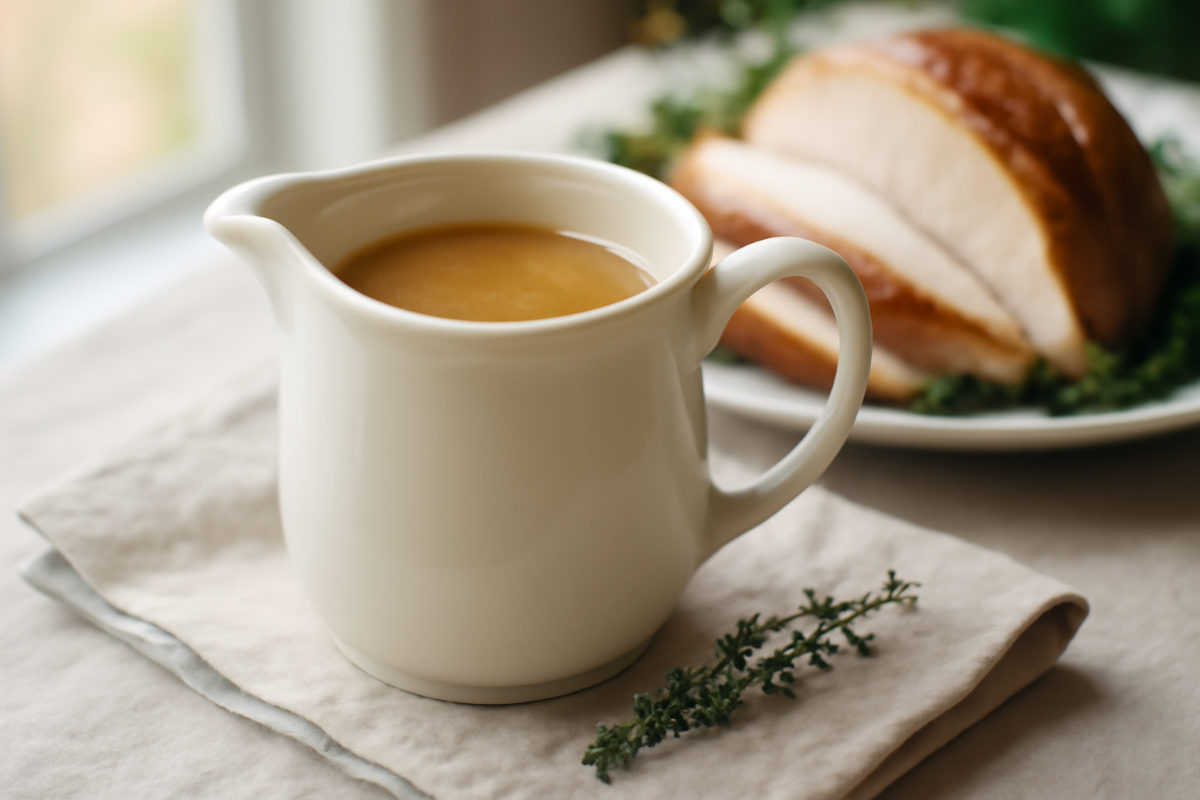
Dry amontillado reduced into a savoury, faintly nutty gravy that lifts turkey, chicken and gammon without shouting about it.
- Contains meat
- sherry
- turkey
- chicken
- festive
- Prep
- 5 min
- Cook
- 22 min
- Total
- 27 min
- Serves
- 6
- Difficulty
- Easy
Sherry is the quiet one of the fortified wines. Dry sherry adds a yeasty, nutty savouriness that makes a stock based gravy taste like it took twice as long. It is a Christmas standard for a reason, and it does exactly the same job on a Tuesday roast chicken.
Ingredients
Makes about 550ml, enough for six plates
Scaled amounts are rounded to something you can actually measure. Season at the end and trust your mouth over the maths.
Kit
- Roasting tin or saucepan
- Whisk
- Sieve
Method
Set the roasting tin over a medium heat with three tablespoons of the fat and all the browned residue. Add the onion and cook for eight minutes until soft and pale gold.
Stir in the flour and cook for two minutes, scraping the tin base clean as the mixture comes together.
Pour in the 125ml of sherry and whisk. Let it bubble for three to four minutes until reduced by about half. Sherry is around 17 per cent alcohol, so unreduced it tastes spirity and slightly harsh in a gravy.
Add the hot stock a ladle at a time, whisking to keep it smooth, then drop in the thyme.
Simmer for twelve minutes uncovered until the gravy thickens to a proper pouring consistency and the flavours have knitted together.
Strain into a clean pan, stir in the mustard and season well.
Off the heat, stir in the reserved tablespoon of sherry. Adding a little raw right at the end puts back the fresh aromatic top note that boiling drives off, which is the trick that makes people ask what is in it.
Tips worth knowing
- Use fino or amontillado, not cream sherry. Cream sherry is sweetened and will make a cloying gravy.
- That final raw tablespoon should be the last thing to go in. Give it thirty seconds off the heat and then pour, since the aroma fades quickly.
- For a non-alcoholic version, use 125ml of white grape juice with 2 tsp of cider vinegar for the reduction, and finish with a teaspoon of vinegar instead of the raw sherry. A dash of Worcestershire sauce also helps rebuild the savoury note.
- Sherry and gammon are a natural pair. If you are using it with ham, cut the salt right back as the stock and meat will already be salty.
Change it up
- Add 100g of chopped smoked bacon at the start for a sherry and bacon gravy to go with turkey.
- Stir in a tablespoon of chopped sage with the mustard for a Christmas leaning version.
- Add 50g of toasted flaked almonds blitzed into the gravy for a Spanish style thickened sauce, and note that this adds nuts to the allergen list.
Keeping and reheating
Keeps four days in the fridge, freezes for three months. Add the final raw tablespoon of sherry after reheating rather than before freezing, or you will lose it entirely.
Questions people ask
What kind of sherry do you use for gravy?
Dry sherry, meaning fino, manzanilla or amontillado. Amontillado is the most forgiving because it is nuttier and stands up to stock. Avoid cream sherry and Pedro Ximenez, both of which are sweet dessert wines.
Can I add sherry to gravy at the end?
A small amount, yes, and it is worth doing. Most of the sherry should go in early and be reduced, but a single tablespoon stirred in off the heat adds an aroma you lose entirely through boiling.
Does sherry gravy taste alcoholic?
It should not. Reducing the main quantity by half drives off most of the alcohol, and the final tablespoon is too small to read as boozy across six servings. If yours tastes sharp, you rushed the reduction.