Perry Gravy
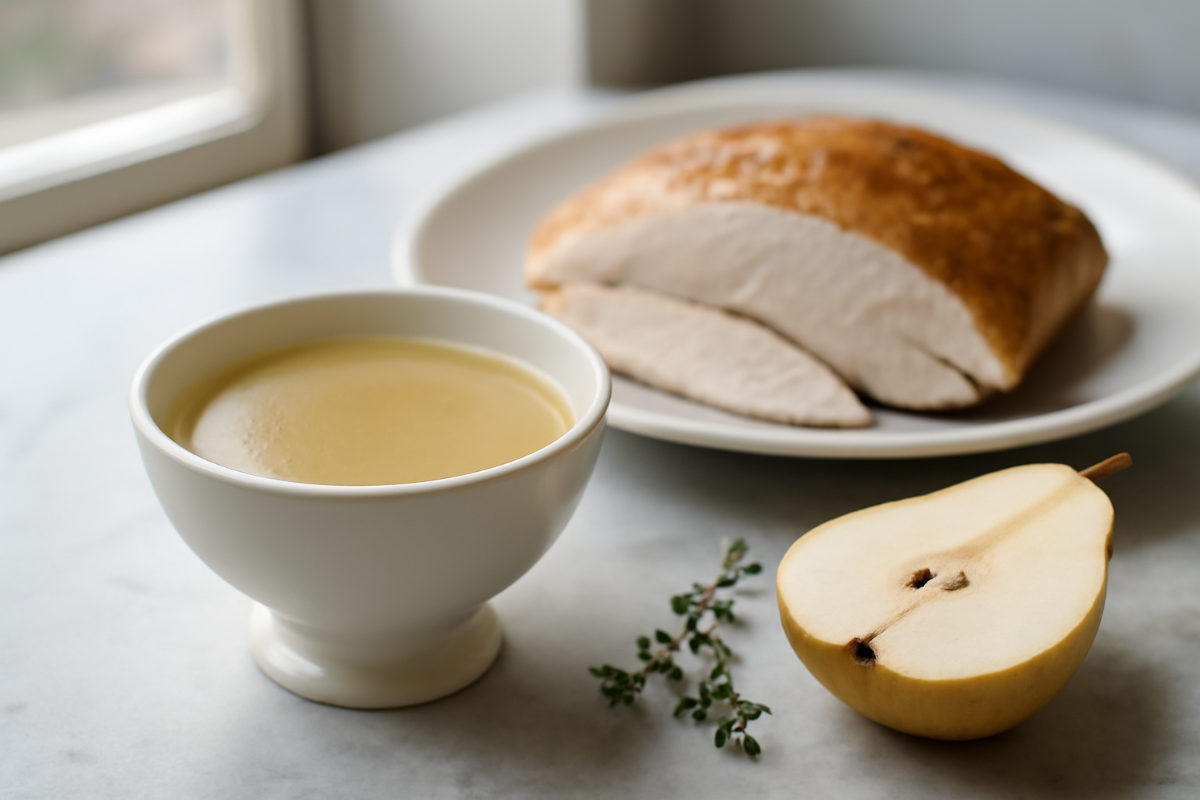
Pear cider reduced with leek and thyme into a delicate, faintly floral gravy that suits chicken, guinea fowl and pork loin.
- Contains meat
- perry
- pear
- chicken
- pork
- Prep
- 5 min
- Cook
- 25 min
- Total
- 30 min
- Serves
- 4
- Difficulty
- Easy
Perry is fermented pear juice and it is a gentler thing than apple cider, more floral and less sharp. That makes it a good match for lighter meat where a cider gravy would be too assertive. It needs a bit of help with acidity, which is where the lemon comes in at the end.
Ingredients
Makes about 400ml, enough for four plates
Scaled amounts are rounded to something you can actually measure. Season at the end and trust your mouth over the maths.
Kit
- Heavy saucepan
- Whisk
- Sieve
Method
Melt the butter in a saucepan and sweat the leek over a low heat for eight minutes with the lid on, stirring occasionally. Keep it pale, browning would bully the delicate pear flavour.
Stir in the flour and cook for a minute and a half without letting it colour.
Add the perry in three additions, whisking each smooth. Drop in the thyme and bay.
Boil for eight minutes until the perry has reduced by half. Taste it. Perry is lower in tannin and acid than apple cider, so it goes from raw to rounded quite quickly and it is easy to push it too far into flatness.
Whisk in the hot stock and simmer for eight minutes until the gravy lightly coats a spoon. It should stay pale gold rather than turning brown.
Strain into a warm jug, pressing the leek gently. Stir in the cream if using.
Add the lemon juice, taste and season with salt and white pepper. That lemon is not optional in a perry gravy, it puts back the brightness the pears never had much of.
Tips worth knowing
- Get a real perry rather than a sweet commercial pear cider. The sweet stuff is loaded with added sugar and glucose syrup and it reduces to something syrupy.
- Keep everything pale. This gravy works because it is light, and a dark roux or browned leek makes it just another brown gravy.
- For a non-alcoholic version, use 300ml of pear juice with 1 tbsp of white wine vinegar and reduce by half as usual. The vinegar supplies the acidity that fermentation would have created, and without it the gravy tastes like warm juice.
- A splash of the resting juices from a roast chicken stirred in at the end lifts it enormously.
Change it up
- Add a peeled, finely diced Conference pear with the leek and let it collapse for a chunkier, sweeter gravy for pork.
- Finish with a tablespoon of chopped tarragon instead of the cream for a fresher, more herbal version.
- Add 100g of sliced fennel with the leek and serve it with roast pork belly.
Keeping and reheating
Three days in the fridge. Freeze it before adding the cream and lemon and it will keep three months. Reheat gently and add fresh lemon juice before serving.
Questions people ask
What is perry and can I use pear cider instead?
Perry is fermented pear juice made from proper perry pears. Most supermarket pear cider is apple cider with pear flavouring and added sugar. You can use it, but reduce the amount to 200ml and skip any extra sweetness, because it is much sweeter than real perry.
What meat goes with perry gravy?
Chicken, guinea fowl, turkey breast, pork loin and rabbit. Anything pale and mild. It is far too delicate for beef or lamb, where an apple cider or red wine gravy would suit better.
Why is my perry gravy bland?
It almost certainly needs acid rather than salt. Perry is low in acidity, so a couple of teaspoons of lemon juice or cider vinegar at the end sharpens the whole thing up. A splash of dry vermouth also works.