Cider and Sage Gravy
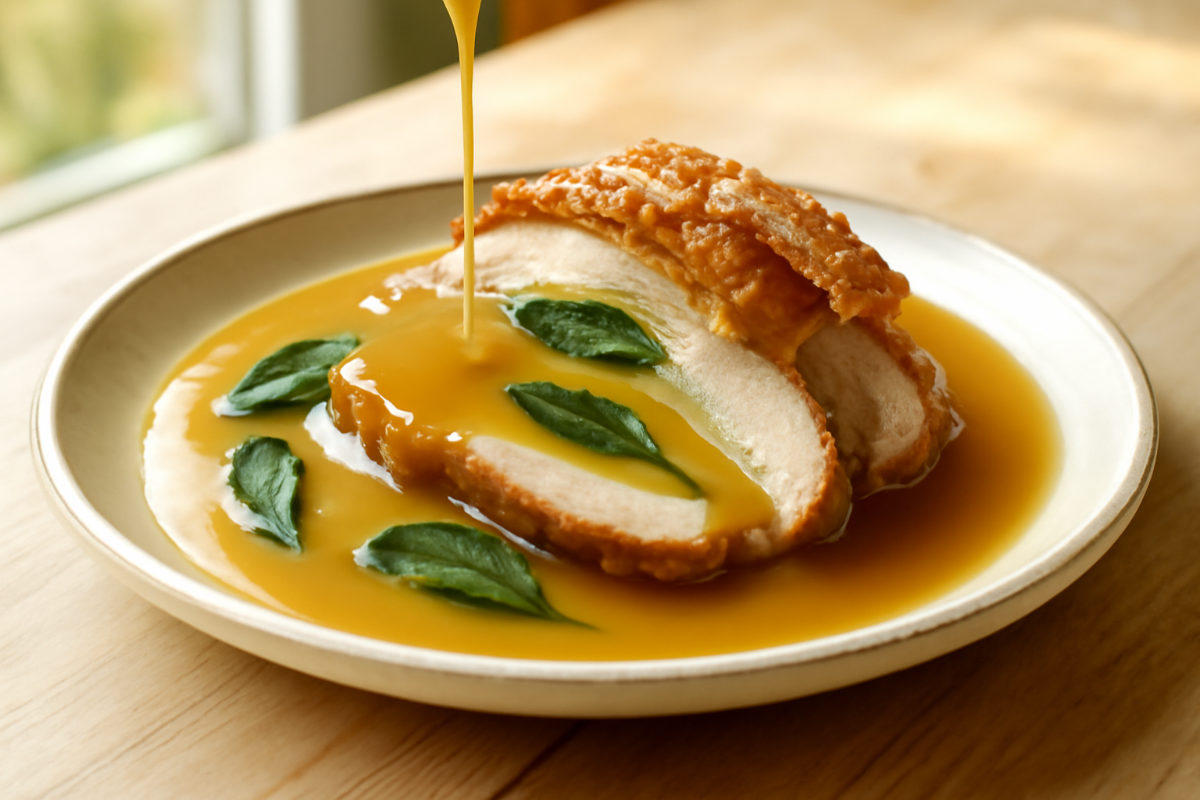
Dry cider cooked down with softened onion and plenty of sage, made for roast pork and the sort of gravy that gets scraped out of the tin.
- Contains meat
- cider
- pork
- sage
- roast dinner
- Prep
- 5 min
- Cook
- 25 min
- Total
- 30 min
- Serves
- 6
- Difficulty
- Easy
Pork and apple is not a cliche for nothing, and cider does the job better than apple sauce ever could because you can build a whole gravy on it. The important call is dry cider, not sweet, unless you are serving it with something salty like gammon. Sage goes in twice, once fried and once fresh.
Ingredients
Makes about 550ml, enough for six plates
Scaled amounts are rounded to something you can actually measure. Season at the end and trust your mouth over the maths.
Kit
- Roasting tin or heavy pan
- Whisk
- Sieve
Method
Pour off all but three tablespoons of fat from the roasting tin, leaving the sticky brown residue. Set the tin over a medium heat.
Fry the four whole sage leaves for about twenty seconds a side until they crisp and go dark. Lift them out onto kitchen paper, they are for the top later.
Add the onion to the same fat and cook for eight minutes until soft and just starting to colour at the edges.
Stir in the flour and the chopped sage and cook for two minutes, working the browned bits off the base with a wooden spoon.
Pour in the cider in stages, whisking. Once smooth, boil it hard for eight to ten minutes until reduced by half. Raw cider in gravy tastes like sharp apple juice, and cooking it down turns that acidity into something rounder and slightly toffee like.
Whisk in the hot stock, bring to a simmer and cook for eight minutes until it thickens enough to coat a spoon.
Stir in the mustard if using, then the cider vinegar. That last teaspoon of vinegar sounds counterintuitive after all that reducing, but it wakes the apple flavour back up.
Season, strain if you want it smooth, and crumble the crisp sage leaves over the top just before it goes to the table.
Tips worth knowing
- Match the cider to the dish. Dry cider for pork belly, roast pork and sausages. Medium cider only if the meat is salty, like gammon or bacon. Sweet cider makes a gravy that tastes like pudding.
- Farmhouse cider with sediment in the bottle gives more flavour but can cloud the gravy. Strain it if presentation matters.
- For a non-alcoholic version use 400ml of cloudy apple juice with 2 tsp of cider vinegar and reduce it by half. The vinegar restores the tartness that fermentation would have provided, without which it is just sweet.
- Fry the whole sage leaves before anything else goes in the pan. Once the tin is wet they will not crisp.
Change it up
- Add a peeled, diced Bramley apple with the onion and let it collapse into the gravy for a thicker, chunkier sauce.
- Stir in 3 tbsp of double cream at the end for a West Country style creamy cider gravy.
- Swap the sage for two sprigs of thyme and add 100g of sliced leek for a milder version that suits roast chicken.
Keeping and reheating
Three days in the fridge and three months in the freezer. Add the crisp sage fresh each time, since it goes soft in storage. Reheat gently with a splash of stock.
Questions people ask
Should I use dry or sweet cider for gravy?
Dry, in almost every case. Sweet cider carries a lot of residual sugar that concentrates as you reduce it, and you end up with a gravy that tastes like apple sauce. Save medium cider for very salty meats like gammon where the sweetness has something to push against.
Can I use cider vinegar instead of cider?
Not as a straight swap, it is far too acidic. If you have no cider, use apple juice for the body and add cider vinegar a teaspoon at a time for the sharpness, tasting as you go.
Does cider gravy contain allergens?
Cider almost always contains sulphites, which are a regulated allergen and must be declared. This recipe also contains wheat from the flour and milk if you use butter rather than pan fat.