Classic Red Wine Gravy
Roasting tin gravy built on half a bottle of red wine, boiled down hard until it is thick and glossy before the stock goes anywhere near it.
- Contains meat
- red wine
- beef
- roast dinner
- reduction
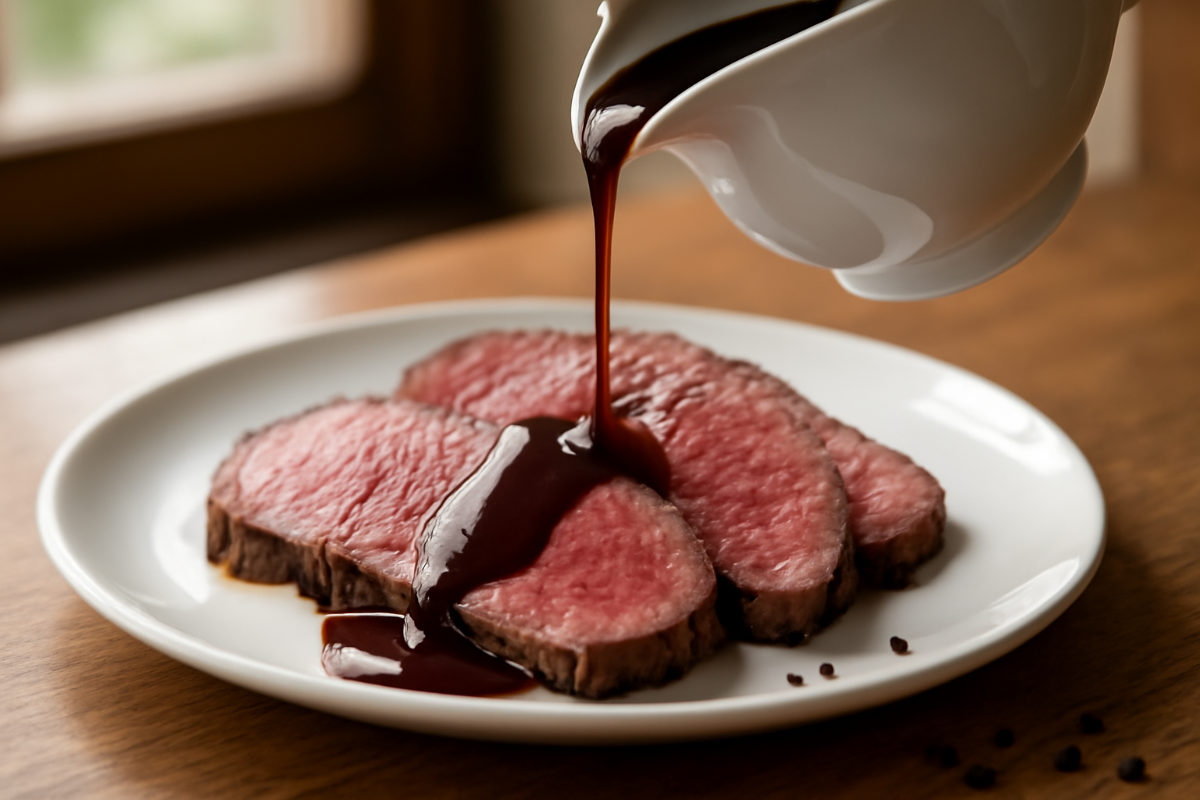
- Prep
- 5 min
- Cook
- 25 min
- Total
- 30 min
- Serves
- 6
- Difficulty
- Medium
This is the gravy that turns a good roast beef into one people talk about afterwards. The whole trick is patience with the wine: you reduce it until it is a dark sticky puddle, because raw wine in gravy tastes sharp and thin and no amount of stock will hide it. Everything after that is straightforward.
Ingredients
Makes about 550ml, enough for six plates
Scaled amounts are rounded to something you can actually measure. Season at the end and trust your mouth over the maths.
Kit
- Roasting tin or heavy frying pan
- Whisk
- Wooden spoon
- Sieve
Method
Lift the joint out of the tin and rest it under foil. Pour off all but about three tablespoons of fat, keeping every scrap of the browned sediment stuck to the bottom of the tin.
Set the tin over two burners on a medium heat. Add the shallot and cook for three or four minutes until soft and translucent, scraping the base with a wooden spoon as it goes.
Scatter in the flour and stir it through the fat. Cook it for a full two minutes, until it smells nutty and looks like wet sand, otherwise the gravy will taste of raw flour.
Pour in the wine a splash at a time, whisking hard after each addition so the flour takes it up smoothly. It will look claggy at first and then loosen.
Turn the heat up and boil the wine hard for eight to ten minutes, until it has reduced by at least half and coats the back of a spoon in a glossy, dark, syrupy way. Taste it. It should be rich and slightly sweet rather than sharp. This is the step that makes or breaks the gravy.
Pour in the hot stock in three or four goes, whisking each one in before the next. Bring to a gentle simmer and cook for eight minutes, skimming off any foam.
Stir in the redcurrant jelly if using, then taste and season. Strain through a sieve into a warm jug, pressing the shallot to get everything out of it.
Off the heat, whisk in the cold butter until it disappears. The gravy will thicken slightly and take on a shine. Serve straight away.
Tips worth knowing
- Use a wine you would happily drink a glass of. Cooking wine and anything labelled as leftovers from three weeks ago will taste tinny once concentrated.
- If the reduced wine tastes bitter rather than sharp, you have taken it a touch too far. A teaspoon of redcurrant jelly or a pinch of sugar pulls it back.
- For a non-alcoholic version, use 350ml of red grape juice cut with 2 tsp of red wine vinegar and reduce it the same way. The vinegar supplies the acidity the juice lacks, which is the thing you actually miss.
- Whisk the finishing butter in off the heat. If it boils it splits and the shine goes.
Change it up
- Add two sprigs of thyme and a bay leaf with the stock and fish them out before straining for a more herbal, French leaning gravy.
- Swap 100ml of the wine for port for a sweeter, deeper version that suits venison.
- Fry 100g of sliced chestnut mushrooms with the shallot and leave them in rather than straining, for a chunkier gravy.
Keeping and reheating
Keeps for three days in the fridge and freezes for three months. Reheat gently with a splash of stock, whisking, and do not boil it hard once the butter is in.
Questions people ask
Can you taste the alcohol in red wine gravy?
Not if you reduce it properly. Boiling the wine hard for eight to ten minutes drives off most of the alcohol and concentrates the fruit and tannin. If it still tastes boozy, you have not reduced it enough, so keep going before adding stock.
What red wine is best for gravy?
A dry, medium bodied red with decent fruit. Merlot, Rioja and Cabernet Sauvignon all work. Avoid anything very oaky or very tannic, because reduction concentrates tannin and can turn it drying and bitter.
Can I make red wine gravy without meat juices?
Yes. Fry the shallot in 3 tbsp of butter or dripping in a heavy pan, add a teaspoon of tomato puree with the flour for colour, and use a strong beef stock. It will not be quite as deep but it is still very good.