Beer Braised Onion Gravy
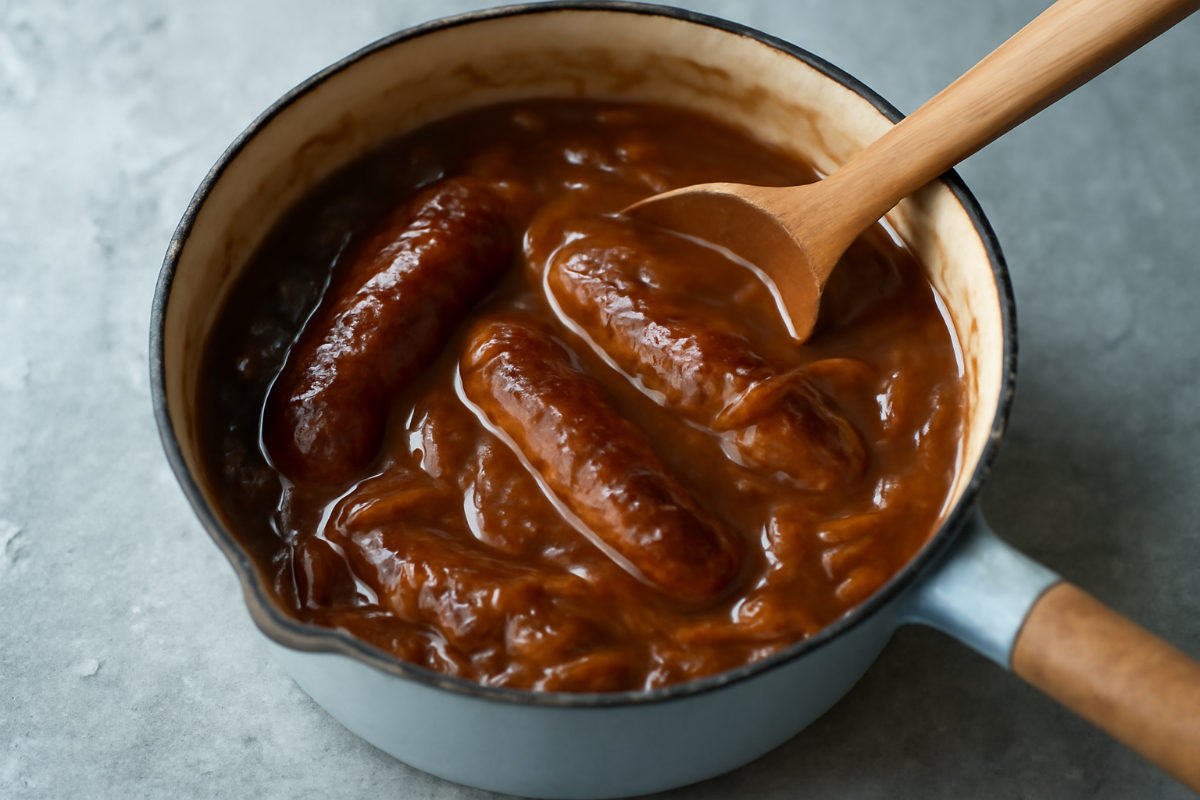
Onions cooked slowly in beer rather than fat until they collapse, giving a thick, sweet, deeply savoury gravy with no roux at all.
- Contains meat
- beer
- onion
- sausages
- no roux
- Prep
- 10 min
- Cook
- 45 min
- Total
- 55 min
- Serves
- 6
- Difficulty
- Easy
Most onion gravies soften the onions in fat and then add liquid. This one braises them in beer from the start, which takes longer but gives a completely different result: sweeter, softer, and thick enough that you can skip the flour entirely. It is the best gravy on this page for sausages.
Ingredients
Makes about 550ml, enough for six plates
Scaled amounts are rounded to something you can actually measure. Season at the end and trust your mouth over the maths.
Kit
- Heavy lidded casserole
- Wooden spoon
- Stick blender, optional
Method
Melt the butter with the oil in a heavy casserole, add the onions and the salt, cover and cook over a low heat for fifteen minutes. They will steam down and release a lot of water.
Take the lid off, turn the heat to medium and cook for another ten minutes, stirring often, until the water has gone and the onions are golden and beginning to stick.
Pour in about a third of the beer and scrape the base clean. Let it bubble away almost completely, which takes four or five minutes, then repeat with another third.
Add the last of the beer along with the bay leaves and let it reduce by half. Adding the beer in stages like this concentrates the malt into the onions instead of just diluting them, and it drives off the alcohol as you go.
Pour in the hot stock, bring to a simmer and cook uncovered for fifteen minutes. The onions will be completely soft by now and the liquid will have thickened on its own from the starch and pectin in them.
Stir in the sugar and the balsamic vinegar. Taste it. Brown ale is malty rather than aggressively hoppy, so it usually needs only a small correction.
Remove the bay leaves. Leave it chunky, or give it three or four pulses with a stick blender for a thicker, smoother gravy that still has texture. Season with pepper and serve.
Tips worth knowing
- Slice the onions all the same thickness. Thin bits turn to mush and thick bits stay firm, and you want them to collapse together.
- There is no flour in this at all, so it is a good option if you are cooking for someone avoiding wheat, though the beer itself still contains barley gluten.
- For a non-alcoholic version, use 440ml of alcohol free brown ale, or 440ml of beef stock with 1 tbsp of Marmite and 1 tsp of black treacle stirred through. Adding it in three stages the same way is what builds the depth.
- Made a day ahead this is noticeably better. The onions keep softening in the fridge and the beer settles down.
Change it up
- Use a wheat beer and finish with a tablespoon of wholegrain mustard for a lighter gravy to serve with pork.
- Add 200g of sliced mushrooms once the onions are golden for a fuller gravy for pies.
- Add two crushed garlic cloves and a sprig of sage in the last ten minutes for a more aromatic version alongside liver and bacon.
Keeping and reheating
Five days in the fridge and three months frozen. It sets thick and reheats well with a splash of stock. This is a gravy that genuinely improves with a night in the fridge.
Questions people ask
Do I need flour in beer onion gravy?
Not with this method. Cooking down 700g of onions until they collapse gives you plenty of natural thickening. If you want it thicker still, blend a little of it or slake a teaspoon of cornflour in cold water and stir it in at the end.
What beer should I use for onion gravy?
A brown ale, mild or malty bitter. They bring caramel sweetness that suits onions. Avoid IPAs, whose hop bitterness gets much louder as the beer reduces, and lagers, which have too little to give.
Why did my beer gravy turn out bitter?
Usually the beer choice rather than the technique. A hoppy beer concentrates into something harsh. If it has happened, stir in a teaspoon of sugar and a knob of butter off the heat, both of which knock back perceived bitterness.