Australian Meat Pie Gravy
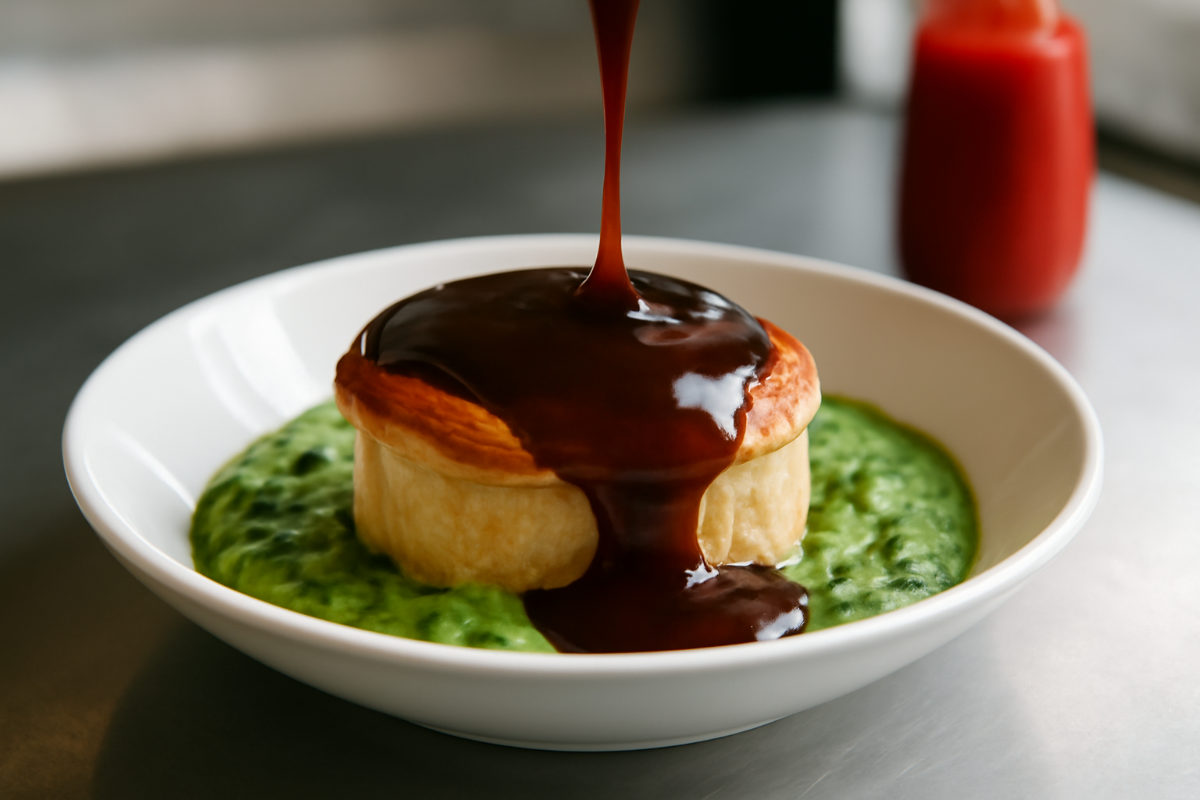
The thick pouring gravy served over a meat pie at an Australian bakery, seasoned with Vegemite and tomato sauce and thickened enough to sit on the pastry.
- Contains meat
- australian
- meat pie
- vegemite
- thick gravy
- Prep
- 5 min
- Cook
- 20 min
- Total
- 25 min
- Serves
- 6
- Difficulty
- Easy
A pie floater is a meat pie sitting in a bowl of mushy peas with gravy poured over the top, and the gravy has to be thick enough to stay where it is put. That is what this one is built for. Vegemite does the savoury heavy lifting, which sounds odd and works completely, and a squirt of tomato sauce rounds it out because that is what goes on an Australian pie anyway.
Ingredients
Makes about 550ml, enough for six pies
Scaled amounts are rounded to something you can actually measure. Season at the end and trust your mouth over the maths.
Kit
- Saucepan
- Whisk
- Small bowl
Method
Melt the butter or dripping in a saucepan over a medium heat. Add the onion and cook for six or seven minutes until very soft and just starting to catch gold at the edges.
Whisk in the flour and cook it for three full minutes, stirring. Take it further than you would for a pale sauce, until it is the colour of a digestive biscuit and smells toasted. This is a dark gravy and the roux is where a lot of that comes from.
Pour in the hot stock a third at a time, whisking hard between each addition. It will go extremely thick after the first splash. Keep whisking and it will loosen as the rest goes in.
Bring to a simmer and cook for eight minutes, whisking now and then. It will thicken to a proper coating consistency and any floury taste will disappear.
Whisk in the Vegemite, tomato sauce, Worcestershire sauce and soy sauce. Vegemite is powerfully salty, so add it a little at a time and taste rather than tipping the lot in.
Simmer for four more minutes. To check the thickness, dip a spoon in and hold it up. The gravy should cling in a thick even layer and take a couple of seconds to drip, which is what stops it sliding straight off a pie.
If it is still too loose, stir in the cornflour slurry and simmer for one more minute. Season with salt if it needs it, which it may not, and a lot of white pepper.
Pour it hot over a beef pie sitting on mushy peas, or serve it in a jug alongside a pie and chips.
Tips worth knowing
- Taste before you salt. Vegemite, soy sauce, Worcestershire sauce and stock all bring salt, and it is very easy to overshoot.
- This gravy is meant to be thicker than a roast dinner gravy. If it looks slightly too heavy in the pan, it is probably right for a pie.
- White pepper is traditional in Australian pie gravy and gives a rounder, hotter background than black pepper does.
- Make it with the juices from a beef stew or braise instead of some of the stock and it goes from good to very good.
Change it up
- Add 200ml of stout with the stock and reduce it a little longer for a darker, maltier gravy. Use extra stock and a teaspoon of black treacle instead if you would rather not use alcohol.
- Stir in a teaspoon of mushroom ketchup for a deeper savoury note.
- Use a strong vegetable or mushroom stock and butter rather than dripping for a vegetarian version, since Vegemite is already yeast based.
Keeping and reheating
Keeps four days in the fridge, where it will set almost solid. That is normal for a gravy this thick. Reheat gently with a splash of stock and whisk it back to smooth. Freezes for three months.
Questions people ask
What is a pie floater?
A South Australian dish of a meat pie sitting upside down in a bowl of thick green pea soup, with gravy and tomato sauce poured over. It sounds unlikely and it is genuinely good, and it is where the demand for a very thick pouring gravy comes from.
Can I use Marmite instead of Vegemite?
Yes, though they are not identical. Marmite is sweeter, saltier and more intense, so start with a teaspoon and taste before adding more. Vegemite is more bitter and less sweet, which is why the Australian version tastes the way it does.
How do I make gravy thick enough for a pie?
Use more roux than usual, roughly 35g of flour to 700ml of liquid rather than the usual 25g, cook it out properly and simmer it longer. A teaspoon of cornflour slurry at the end will take it further if you need it.