Filipino Chicken Gravy
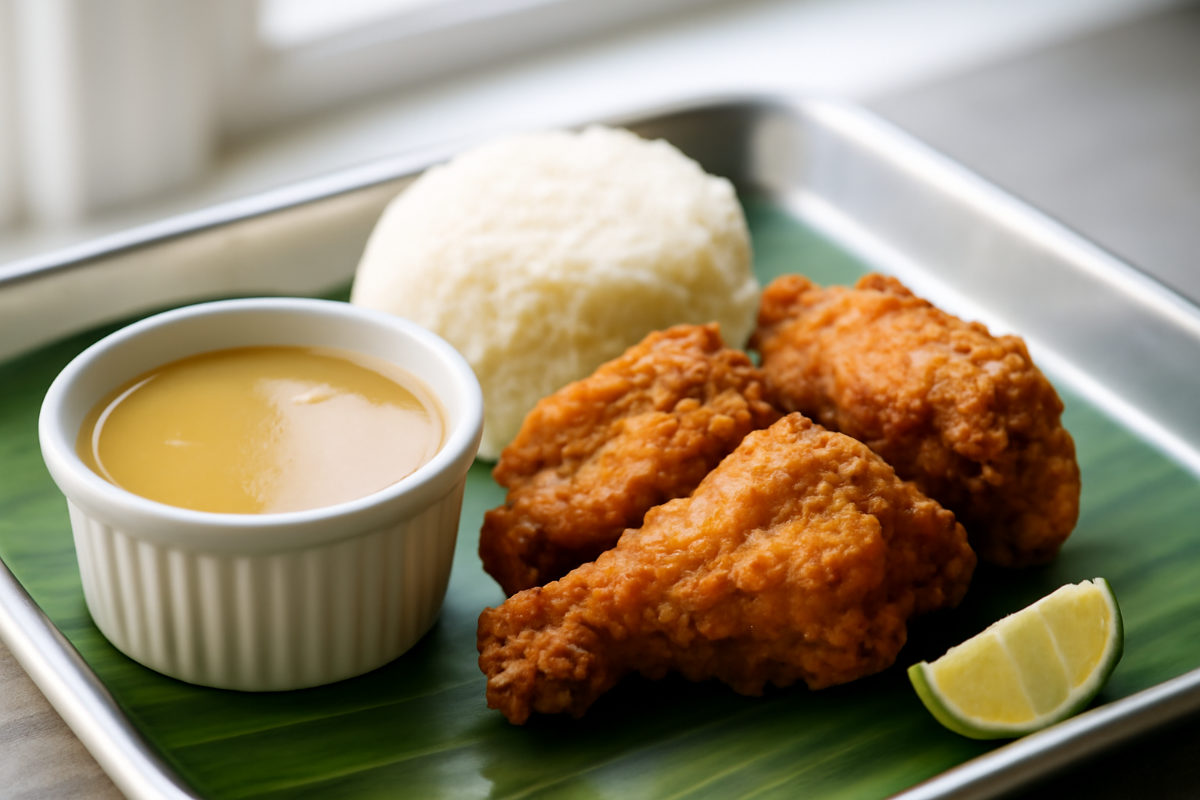
The smooth, faintly sweet chicken gravy served with fried chicken across the Philippines, made from the frying fat with a splash of calamansi at the end.
- Contains meat
- filipino
- chicken
- fried chicken
- pan gravy
- Prep
- 5 min
- Cook
- 20 min
- Total
- 25 min
- Serves
- 6
- Difficulty
- Easy
If you have eaten fried chicken in the Philippines, you have had a small pot of this alongside it, and probably poured it straight over the rice. It is a simple pan gravy, but the balance is different from a British one: a little sweeter, a little sharper, and finished with calamansi so it lifts rather than sits heavy. Made properly it goes with roast chicken just as well.
Ingredients
Makes about 500ml, enough for six
Scaled amounts are rounded to something you can actually measure. Season at the end and trust your mouth over the maths.
Kit
- Frying pan or saucepan
- Whisk
- Sieve
Method
Pour off all but three tablespoons of the fat from the pan you cooked the chicken in, leaving behind any browned bits stuck to the base. If you are starting from scratch, melt three tablespoons of butter instead.
Set the pan over a medium heat, add the onion and cook for four minutes until soft and translucent. Add the garlic and cook for one minute more, no longer, or it will turn bitter.
Sprinkle in the flour and stir it into the fat. Keep it moving for two full minutes over a medium heat. You want it cooked out but still pale, because this gravy should be light golden rather than dark.
Add the hot stock a ladle at a time, whisking hard after each one so the flour takes it up smoothly before the next goes in.
Bring to a gentle simmer and cook for eight to ten minutes, whisking now and then, until it thickly coats the back of a spoon. Skim any foam that gathers at the edge.
Stir in the soy sauce, sugar and white pepper. Simmer for two minutes so the sugar dissolves and the soy loses its raw edge.
Take the pan off the heat and stir in the calamansi juice. Taste and season with salt. It should be savoury first, with a faint sweetness and a clean sour note behind it.
For the very smooth texture served in Filipino restaurants, pass it through a sieve into a warm jug. Serve with fried chicken and plenty of rice.
Tips worth knowing
- White pepper rather than black is worth sticking to. It gives the particular warm, slightly floral heat that makes this gravy taste like itself.
- Add the calamansi off the heat. Boiled citrus juice turns dull and slightly bitter and you lose the whole point of it.
- If you have fried chicken in a batter, scrape up the loose crispy bits from the oil and whisk a spoonful into the gravy. It is what makes the version sold at Filipino chicken houses taste so good.
- Chicken drippings make this, but a stock cube gravy with a knob of butter whisked in at the end is a perfectly good weeknight version.
Change it up
- Whisk in 4 tbsp of evaporated milk at the end for the creamier style often served with roast chicken and mashed potato.
- Add a teaspoon of finely chopped chicken liver, fried with the onion, for a richer gravy with more body.
- Stir in a tablespoon of banana ketchup with the soy sauce for a sweeter, redder gravy that suits chips as much as rice.
Keeping and reheating
Three days in the fridge, three months in the freezer. Reheat gently with a splash of stock and add a fresh squeeze of calamansi or lime once it is hot, since the citrus fades on standing.
Questions people ask
What can I use instead of calamansi?
Mix two parts lime juice with one part orange juice. That gets you close to the balance of sharpness and mild sweetness. Straight lemon juice also works at a push, but use slightly less as it is more aggressive.
Why is Filipino gravy sweeter than British gravy?
Filipino cooking generally balances salt with a touch of sugar, and it runs through everything from adobo to spaghetti. A teaspoon of sugar in a pot of gravy is not enough to taste sweet on its own, it just rounds the soy and the pepper out.
Can I make this gravy without chicken drippings?
Yes. Use butter instead of the drippings and a strong chicken stock, and add half a teaspoon of yeast extract or a splash more soy sauce to make up the savoury depth you lose.