Greek Lemon and Herb Roast Gravy
The lemony, oregano heavy pan juices from a Greek roast, loosened with stock and thickened only by reduction and a slug of olive oil.
- Contains meat
- Gluten free
- Dairy free
- greek
- lemon
- lamb
- oregano
- Prep
- 5 min
- Cook
- 15 min
- Total
- 20 min
- Serves
- 6
- Difficulty
- Easy
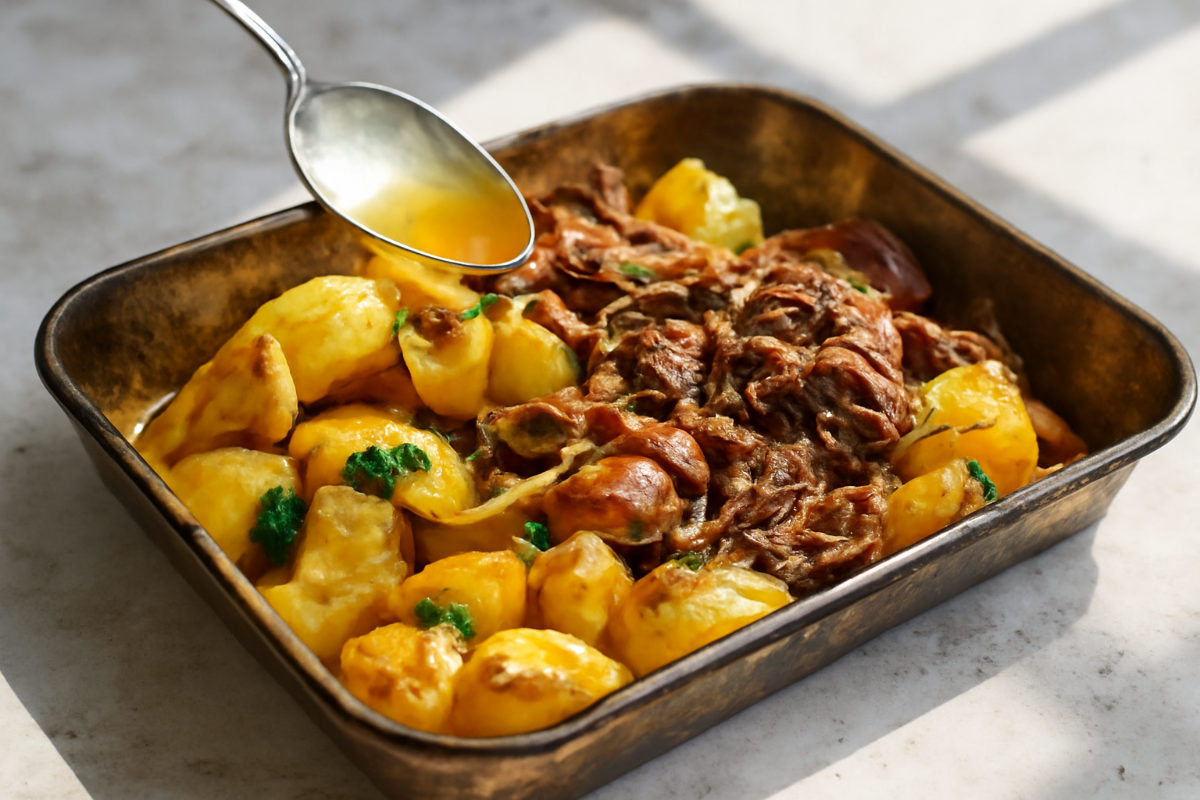
Greek cooking does not really do thick flour gravy. What you get with a lamb or chicken roast is the pan juices themselves: lemon, garlic, dried oregano and a lot of olive oil, cooked down with the meat and spooned over the potatoes. This version keeps that honestly thin and sharp, so it soaks into roast potatoes rather than sitting on top of them.
Ingredients
Makes about 400ml, enough for six plates
Scaled amounts are rounded to something you can actually measure. Season at the end and trust your mouth over the maths.
Kit
- Roasting tin
- Wooden spoon
- Sieve
- Small jug
Method
Lift the roast out of the tin and rest it. Tip the tin so the fat gathers at one end and spoon off most of it, leaving the darker meat juices behind along with everything stuck to the base.
Set the tin over a medium heat on the hob, add the olive oil and the crushed garlic and cook for two minutes until the garlic is golden at the edges but nowhere near brown. Burnt garlic will ruin this, so keep it moving.
Crumble in the oregano between your fingers as you add it, which wakes the oils up, and let it sizzle for twenty seconds.
Pour in the stock and scrape the base of the tin hard with a wooden spoon to lift every bit of the caramelised residue. That sediment is most of the flavour.
Add the strips of lemon peel and bring to a brisk simmer. Cook for eight to ten minutes until it has reduced by roughly a quarter and tastes concentrated rather than watery. It will stay thin, which is correct.
Strain into a warm jug, pressing the garlic through the sieve with the back of a spoon so it thickens the sauce very slightly.
Stir in the lemon juice off the heat, taste, and add the honey only if it is puckeringly sharp. Season well, whisk in a final tablespoon of olive oil for gloss, and stir through the parsley just before it goes to the table.
Tips worth knowing
- Add the lemon juice at the very end. Simmered lemon juice loses its brightness and can turn slightly bitter, and the whole character of this sauce is that sharpness.
- Greek oregano is worth seeking out. It is sold on the branch in Greek, Turkish and Cypriot grocers and keeps its punch for a year, unlike supermarket dried oregano which fades fast.
- If you have roasted potatoes in the same tin as the lamb, the sauce will be cloudier and slightly thicker from the starch. That is a good thing, not a fault.
- Do not be tempted to thicken this with flour or cornflour. It is meant to pool around the food and soak in, and a thick version tastes wrong against the lemon.
Change it up
- Whisk two egg yolks with the lemon juice, temper them with a ladle of the hot strained sauce, then stir back in off the heat for an avgolemono style sauce that is pale, silky and much richer.
- Add a teaspoon of dried mint with the oregano for a version that suits roast lamb particularly well.
- Simmer a tablespoon of small capers and a few chopped green olives in the sauce for the last two minutes, and skip the straining, for a chunkier sauce for chicken.
Keeping and reheating
Keeps three days in the fridge. It separates as it cools, which is just the olive oil, so whisk it as it reheats. Freezing is possible for two months but the fresh lemon note dulls, so add a fresh squeeze after reheating.
Questions people ask
Why is Greek gravy so thin?
Because it is not really a gravy in the British sense, it is seasoned pan juices. Greek roasts are usually served with potatoes cooked in the same tin, and a thin lemony liquid soaks into those far better than a thick flour based sauce would.
Can I make this without a roast?
Yes. Fry the garlic in olive oil in a saucepan, add a teaspoon of tomato puree for a little depth, then follow the recipe from the stock onwards. It will be lighter but still good over roast potatoes or grilled chicken.
How do I stop lemon sauce tasting bitter?
Keep the pith out. Use only thin strips of the yellow peel, remove them before serving, and add the juice off the heat. Bitterness in a lemon sauce almost always comes from pith or from boiling the juice too long.