Thai Peanut Gravy
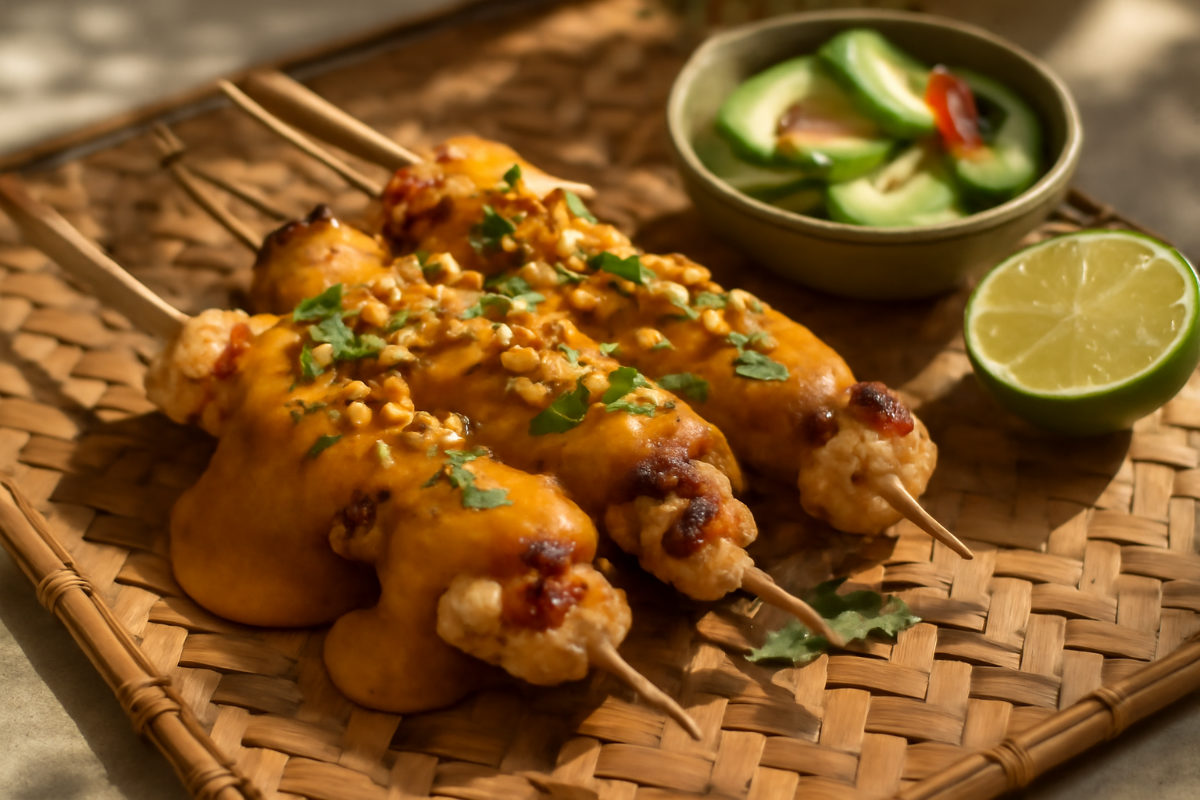
A coconut and peanut sauce in the style of Thai satay sauce, loosened into a pourable gravy with red curry paste, tamarind and palm sugar.
- Contains fish
- Dairy free
- Gluten free
- thai
- peanut
- coconut
- satay
- Prep
- 10 min
- Cook
- 20 min
- Total
- 30 min
- Serves
- 4
- Difficulty
- Easy
Thailand does not really have a gravy tradition, so it is worth being straight about what this is: a satay style peanut sauce, thinned and balanced so it behaves like one. The four way balance of salty, sour, sweet and hot is what makes it Thai rather than just a peanut sauce, so taste it at the end and push whichever corner is missing. Good over chicken, pork, noodles or roast squash.
Ingredients
Makes about 450ml, enough for four
Scaled amounts are rounded to something you can actually measure. Season at the end and trust your mouth over the maths.
Kit
- Saucepan
- Whisk
- Small bowl
Method
Open the tin of coconut milk without shaking it and spoon the thick cream from the top into a saucepan with the oil. Set over a medium heat and cook for three or four minutes until it bubbles hard and you can see the oil separating out into little pools. This is called cracking the cream and it is how Thai curries start.
Add the curry paste and fry it in that hot coconut oil for two to three minutes, stirring constantly, until it darkens a shade and smells strongly of lemongrass and chilli rather than damp paste.
Stir in the peanut butter. It will seize into a thick lump, which is normal and sorts itself out in the next step.
Pour in the rest of the coconut milk a third at a time, whisking each addition in until smooth before the next goes in.
Add the tamarind, palm sugar, fish sauce, stock and lime leaves. Bring to a gentle simmer.
Cook uncovered for ten to twelve minutes, stirring often as peanut sauces catch easily. It will thicken to a pourable gravy and darken to a soft ochre. Add a splash more stock if it goes past that.
Fish out the lime leaves. Take the pan off the heat and stir in the lime juice, then taste properly. It should hit salty, sour, sweet and hot in roughly that order of loudness. Adjust with fish sauce, lime, sugar or a pinch of chilli until it does.
Scatter the chopped peanuts over just before serving so they stay crunchy.
Tips worth knowing
- Frying the curry paste in cracked coconut cream rather than plain oil is the step people skip, and it is the one that gives the sauce its depth.
- Peanut sauce always thickens as it cools, so leave it a little looser in the pan than you want it on the plate.
- Add lime juice off the heat. Simmered lime goes bitter and you lose the fresh sourness that keeps the sauce from feeling heavy.
- For a vegan version use a vegan curry paste, since many contain shrimp paste, and replace the fish sauce with light soy sauce plus a pinch of salt.
Change it up
- Use massaman curry paste instead of red and add a pinch of ground cinnamon and cardamom for a sweeter, warmer sauce that suits beef and potatoes.
- Stir in a tablespoon of finely chopped lemongrass with the paste, and finish with Thai basil, for a fresher, more aromatic version.
- Swap the peanut butter for cashew butter to make it milder and creamier, though the sauce is then no longer peanut free of the same allergen concern.
Keeping and reheating
Keeps five days in the fridge and thickens to a solid paste when cold. Loosen with hot stock or water while reheating over a low heat. It freezes for three months but can look grainy on defrosting, which a hard whisk fixes.
Questions people ask
Is peanut sauce actually Thai?
Satay and its peanut sauce are more properly Indonesian and Malaysian in origin, though Thailand has its own well established version served with grilled skewers. This recipe follows the Thai style with red curry paste and tamarind, and it is a sauce rather than a traditional gravy.
Why did my coconut milk split?
Full fat coconut milk is meant to separate at the start, that is the cracking step. Unpleasant splitting happens with reduced fat coconut milk or when the sauce is boiled hard for a long time. Keep it at a lazy simmer and use full fat.
Can I use peanut butter with added sugar?
You can, but reduce the palm sugar to a teaspoon and taste before adding more. Sweetened peanut butter also contains palm oil and salt, so check the seasoning at the end more carefully than you would with a plain one.