Shake and Pour Jar Gravy
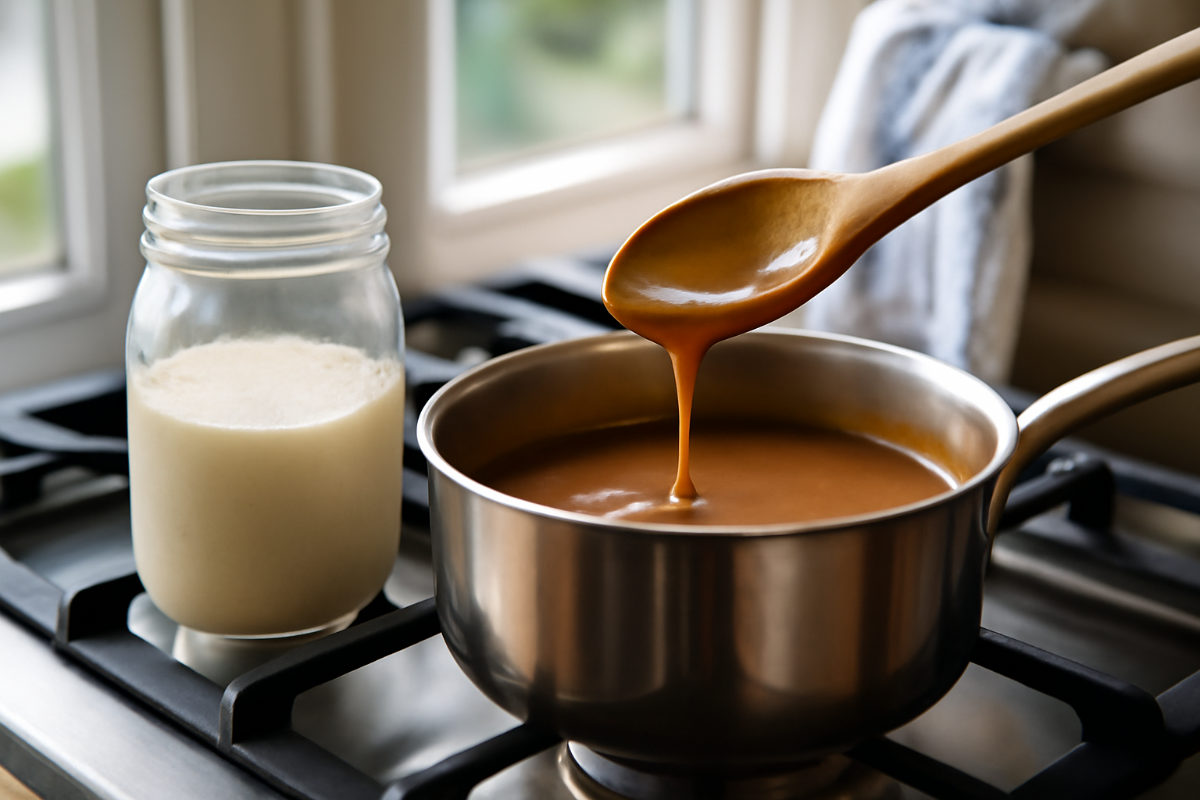
Flour and cold liquid shaken to a smooth slurry in a screw top jar, then poured into simmering stock. No roux, no whisk, no lumps, ever.
- Contains meat
- no whisk
- lump free
- jar method
- technique
- Prep
- 3 min
- Cook
- 7 min
- Total
- 10 min
- Serves
- 4
- Difficulty
- Easy
This is how a lot of country kitchens have thickened gravy for generations, and it is the most reliably lump free method there is. A jar with a tight lid does in fifteen seconds what a whisk does in two minutes, because shaking suspends every grain of flour in cold liquid before it ever meets heat. It is also the method to use if you are cooking somewhere with no whisk.
Ingredients
Makes about 450ml, enough for four plates
Scaled amounts are rounded to something you can actually measure. Season at the end and trust your mouth over the maths.
Kit
- Jam jar with a tight fitting lid
- Saucepan
- Wooden spoon
- Sieve as a backup
Method
Put the stock in a saucepan and bring it to a steady simmer over a medium heat. Get it going before you make the slurry, because the slurry will start settling the moment you put the jar down.
Put the cold water into the jar first, then add the flour on top. That order matters. Flour into water shakes clear, water onto flour packs it into a paste at the bottom of the jar that no amount of shaking will shift.
Screw the lid on properly. Check it, then check it again, because a jar of flour and water at head height with a loose lid is a genuinely bad afternoon.
Shake hard for fifteen to twenty seconds. Hold it up to the light. It should look like thin milk with no specks, no streaks and nothing gritty rolling round the bottom.
Pour about two thirds of the slurry into the simmering stock in a thin steady stream, stirring the pan the whole time with a wooden spoon. It will thicken within thirty seconds.
Judge the thickness before you add the rest. Two thirds is usually right for a pouring gravy and the whole jar makes a thick one. Adding the rest is easy, taking it back out is not.
Simmer for a full three minutes once thickened, stirring now and then. This one needs the extra time because the flour has not been cooked in fat first, and undercooked flour in a slurry gravy is the one flaw of the method.
Take it off the heat, stir in the butter until it melts, then the Worcestershire sauce, salt and pepper. The butter at the end is doing the job the roux would normally have done, which is putting fat and gloss into the gravy.
Tips worth knowing
- Cold liquid in the jar first, dry flour second. This single detail is what makes the method work.
- The slurry separates in under a minute standing still, so shake it again just before it goes in the pan even if you only made it thirty seconds ago.
- Because there is no roux, this gravy needs a longer simmer and finishing butter to taste right. Skip either and it tastes pasty.
- A jar with a rubber sealed clip lid is best. Failing that, put a square of cling film over the mouth before screwing the lid down.
Change it up
- Use cold stock in the jar instead of water for a stronger gravy, keeping the same three tablespoons of flour.
- Shake cornflour instead of plain flour, using one tablespoon to 100ml of cold water, for a gluten free version that thickens instantly and needs only a minute of simmering.
- Add a teaspoon of onion granules and half a teaspoon of mustard powder to the dry flour in the jar for a seasoned slurry you can mix ahead and keep in the cupboard.
Keeping and reheating
The finished gravy keeps three days in the fridge and three months frozen. You can also make up the dry flour and seasoning mix in a jar and keep it in the cupboard for a month, then just add cold water and shake when you need it.
Questions people ask
How do you thicken gravy without lumps?
Shake flour with cold water in a sealed jar until completely smooth, then pour it slowly into simmering liquid while stirring. Lumps form when dry flour hits hot liquid, so getting every grain wet and suspended while everything is cold prevents them completely.
Is a flour slurry as good as a roux?
It is more reliable and quicker, but a roux tastes better because cooking flour in fat gives it a toasted, nutty flavour. With a slurry you make up for that by simmering longer and stirring butter in at the end.
How much flour do I need to thicken gravy?
About three tablespoons of plain flour to 500ml of liquid gives a good pouring gravy, or four for a thick one. Always shake it with roughly three times its volume of cold water first.