Freezer to Table Gravy
How to take a block of frozen gravy and get it back to something you would be happy to pour, including the three things that go wrong and how to fix each one.
- Contains meat
- freezer
- leftovers
- make ahead
- reheating
- Prep
- 1 min
- Cook
- 10 min
- Total
- 11 min
- Serves
- 4
- Difficulty
- Easy
Frozen gravy is the best kind of leftover, but it never comes back exactly as it went in. Flour gravies can split, cornflour ones weep, and everything tastes a bit muted after a month in the cold. None of that is fatal. This is the reheating method plus the small handful of things you add on the way back up that make it taste freshly made.
Ingredients
Makes about 450ml from a 400ml frozen block, once refreshed
Scaled amounts are rounded to something you can actually measure. Season at the end and trust your mouth over the maths.
Kit
- Saucepan
- Whisk
- Stick blender if it splits
Method
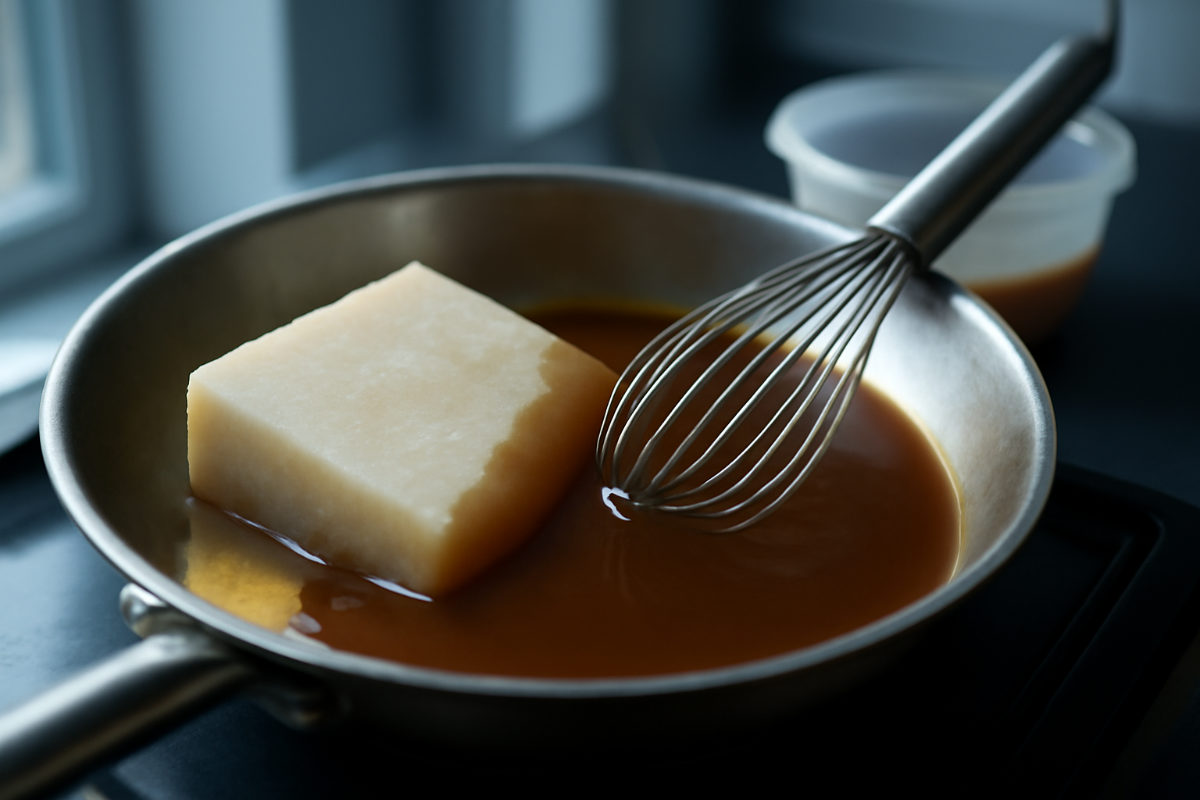
Get the block out of the tub and into a saucepan with four tablespoons of water. If it will not come out, run the outside of the tub under a hot tap for twenty seconds and it will drop out in one piece.
Start on a low heat with the lid on. Do not be tempted to go straight to a high heat, because the outside will boil while the middle is still solid and that is what causes a split.
As soon as there is enough liquid moving to whisk, start whisking gently and break the block down. It usually takes four or five minutes to go from solid to a rough slush.
Once it is fully melted, turn the heat up to medium and bring it to a proper simmer, whisking regularly. It will look thin and possibly slightly separated at this point, which is normal and not a disaster.
If it has split, meaning you can see fat sitting in beads on top or the texture has gone grainy, take it off the heat and blitz it with a stick blender for ten seconds. That brings it back together nearly every time.
If it has gone watery, which happens with cornflour thickened gravy, simmer it uncovered for three or four minutes to drive off the extra liquid, or whisk in a teaspoon of cornflour slaked in cold water.
Off the heat, whisk in the cold butter, then the soy sauce and the vinegar or lemon. Freezing dulls both savouriness and acidity, and those two spoonfuls put back most of what the freezer took.
Grind in fresh black pepper. Pepper loses its aromatics faster than almost anything else in a frozen sauce, and fresh pepper at the end does more here than in almost any other recipe.
Tips worth knowing
- Freeze gravy flat in a bag rather than in a deep block. A flat sheet thaws in a quarter of the time and reheats far more evenly.
- Flour thickened gravy freezes better than cornflour thickened gravy. If you know you are making gravy for the freezer, use a roux.
- Label the bag with the date and what meat it came from. Beef, chicken and vegetarian gravy all look identical when frozen and you will not remember.
- Never refreeze gravy that has been thawed and reheated. Make it into a stew or a pie filling instead.
Change it up
- Refresh it with a small onion softened in butter in the pan first, then melt the frozen block into that. It goes from reheated to genuinely improved.
- Add a splash of cream or a spoon of creme fraiche at the end for a richer sauce, which also helps disguise any texture problems from freezing.
- Melt it into a pan you have just fried meat in and scrape the base, which gives frozen gravy a fresh pan flavour it cannot have on its own.
Keeping and reheating
Once reheated, use within two days and keep it in the fridge, not on the side. Gravy is a low acid, protein rich liquid and it is not a good thing to leave out. Do not refreeze.
Questions people ask
Can you freeze gravy?
Yes, for about three months. Flour thickened gravy freezes best, cornflour thickened gravy tends to weep on thawing, and anything with a lot of cream in it is most likely to split. Cool it fully before freezing and use flat bags or ice cube trays.
Why has my gravy split after freezing?
The fat and the water have separated, which is what ice crystals do to an emulsion. Ten seconds with a stick blender off the heat usually brings it straight back, and whisking in a knob of cold butter afterwards helps hold it together.
How do you reheat frozen gravy quickly?
Put the block in a pan with a few tablespoons of water, lid on, over a low heat until it slushes, then turn up and whisk to a simmer. About ten minutes from solid. A microwave works too but needs thirty second bursts with a whisk between each, or the edges will boil while the centre is still frozen.