Gravy for a Sausage Sandwich
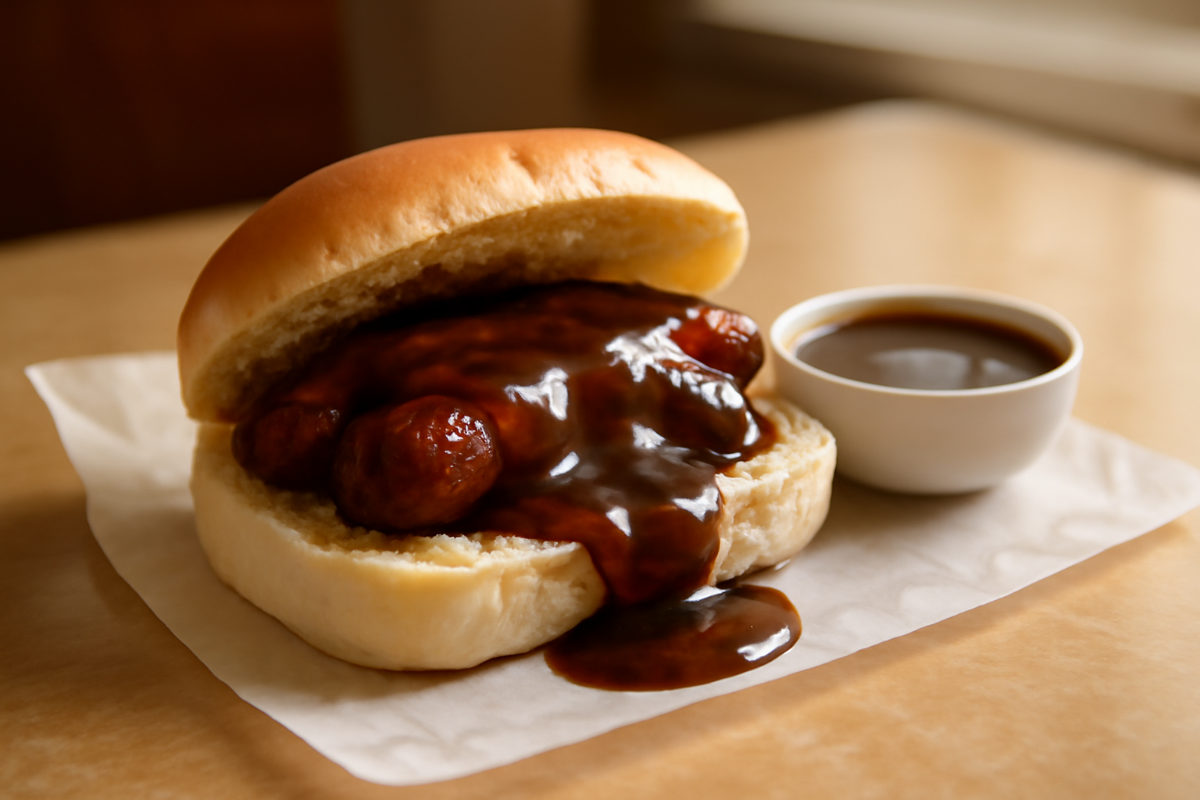
Made deliberately thick and strongly seasoned so it clings to the sausages and does not turn the bottom slice of bread into a wet rag.
- Contains meat
- sandwich
- thick gravy
- dipping
- butty
- Prep
- 2 min
- Cook
- 8 min
- Total
- 10 min
- Serves
- 2
- Difficulty
- Easy
A sausage sandwich with gravy is one of the great British inventions and it is ruined more often by the gravy than by anything else. Ordinary pouring gravy goes straight through the bread. This one is thickened harder, seasoned stronger and made in a smaller quantity, so it behaves more like a sauce than a liquid and stays where you put it.
Ingredients
Makes about 200ml, enough for two big sandwiches
Scaled amounts are rounded to something you can actually measure. Season at the end and trust your mouth over the maths.
Kit
- Small saucepan
- Whisk
- Small bowl for dipping
Method
Melt the butter in a small pan over a medium heat and stir in the flour. Note the ratio here is heavier on flour than a normal gravy, because you are aiming for something closer to a coating sauce.
Cook the roux for a full minute and a half, stirring, until it goes properly biscuit coloured. A darker roux thickens slightly less but tastes much better, and in a sandwich the gravy is not competing with potatoes so the flavour has to stand up on its own.
Add the hot stock a third at a time, whisking hard between each. It will be noticeably thicker than a normal gravy at every stage, so put a bit more effort into the whisking.
Bring it to a simmer and cook for four minutes. You want it thick enough that a spoon dragged through it leaves a channel that closes slowly rather than instantly.
Stir in the mustard, brown sauce and vinegar. Season hard with black pepper. A sandwich gravy needs to be more assertive than a dinner gravy because bread and butter mute everything.
Test it on a bit of bread before you commit. Spoon a little onto a crust and see whether it sits on top or soaks straight through. If it soaks, simmer it for another two minutes.
Build the sandwich with butter on both slices, which forms a barrier against the gravy, then the sausages, then the gravy spooned over the sausages rather than onto the bread. Serve any extra in a small bowl for dipping the corners.
Tips worth knowing
- Butter both slices of bread right to the edges. It is not just for flavour, the fat genuinely slows the gravy soaking through.
- White bloomer or a soft bap holds up better than thin sliced bread, which surrenders immediately.
- Make it thicker than you think. It loosens as soon as it hits the hot sausages, so what looks slightly too thick in the pan is usually right on the plate.
- If you have fried the sausages yourself, make this in the sausage pan and cut the butter to 10g, since there will be rendered fat in there already.
Change it up
- Add a finely chopped fried onion for a full onion gravy sandwich, which is heavier but arguably the definitive version.
- Stir in a tablespoon of grated strong cheddar off the heat for a cheesy gravy that goes very well with a bacon and sausage sandwich.
- Use a chicken stock and swap the brown sauce for cranberry sauce to make a leftover Christmas turkey sandwich gravy.
Keeping and reheating
Two days in the fridge. It sets very solid because of the extra flour, so add a good splash of water when reheating and whisk properly. Freezes for three months but comes back thicker still, so plan for that.
Questions people ask
How do you stop gravy making a sandwich soggy?
Make the gravy thicker than usual, butter both slices of bread to the edges, and spoon the gravy over the filling rather than directly onto the bread. Serving extra gravy in a dipping bowl on the side is the other honest answer.
How do you make gravy thicker for a sandwich?
Use more flour for the same amount of liquid, around two tablespoons to 300ml instead of the usual one and a half, and simmer it a couple of minutes longer to reduce. A cornflour slurry whisked in at the end will also thicken it fast if you have already made it too thin.
What is a gravy butty?
A sandwich, usually with sausages or chips in it, with gravy poured over the filling. It is a northern English staple and the gravy is normally thick and strongly flavoured rather than the thin pouring gravy you would put on a roast.