Instant Gravy with Pan Scrapings
Whatever you just fried leaves a fortune stuck to the pan. Deglaze it, whisk in granules, and you have real gravy in ninety seconds.
- Contains meat
- deglazing
- gravy granules
- steak
- chops
- fastest
- Prep
- 1 min
- Cook
- 3 min
- Total
- 4 min
- Serves
- 2
- Difficulty
- Easy
This is less a recipe than a habit worth getting into. Any time you fry a chop, a steak, a chicken thigh or a couple of burgers, there is browned residue on the base of the pan that is worth more than most of what goes into a gravy from scratch. Granules do the thickening. All you do is get the brown off the pan and into the liquid.
Ingredients
Makes about 250ml, enough for two plates
Scaled amounts are rounded to something you can actually measure. Season at the end and trust your mouth over the maths.
Kit
- The frying pan you just cooked in
- Wooden spoon
- Small whisk
- Kettle
Method
Lift the meat out of the pan onto a warm plate to rest and turn the heat down to medium. Pour off any fat that is genuinely pooling, but leave the pan looking oily rather than dry.
Have a proper look at what is stuck on. Dark brown and glossy is exactly what you want. Black and matte is burnt, and if a good third of the pan looks like that then wipe it out and start with fresh stock instead, because burnt residue makes bitter gravy.
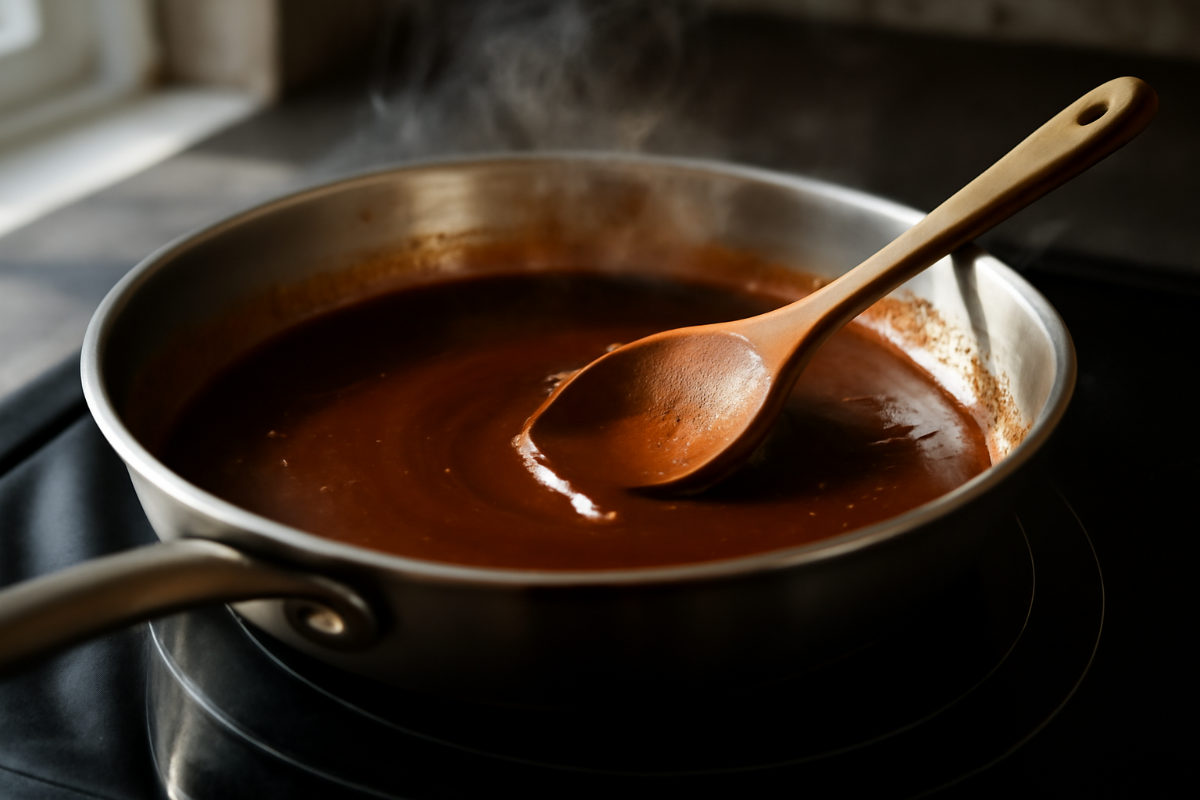
Pour in about a third of the boiling water. It will hiss and steam violently for a few seconds. Immediately start scraping the base with a wooden spoon, working across the whole pan, until every stuck on bit has lifted into the liquid and the base is clean metal again.
Add the rest of the water, then sprinkle in the granules while whisking. They thicken in about ten seconds, so the whisk needs to be moving before they land.
Let it bubble for a minute, still whisking now and then, and it will darken and gloss up.
Off the heat, stir in the brown sauce or jelly and drop in the cold butter, swirling the pan until it disappears. Pepper it, then tip in any juices from under the resting meat and pour straight onto the plate.
If the residue was heavy and the gravy has come out too intense, let it down with a splash more hot water. Concentrated pan gravy is a good problem to have.
Tips worth knowing
- Deglaze while the pan is still hot. Once it cools the residue goes hard and clings, and you will spend twice as long scraping for half the flavour.
- A stainless steel or cast iron pan gives you far more browned residue than a non stick one. Non stick works, there is just less to scrape.
- Do not tip wine or spirits straight into a very hot pan on a gas hob without taking it off the flame first. Water is safer and does almost the same job.
- Granules already contain salt, colouring and thickener, so nothing else needs adding except the acid or sweetness at the end.
Change it up
- After lamb chops, add a teaspoon of mint sauce with the granules and a crushed garlic clove to the pan just before deglazing.
- After steak, crush half a teaspoon of black peppercorns into the pan before the water and finish with a tablespoon of double cream instead of the butter.
- After chicken thighs, use a chicken cube in the water and finish with a squeeze of lemon rather than brown sauce.
Keeping and reheating
Best eaten straight away, this is a pour it now gravy. It will keep two days in the fridge if you have made too much. Do not freeze, because the small quantity reheats unevenly.
Questions people ask
What is deglazing a pan?
Adding liquid to a hot pan to dissolve the browned residue stuck to the base, then scraping it up so it becomes part of the sauce. That residue is where most of the roasted flavour in a pan gravy comes from, and washing the pan without deglazing it throws that away.
Can I use water instead of stock for gravy?
In this recipe yes, because the pan residue and the granules between them supply the flavour and the seasoning. In a gravy with nothing else going on, water alone gives you a thin, papery result and you want stock.
My pan is burnt, can I still make gravy?
If the residue is dark brown you are fine. If it is black and smells acrid, no. Burnt sugars and burnt protein are bitter and no amount of butter or jelly will hide it. Wipe the pan, start again with stock, and take the loss.