Gravy from a Roast Chicken Tray
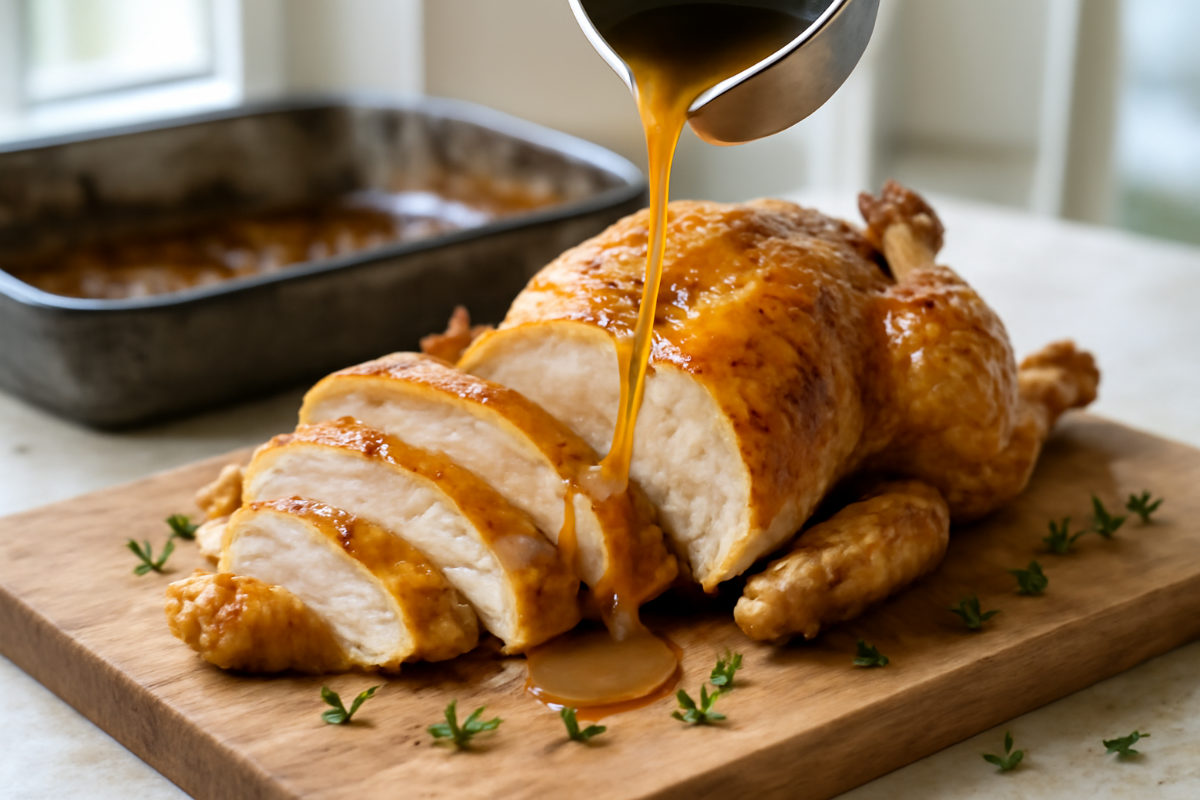
Everything left in the tray after a roast chicken, shop bought or home cooked, turned into gravy in about ten minutes.
- Contains meat
- roast chicken
- pan juices
- shop bought chicken
- tray gravy
- Prep
- 3 min
- Cook
- 8 min
- Total
- 11 min
- Serves
- 4
- Difficulty
- Easy
A roast chicken tray, even the flimsy foil one under a supermarket hot chicken, holds a couple of tablespoons of liquid gold. Most of it goes in the bin. Do this instead and you get gravy with almost no other ingredients, because the tray has already done the hard part for you.
Ingredients
Makes about 400ml, enough for four plates
Scaled amounts are rounded to something you can actually measure. Season at the end and trust your mouth over the maths.
Kit
- Roasting tin, or a saucepan if the tray is foil
- Wooden spoon
- Whisk
- Small jug for separating fat
Method
Lift the chicken out and let it rest on a board or a warm plate. Tip everything from the tray into a small jug and give it two minutes to settle. The clear fat rises to the top and the darker, jellied juices sink.
Spoon two tablespoons of the fat off the top and put it in a roasting tin or small saucepan. Keep the dark juices underneath separately, they go in later and they are the good bit.
If the tray is a sturdy tin, put it straight over a hob ring on medium heat. If it is a flimsy foil tray from the supermarket, do not, it will buckle. Instead pour a splash of hot stock into the foil tray, scrape it out thoroughly with a spoon and add all of that to a proper saucepan with the fat.
Heat the fat until it shimmers, sprinkle in the flour and stir it to a paste. Cook for a minute over medium heat until it smells toasty and has gone a shade darker.
Pour in a third of the hot stock and whisk, scraping the base hard. Any browned residue in the tin should release into the liquid. Add the rest of the stock and whisk smooth.
Simmer for four minutes until it thickens enough to coat a spoon, then pour in the reserved dark juices from the jug along with anything that has leaked out of the resting chicken.
Finish with lemon juice, the mustard if you are using it, and black pepper. A shop bought chicken is usually well salted already, so taste before you reach for the salt tin.
Strain it if there is a lot of loose herb or skin in there, or leave it rustic. Either way pour it into a warm jug, because chicken gravy goes cold quickly.
Tips worth knowing
- Separate the fat from the juices rather than using the lot. Two tablespoons of fat is what you need for one tablespoon of flour, and everything above that just makes it greasy.
- Supermarket hot chickens are seasoned heavily, so their tray juices are salty. Use a low salt stock cube or half a cube plus water if you are working with one.
- Do not put a foil tray directly over a flame. They buckle, they tear and you will lose the lot down the back of the hob.
- If the tray had lemon, garlic or herbs in it, squash them into the liquid with a fork before you strain. There is real flavour left in a roasted garlic clove.
Change it up
- Add a splash of white wine or vermouth to the tin before the stock and let it bubble down by half. Use apple juice with a squeeze of lemon for an alcohol free version with the same lift.
- Stir in two tablespoons of double cream and a handful of chopped tarragon at the end for a creamy chicken gravy.
- Add a rasher of streaky bacon snipped into the fat at the start and fry it until crisp for a smokier gravy.
Keeping and reheating
Three days in the fridge and three months frozen. If you are freezing it, do it the same day. Gravy made with tray juices from a chicken that has been sitting warm on a counter for hours is not one to keep hanging about.
Questions people ask
Can you make gravy from a shop bought roast chicken?
Yes, and it is one of the best shortcuts going. The tray under a hot supermarket chicken holds seasoned fat and concentrated juices. Scrape it all out, use the fat for a small roux and the juices as flavouring, and top up with stock.
Should I use all the fat from the roasting tin?
No. Use about two tablespoons of fat for every tablespoon of flour and pour the rest off. Excess fat cannot be absorbed by the flour and will float on top of the finished gravy as a greasy slick.
Why is my chicken gravy pale?
Chicken juices are lighter than beef and a roux made with chicken fat browns less. Cook the roux a full minute longer, add a teaspoon of soy sauce, or brown a little tomato puree in the fat first. Do not just add gravy browning and hope, because colour without flavour tastes odd.