Rabbit Gravy
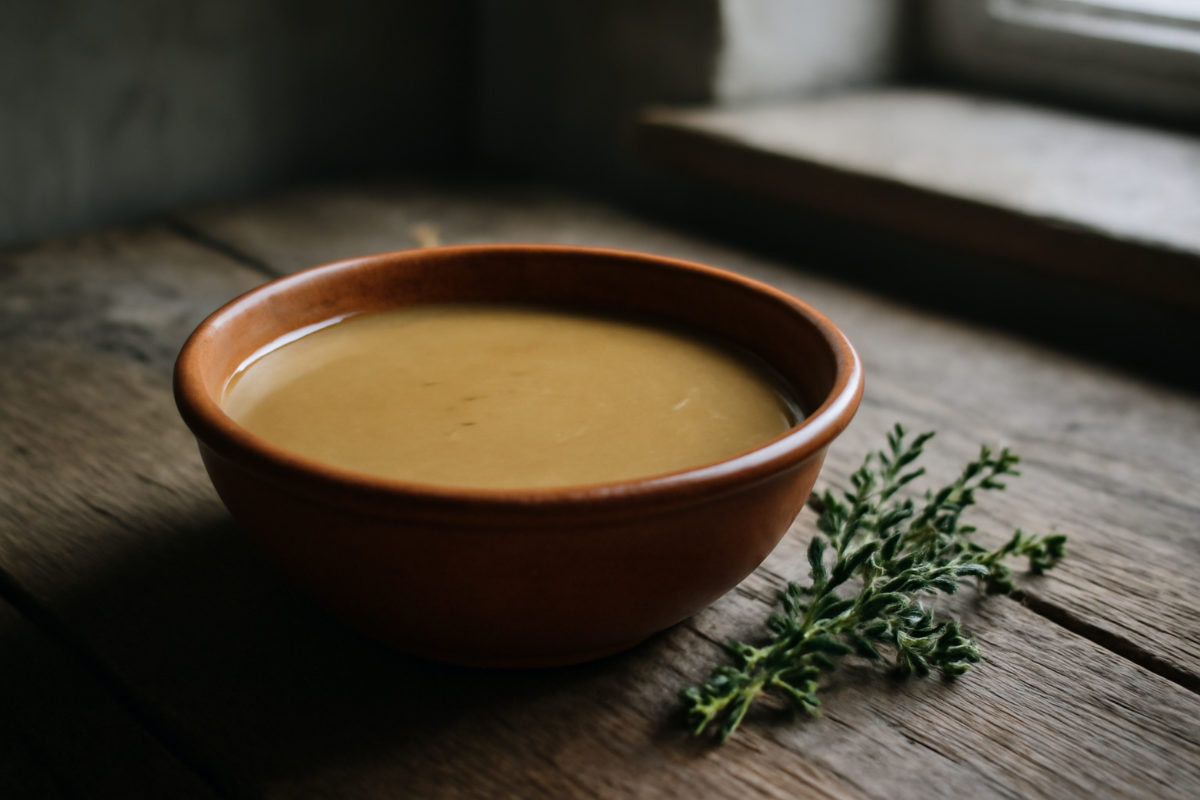
Rabbit carcass and bones browned in butter, simmered with cider and thyme, then finished with a spoon of mustard to cut the leanness.
- Contains meat
- rabbit
- game
- cider
- mustard
- farmhouse
- Prep
- 20 min
- Cook
- 3 hr 15 min
- Total
- 3 hr 35 min
- Serves
- 4
- Difficulty
- Medium
Rabbit is very lean, so the stock is delicate rather than rich and it needs some help. Butter for browning, cider for acidity and mustard at the end give you a gravy with enough going on to stand beside the meat. This is a farmhouse sauce, not a restaurant one.
Ingredients
Makes about 400ml
Scaled amounts are rounded to something you can actually measure. Season at the end and trust your mouth over the maths.
Kit
- Heavy frying pan
- Saucepan
- Fine sieve
- Whisk
Method
Chop the carcass into pieces with a heavy knife. Melt the 30g of butter in a wide frying pan over medium high heat and brown the bones for 10 to 12 minutes, turning them, until they are properly golden. Rabbit carries almost no fat so butter is doing the browning work here, and you need to watch it does not burn.
Add the onion, carrot, celery and garlic and cook another 6 minutes until the vegetables take colour.
Pour in the cider and let it bubble down by half, scraping the base of the pan clean as it goes.
Tip everything into a saucepan, cover with 1.2 litres of cold water and bring slowly to a simmer, skimming as it comes up. Add the thyme and bay.
Simmer gently for 2.5 hours. Rabbit bones are small and fine so this is plenty, and pushing longer gives a slightly dusty flavour rather than more depth.
Strain and reduce the resulting 900ml or so down to 500ml over about 15 minutes to concentrate it.
Make a roux with the 20g of butter and the flour, cooking for 2 minutes to pale gold, then whisk in the hot stock in stages. Simmer 5 minutes until it just coats a spoon.
Off the heat, stir in the mustard and the cream if using. Mustard loses its heat if you boil it, so it always goes in at the end. Season well, because lean meat gravies need more salt than fatty ones.
Tips worth knowing
- Butter rather than oil for browning. Rabbit is so lean that the milk solids in butter provide most of the browned flavour.
- Wild rabbit gives a stronger, gamier stock than farmed. If you are using wild, cut the simmer to two hours.
- Keep the kidneys and liver back and fry them for the cook. They are excellent and they do not belong in the stock.
- Two teaspoons of Dijon is the balance point. More and the mustard takes over from the rabbit.
Change it up
- Fry 60g of chopped smoked bacon with the vegetables for a richer, smokier gravy that works well over pappardelle.
- Swap the cider for unsweetened apple juice with a tablespoon of cider vinegar for a non-alcoholic version with the same balance.
- Add a handful of chopped tarragon at the end instead of the mustard for something lighter and more French.
Keeping and reheating
Stock keeps three days chilled and three months frozen. Gravy keeps two days but the mustard fades, so add a little fresh when you reheat it.
Questions people ask
Can you make stock from a rabbit carcass?
Yes, and it is worth doing since rabbit is usually sold whole. Chop the ribcage, spine and forelegs and brown them in butter first, then simmer for two and a half hours. It gives a delicate, pale golden stock rather than a heavy one.
Does rabbit gravy taste gamey?
Farmed rabbit is very mild and tastes closer to chicken than game. Wild rabbit is noticeably stronger and more savoury. Either way the mustard and cider in this recipe balance it, and neither will taste anything like the strong flavour of hare.
What do you serve rabbit gravy with?
Roast or braised rabbit obviously, but it is also very good over pappardelle, with pot roast chicken, or poured over mashed potato with buttered greens. It goes with anything mild that needs some acidity alongside it.