Thanksgiving Style Turkey Gravy
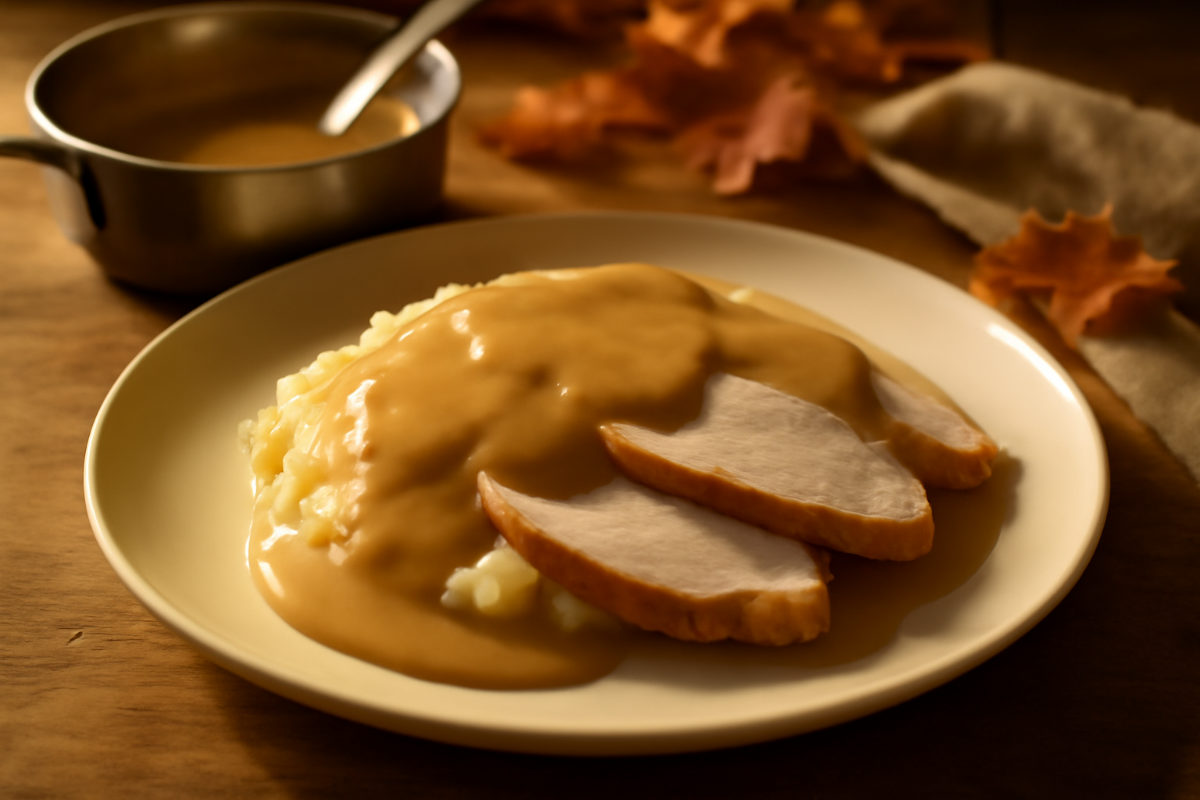
A thicker, sage heavy American style gravy with the chopped giblets left in, made to be ladled generously over turkey, stuffing and mash.
- Contains meat
- turkey
- thanksgiving
- giblets
- sage
- Prep
- 15 min
- Cook
- 2 hrs
- Total
- 2 hr 15 min
- Serves
- 10
- Difficulty
- Medium
American gravy is a different animal to British gravy. It is thicker, paler, heavier on the sage, and it is expected to sit on the plate rather than run off it. The giblets get chopped and stirred back in, which people either love or pick out. If you are doing a Thanksgiving table in the UK, this is the one to make.
Ingredients
Makes about 1.2 litres, ladled generously
Scaled amounts are rounded to something you can actually measure. Season at the end and trust your mouth over the maths.
Kit
- Saucepan
- Roasting tin
- Whisk
- Sieve
- Chopping board
Method
Simmer the giblets with the onion, celery, carrot, bay and water for two hours, keeping it at a bare tremble and skimming early. Strain, keeping both the stock and the giblets. You want about 1.1 litres of stock, so boil it down if you have more.
Pull the meat off the neck with your fingers, which is fiddly but worth it, and finely chop the heart and gizzard. Set the chopped meat aside. This is what makes it giblet gravy rather than turkey gravy.
When the turkey comes out, rest it for at least thirty minutes. Pour the fat from the tin into a jug and let it settle, then measure three tablespoons of the clear fat back into a large saucepan and add the butter.
Set the pan over a medium heat and whisk in the flour. Cook it for three minutes, longer than you would for a British gravy, until it is a smooth pale blond paste and smells strongly of toasted biscuit. An American gravy carries more flour so the flour has to be properly cooked.
Pour a ladleful of the hot stock into the roasting tin and scrape the residue up, then tip that and the rest of the stock into the roux a little at a time, whisking each addition until completely smooth before adding the next.
Add the sage and thyme and simmer for twelve minutes, stirring often, until it is thick enough to hold a channel when you drag a spoon through it. It should be noticeably thicker than a British roast gravy.
Stir in the chopped giblet meat and the resting juices from the board, bring back to a simmer for two minutes so the raw juices are cooked through, then add the milk if using. Season hard with black pepper and check the salt.
Tips worth knowing
- Rubbed sage, not ground. Ground sage is dusty and tastes medicinal in quantity, rubbed sage is fluffy and much closer to fresh.
- This gravy thickens dramatically as it sits. Keep a mug of hot stock beside the jug to let it down between first plates and seconds.
- If anyone objects to the giblets, ladle out a jugful before you stir them in. It is a genuine dividing line at some tables.
- American recipes call for a cup of flour to a quart of stock in places, which is far too much for British tastes. The 70g here gives a proper Thanksgiving thickness without turning to wallpaper paste.
Change it up
- Leave the giblets whole in the stock and strain them out for a smooth gravy that still tastes of them.
- Add 100g of crumbled cooked sausagemeat or a few spoonfuls of the stuffing at the end for a rougher, heartier gravy.
- Stir a tablespoon of bourbon into the finished gravy off the heat, or a teaspoon of maple syrup and a splash of cider vinegar if you would rather not use spirits.
Keeping and reheating
Cool quickly in shallow trays and refrigerate for three days or freeze for three months. The giblet meat freezes fine. It sets very firm because of the flour, so reheat with a splash of stock, whisking, and bring it to a rolling boil before it goes back on the table.
Questions people ask
What is the difference between British and American turkey gravy?
American gravy uses roughly twice the flour, so it is thicker and paler, and it leans on sage and black pepper rather than wine or Worcestershire sauce. British gravy is thinner, darker and usually deglazed with something alcoholic. Neither is wrong, they are built for different plates.
Do you have to use the giblets?
No, but the stock is much better for them and it costs nothing. If the bird came without giblets, use 500g of turkey wings simmered the same way. Chopping the cooked meat back into the gravy is optional in any case.
How do I make gravy thicker without lumps?
Make a beurre manie by mashing equal weights of soft butter and plain flour into a paste, then whisk small pieces of it into the simmering gravy. It disperses smoothly where dry flour would clump, and it takes about two minutes of simmering to lose the raw taste.