Bread Sauce Gravy
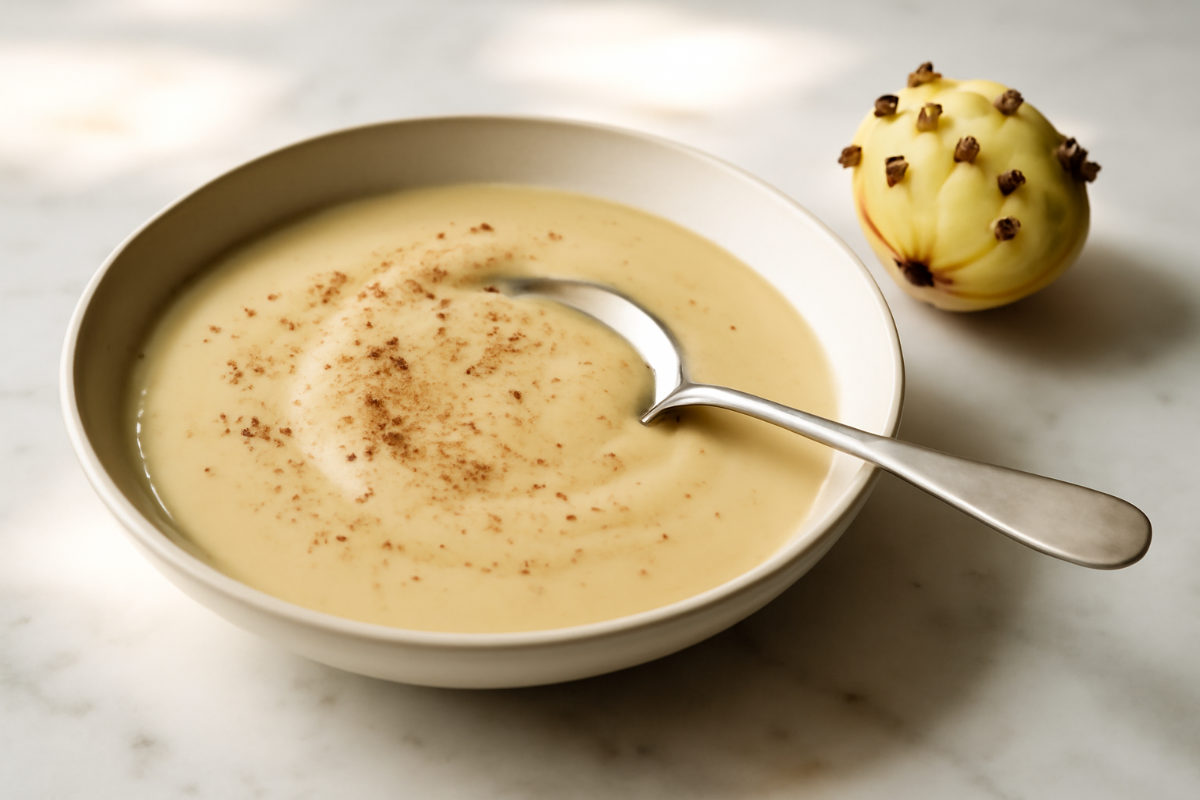
The two great turkey sauces folded into one: clove and bay infused milk enriching a proper pan gravy, thickened by bread rather than flour.
- Contains meat
- turkey
- christmas
- bread sauce
- creamy
- Prep
- 10 min
- Cook
- 30 min
- Total
- 40 min
- Serves
- 8
- Difficulty
- Easy
Every year somebody at the table puts bread sauce and gravy on the same forkful and decides it is the best thing on the plate. This is that forkful made deliberate. It is thicker than a normal gravy and paler, somewhere between a sauce and a gravy, and it is very good with turkey, chicken and cold ham.
Ingredients
Makes about 800ml, enough for eight plates
Scaled amounts are rounded to something you can actually measure. Season at the end and trust your mouth over the maths.
Kit
- Small saucepan
- Roasting tin or wide pan
- Stick blender
- Sieve
Method
Put the milk, clove studded onion, bay, peppercorns and mace in a small pan and bring it to just under a simmer. Take it off the heat, cover, and leave it to infuse for at least twenty minutes. An hour is better and it can sit all afternoon.
Strain the milk and discard the aromatics, keeping the onion if you want a stronger flavour. Return the milk to the pan, add the torn bread and warm it over a low heat for five minutes, stirring, until the bread collapses into a thick paste.
Meanwhile, lift the turkey out to rest. Pour off all but two tablespoons of fat from the roasting tin, set it over a medium heat and pour in a ladleful of the hot stock. Scrape the base hard with a wooden spoon until every bit of the brown residue has lifted.
Add the rest of the stock to the tin and let it bubble for five minutes to concentrate. You want it reduced by about a fifth and tasting properly of turkey, since the milk is going to soften everything that follows.
Whisk the bready milk into the stock a spoonful at a time. It will look curdled and wrong for a moment. Keep whisking and it comes together into a pale beige sauce with the texture of thin custard.
Blitz it smooth with a stick blender for twenty seconds, then push it through a sieve into a clean pan if you want it properly silky. Bread leaves a slight grain and some people like that, so taste it first and decide.
Bring it back to a bare simmer, take it off the heat and whisk in the cold butter a cube at a time until it turns glossy. Add the resting juices, bring it back to a simmer for a minute, then season with salt and white pepper and a final grating of nutmeg.
Tips worth knowing
- Stale bread, not fresh. Fresh bread turns gluey and the sauce ends up like wallpaper paste. Day old sourdough or a plain white tin loaf both work.
- This one skins faster than any other gravy on the site because of the milk. Lay clingfilm or greaseproof straight onto the surface the moment it goes in the jug.
- Do not let it boil hard after the milk goes in. A rolling boil for more than a minute or two makes it grainy and can catch on the base.
- It thickens a lot as it stands. Make it looser than you think you need and hold back a mug of hot stock to let it down just before serving.
Change it up
- Stir in two tablespoons of double cream at the very end for a richer version that eats more like a sauce than a gravy.
- Fry a finely chopped onion in the turkey fat before adding the stock for a sweeter, more textured result.
- Use half chicken stock and half ham stock for serving with a cold cut plate on Boxing Day.
Keeping and reheating
Keeps two days in the fridge, no more, because of the milk and bread. Cool it quickly in a shallow dish. It does not freeze well, the bread goes grainy and the milk separates. Reheat gently, whisking, with a splash of milk or stock, and bring it to a full simmer.
Questions people ask
Can you mix bread sauce and gravy?
Yes, and it works better than it has any right to. The trick is to reduce the stock hard first so the turkey flavour is strong enough to stand up to the milk, and to use enough bread that it thickens without needing flour as well.
Why has my bread sauce gravy split?
Usually too much heat after the milk went in. Take it off the hob, add a splash of cold milk and blitz it with a stick blender, which pulls it back together nine times out of ten. Keep it at a bare simmer from then on.
What is mace and can I leave it out?
Mace is the lacy outer covering of the nutmeg seed, warmer and less sweet than nutmeg itself. If you cannot find a blade of it, a quarter teaspoon of grated nutmeg does the job. It is not worth a special trip.