Christmas Gravy with Sherry and Sage
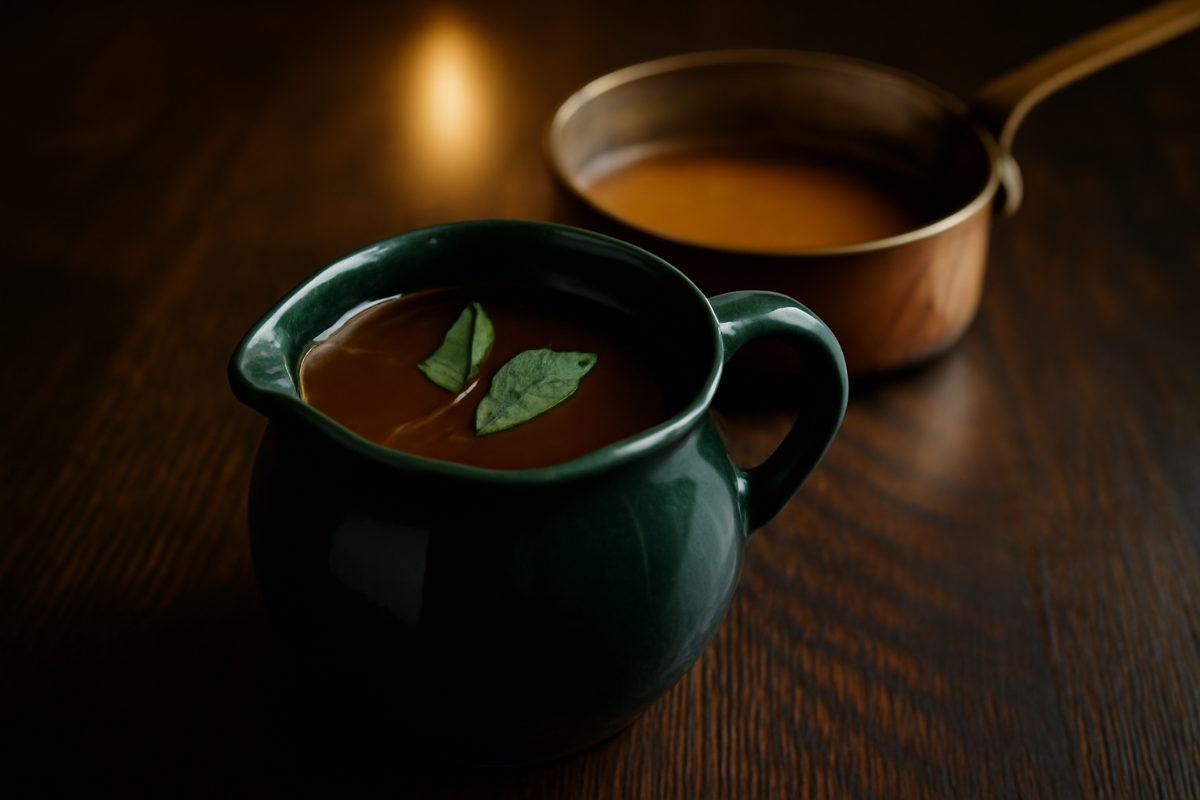
Dry oloroso sherry reduced into a turkey pan gravy and finished with sage fried in brown butter until crisp.
- Contains meat
- sherry
- sage
- christmas
- turkey
- Prep
- 10 min
- Cook
- 25 min
- Total
- 35 min
- Serves
- 8
- Difficulty
- Easy
Sherry is the most underused bottle in a British Christmas and it does something to a turkey gravy that wine cannot. Dry oloroso brings nuttiness and a slight bitterness that stops the whole plate being sweet. The sage goes in twice, once in the gravy and once crisped in brown butter over the top.
Ingredients
Makes about 800ml, enough for eight plates
Scaled amounts are rounded to something you can actually measure. Season at the end and trust your mouth over the maths.
Kit
- Roasting tin
- Small frying pan
- Whisk
- Fine sieve
- Kitchen paper
Method
Lift the turkey out to rest for at least thirty minutes. Pour the fat off the tin down to three tablespoons, keeping all the residue, and set the tin over a medium heat on two rings if it is a big one.
Soften the shallots in the fat for four minutes, then add the shredded sage and cook for another minute. Sage cooked in fat like this loses its slightly dusty edge and turns savoury.
Stir in the flour and cook it for two full minutes, scraping the tin base. It should go the colour of a digestive biscuit and smell nutty rather than of raw flour.
Pour in the sherry and whisk hard as it bubbles up. Keep scraping until the tin is clean, then let it reduce by about half, three or four minutes, so the sharpness of the sherry cooks off and the nuttiness stays.
Add the hot stock in three additions, whisking each smooth before the next, and bring to a simmer. Cook for ten minutes until it coats the back of a spoon, then strain through a fine sieve into a clean pan.
While it simmers, melt the butter in a small frying pan over a medium heat. When it stops foaming and the solids at the bottom turn the colour of hazelnuts, drop in the whole sage leaves. They will crisp in about twenty seconds. Lift them onto kitchen paper.
Add the resting juices to the strained gravy, bring back to a simmer for a minute, then whisk in most of the brown butter from the frying pan. Sharpen with the sherry vinegar, season, and float the crisp sage leaves on top just before it goes to the table.
Tips worth knowing
- Dry oloroso or amontillado, not cream sherry. Cream sherry is sweet and will make the gravy taste like trifle.
- Brown butter goes from hazelnut to burnt in about fifteen seconds. Take the pan off the heat as soon as the smell changes and let the residual heat finish it.
- Crisp the sage leaves at the last minute. They soften within five minutes of hitting the hot gravy, so they are a garnish, not an ingredient.
- A bottle of dry sherry keeps a couple of weeks open in the fridge and is worth having in December for exactly this. It also improves any mushroom soup you make in January.
Change it up
- Leave the sherry out and use 200ml of extra stock reduced with a tablespoon of sherry vinegar and a teaspoon of light brown sugar.
- Add 100g of chopped chestnuts with the shallots for a version that carries the flavour of the stuffing into the jug.
- Swap the sage for rosemary and the sherry for Marsala for a gravy better suited to pork or a roast chicken.
Keeping and reheating
The gravy without the brown butter and crisp sage keeps three days in the fridge and three months in the freezer, cooled quickly in a shallow tray. Reheat to a rolling boil, then whisk in fresh brown butter and fry fresh sage leaves. Reheated crisp sage is limp and pointless.
Questions people ask
What sherry is best for gravy?
A dry oloroso, which has the nutty depth without the sugar. Amontillado works too. Avoid cream sherry and pale cream, which are sweetened and will unbalance a savoury gravy. Fino is dry enough but too delicate to survive being reduced.
Can I use cooking sherry?
You can, but supermarket cooking sherry is usually salted, which matters a great deal in a gravy you are going to reduce. If you use it, do not add any salt until the very end and expect to need less than usual.
Is sage too strong for gravy?
Not if you cook it in fat first. Raw or boiled sage tastes medicinal and slightly furry, but frying it in butter or turkey fat mellows it into something savoury and nutty. Eight shredded leaves in 800ml is assertive but not overwhelming.