Stilton and Port Gravy
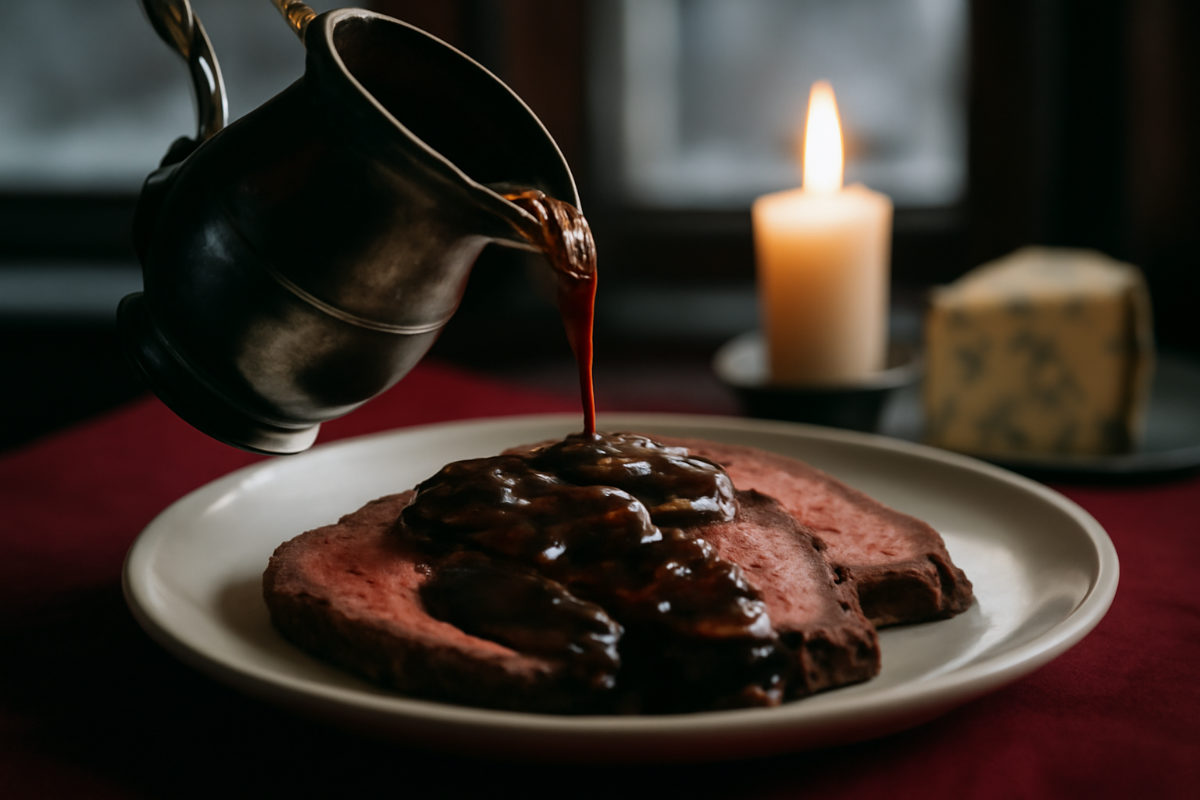
Port reduced to a syrup with thyme and shallot, built with beef stock and a little cream, then finished off the heat with crumbled Stilton.
- Contains meat
- stilton
- port
- christmas
- beef
- Prep
- 8 min
- Cook
- 25 min
- Total
- 33 min
- Serves
- 6
- Difficulty
- Medium
This is a Christmas Day sort of gravy, dark and slightly sweet from the port with the Stilton coming through at the end. Keep the cream quantity small. The cheese brings plenty of fat of its own, and too much dairy turns what should be a gravy into a cheese sauce.
Ingredients
Makes about 400ml, enough for six plates
Scaled amounts are rounded to something you can actually measure. Season at the end and trust your mouth over the maths.
Kit
- Saucepan
- Fine sieve
- Wooden spoon
Method
Melt the butter in the saucepan over a medium heat and cook the shallots with the thyme sprigs for five minutes until soft and just starting to colour.
Pour in the port and turn the heat up. Boil it hard for five to six minutes until it has reduced to about three tablespoons and coats the base of the pan in a glossy syrup. Port is sweet and acidic, and both of those need concentrating and softening before dairy joins in.
Add the beef stock and simmer briskly for ten minutes until reduced by around a third. It should look dark and just starting to thicken on its own.
Fish out the thyme sprigs, or pour the sauce through a fine sieve into a clean pan if you want it completely smooth.
Lower the heat, stir in the double cream and warm it through for two minutes at a bare simmer. It will turn from dark brown to a deep milky brown.
Take the pan right off the heat. Wait a few seconds for it to stop moving, then stir in the crumbled Stilton in three lots, letting each one melt before the next goes in. It should melt smoothly in about a minute using nothing but the heat left in the pan.
Grind in black pepper and taste. Stilton carries a lot of salt, so it will almost certainly need none added. Pour into a warmed jug and serve at once.
Tips worth knowing
- Never boil the sauce after the Stilton is in. Blue cheese splits into oil and grit at a simmer, and once that has happened there is no reliable way back.
- Ruby port rather than tawny. Ruby is fruitier and keeps its colour, while tawny goes slightly nutty and can make the gravy look muddy.
- Take the rind off the Stilton before crumbling. It does not melt properly and leaves little chewy pieces suspended in an otherwise smooth gravy.
- If you are serving this at Christmas, make the port and stock base a day ahead and add the cream and cheese in the ten minutes before you sit down.
Change it up
- Leave out the port and use 150ml of dark grape juice with a teaspoon of balsamic vinegar, reduced right down, for an alcohol free version with similar depth.
- Swap the Stilton for a good mature Cheddar for something less assertive that children will actually eat.
- Add 50g of chopped walnuts, toasted in a dry pan, scattered over the finished gravy for texture with roast beef.
Keeping and reheating
Keeps two days in the fridge. It sets firm and needs coaxing back, so reheat very slowly with a splash of stock, stirring the whole time, and take it off well before it bubbles. Do not freeze, as the blue cheese separates on thawing.
Questions people ask
Can you put Stilton in gravy?
Yes, but it must go in off the heat at the end. Stilton is a high fat, crumbly cheese that separates if it boils. Build and season the gravy first, then take the pan off the hob and stir the cheese through in stages.
What do you serve Stilton and port gravy with?
Roast beef, beef Wellington and steak are the obvious ones. It also works very well with a nut roast, with roast celeriac and over a baked potato on Boxing Day when you are using things up.
Do I have to reduce the port?
Yes. Unreduced port leaves the gravy tasting boozy and slightly harsh, and its acidity makes the cream and cheese far more likely to split. Boil it down until it is syrupy and coats the pan, which takes about five minutes.