Soured Cream Gravy
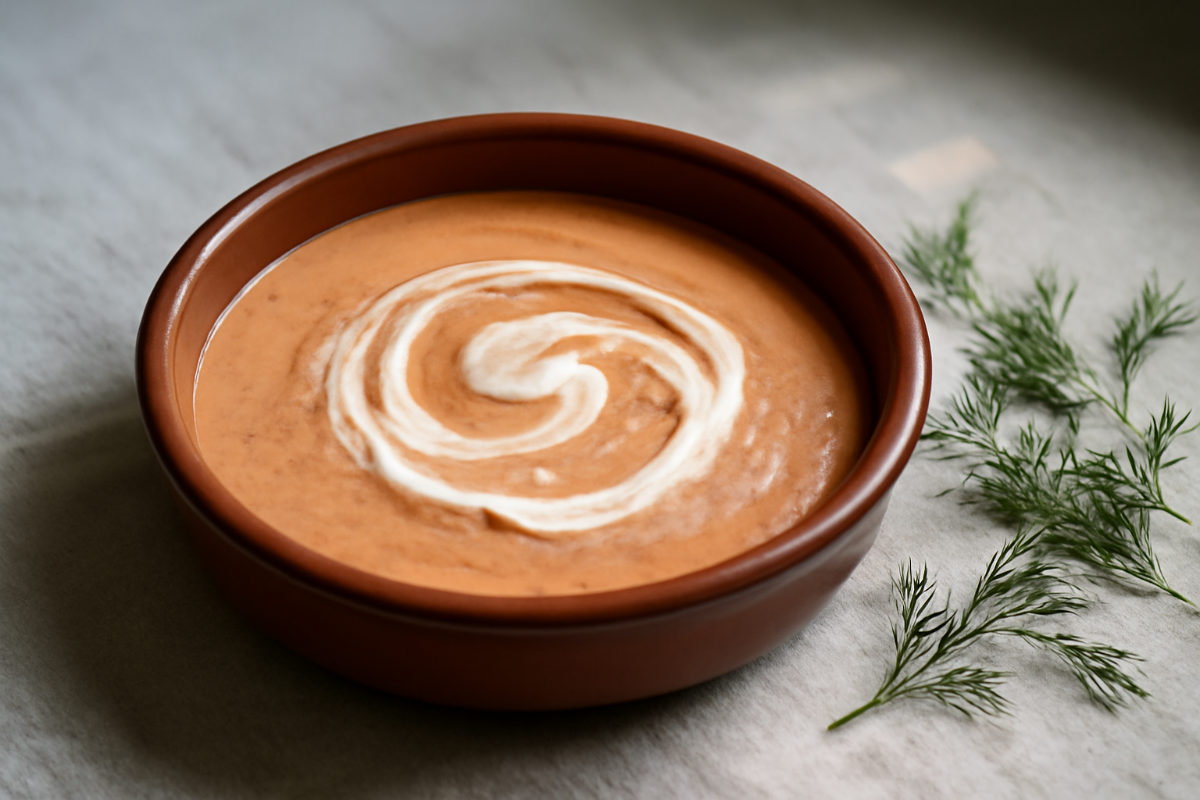
A paprika and caraway pan gravy finished with soured cream that has been stabilised with flour and tempered, so it stays smooth instead of splitting.
- Contains meat
- soured cream
- paprika
- schnitzel
- tempering
- Prep
- 8 min
- Cook
- 20 min
- Total
- 28 min
- Serves
- 4
- Difficulty
- Medium
Soured cream is the most likely of all the creams to break, because it is both acidic and relatively low in fat. Two things fix that: stirring a little flour into it first, and warming it with a ladle of hot gravy before it goes anywhere near the pan. Do those and you get a tangy, paprika scented gravy that is very good with schnitzel, pork or meatballs.
Ingredients
Makes about 400ml, enough for four plates
Scaled amounts are rounded to something you can actually measure. Season at the end and trust your mouth over the maths.
Kit
- Frying pan
- Small bowl
- Ladle
- Whisk
Method
Melt the butter in the pan over a medium heat and cook the onion for six or seven minutes until soft and translucent. Add the caraway and cook for a minute until it smells fragrant.
Take the pan off the heat before adding the paprika and stir it into the butter for thirty seconds. Paprika scorches in seconds over a live flame and turns bitter, and taking the pan off is the easiest way to avoid it.
Return the pan to the heat, stir in the tablespoon of flour and cook for a minute. Add the hot stock a third at a time, stirring until smooth after each addition, and simmer for five minutes until it thickens and coats a spoon. Season it now.
While that simmers, put the soured cream in a small bowl and stir the two extra teaspoons of flour into it until completely smooth. The starch coats the proteins and physically stops them clumping when the heat hits, which is the trick that makes this work.
Take the pan off the heat. Ladle two spoonfuls of the hot gravy into the soured cream, one at a time, whisking after each. This is tempering. You are raising the cream's temperature slowly instead of shocking it, and it is what stops the whole thing going grainy.
Pour the warmed soured cream mixture back into the pan, whisking as you go. Put it back on the lowest possible heat for two or three minutes to cook out the flour, stirring constantly. It must not boil.
Stir in the herbs off the heat, taste for salt and pepper, and serve straight away over pork, schnitzel or meatballs.
Tips worth knowing
- Full fat soured cream only. Low fat and light versions have had the fat removed that would otherwise protect the proteins, and they curdle almost on contact with a hot pan.
- Tempering is not fussiness, it is the whole recipe. Adding cold soured cream straight into a simmering pan raises its temperature by eighty degrees in a second, and it will separate.
- The teaspoons of flour stirred into the cream do two jobs at once. They thicken slightly and they stabilise, which is why this method is used all over central Europe for exactly this sort of sauce.
- If it does split, take it off the heat, whisk hard, and if that fails press it through a sieve and whisk in a tablespoon of cold double cream. It will not be perfect but it will be usable.
Change it up
- Stir in a tablespoon of tomato puree with the paprika and serve it over beef strips for something close to a stroganoff.
- Use full fat Greek yoghurt in place of the soured cream, stabilised and tempered exactly the same way, for a sharper and slightly lighter sauce.
- Add 150g of sliced mushrooms with the onion and finish with a squeeze of lemon into the stock, before the cream, for a fuller version.
Keeping and reheating
Keeps two days in the fridge but reheats badly, so reheat only what you need and do it very slowly in a pan over the lowest heat, stirring. It cannot be frozen, as soured cream separates completely on thawing.
Questions people ask
How do you stop soured cream curdling in a sauce?
Three things together. Use full fat, stir a couple of teaspoons of flour or cornflour into it first, and temper it by whisking in a couple of ladles of hot liquid before it joins the pan. Then keep the pan below a simmer for the rest of the cooking.
Can you boil soured cream?
No. It has around 18 per cent fat and a low pH, which is the worst combination for stability. At boiling point the proteins clump together and you get grains suspended in a watery liquid. Keep it below a simmer at all times.
What is the difference between soured cream and creme fraiche in cooking?
Creme fraiche has roughly twice the fat, around 30 to 40 per cent, so it is considerably more stable in a hot pan. Soured cream is tangier and lighter but needs stabilising and tempering. If a recipe worries you, creme fraiche is the safer choice.