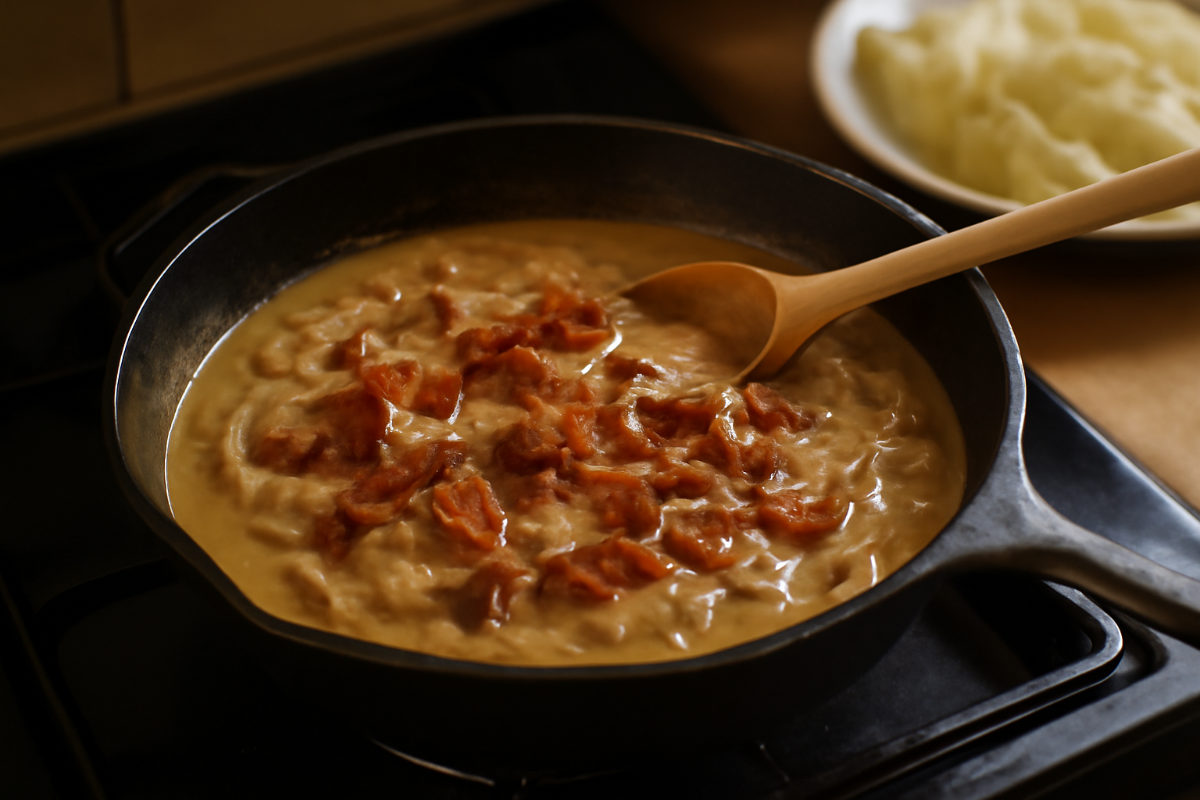
Creamy Onion and Bacon Gravy
Smoked bacon lardons rendered slowly, onions softened in the fat until sweet, then a stock and cream gravy built straight on top of them.
- Contains meat
- bacon
- onion
- sausages
- mash
- Prep
- 10 min
- Cook
- 35 min
- Total
- 45 min
- Serves
- 4
- Difficulty
- Easy
Bacon and onions cooked slowly in the same pan make their own gravy base, so there is very little to buy. Give the onions twenty minutes rather than ten and they turn properly sweet, which is what stops this tasting like a bacon sauce and makes it taste like a gravy. Very good over sausages, chops or a plate of mash.
Ingredients
Makes about 450ml, enough for four hungry plates
Scaled amounts are rounded to something you can actually measure. Season at the end and trust your mouth over the maths.
Kit
- Wide heavy frying pan
- Wooden spoon
- Measuring jug
Method
Put the bacon in a cold pan with the teaspoon of oil and bring it up to a medium heat slowly. Starting cold renders the fat out properly instead of scorching the outside, and that fat is what the onions will cook in. Give it six or seven minutes until crisp at the edges.
Lift out about half the bacon with a slotted spoon and set it aside for scattering over at the end. Leave the rest in the pan with all the fat.
Add the onions and turn the heat down to low. Cook them for twenty minutes, stirring every few minutes, until they are completely soft, slumped and deep gold. If they start to catch, add a tablespoon of water and scrape the base.
Stir in the thyme and the flour and cook for a minute so the flour toasts in the bacon fat rather than sitting raw.
Add the hot stock a third at a time, stirring well after each addition to keep it smooth. Bring it to a simmer and cook for five minutes until it thickens and looks glossy. Add the Worcestershire sauce, then taste. Bacon is salty, so it will very likely need no salt at all.
Turn the heat to its lowest and pour in the double cream. Warm it for two minutes without letting it boil, stirring occasionally.
Scatter the reserved crisp bacon over the top just before serving so it stays crunchy instead of going soft in the sauce.
Tips worth knowing
- Season last and season carefully. Between the bacon, the stock and the Worcestershire sauce this gravy is often salty enough on its own, and cream makes salt harder to judge by taste.
- Twenty minutes on the onions is the difference between a decent gravy and a very good one. Rushing them on a high heat browns the outsides while the middles stay sharp.
- If the bacon fat looks excessive after rendering, pour some off before the onions go in. You want about two tablespoons in the pan, enough for the flour to absorb.
- Keeping half the bacon back for the top gives you two textures. Bacon left to simmer in the sauce goes soft and loses its point.
Change it up
- Add a splash of dry cider with the stock, reduced down first, for a sharper version that suits pork.
- Stir in a handful of frozen peas five minutes before the end and serve it over a jacket potato as a meal in itself.
- Use smoked pancetta and finish with a tablespoon of grated Parmesan off the heat for something closer to a carbonara sauce.
Keeping and reheating
Three days in the fridge, covered. It thickens considerably when cold. Reheat in a pan with a splash of stock over a low heat, stirring. It freezes for two months, though the bacon softens, so keep back some fresh crisp bacon for serving.
Questions people ask
Should I fry bacon before adding it to gravy?
Yes, and start it in a cold pan. Rendering the fat out slowly gives you crisp bacon and a pan full of flavoured fat to cook the onions in, which is where most of the gravy's flavour comes from. Bacon dropped into hot liquid just goes rubbery.
Can I make bacon gravy without cream?
Yes. Leave out the cream and add 100ml more stock, and you have a straightforward bacon and onion gravy. The cream mostly softens the smokiness and gives it a rounder body, so it is a preference rather than a necessity.
Why is my onion gravy bitter?
The onions caught and burnt somewhere along the way, usually at the base of the pan while you were not stirring. Cook them low and slow, and if you see dark patches sticking, add a splash of water and scrape them up before they go black.