Creamy Wholegrain Mustard Gravy
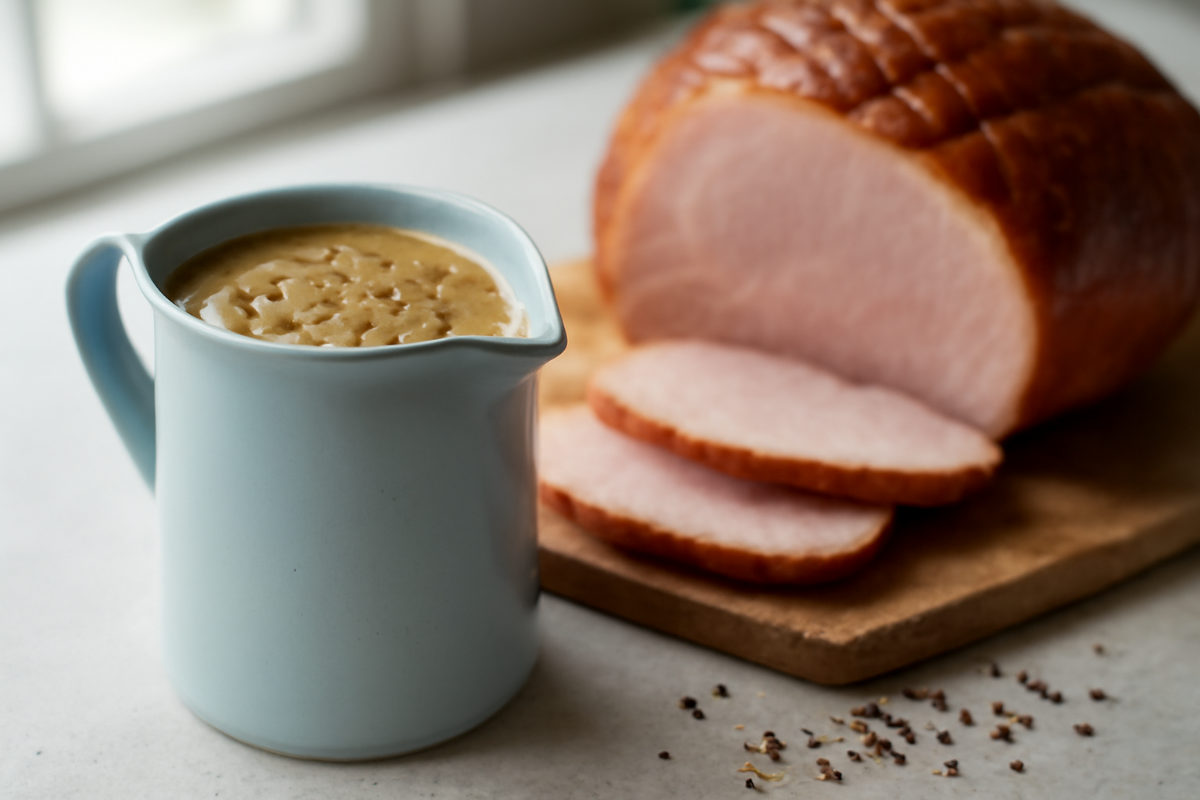
Chicken stock sharpened with cider vinegar and honey, softened with double cream, and stirred through with a generous three tablespoons of wholegrain mustard.
- Contains meat
- wholegrain mustard
- gammon
- sausages
- honey
- Prep
- 5 min
- Cook
- 18 min
- Total
- 23 min
- Serves
- 4
- Difficulty
- Easy
Wholegrain mustard behaves differently from smooth mustard, because the heat is locked inside the seeds and survives a bit of cooking. That means you can be much more generous with it, and this gravy uses three heaped tablespoons. It goes with gammon, sausages, roast chicken and a plate of buttery mash.
Ingredients
Makes about 400ml, enough for four plates
Scaled amounts are rounded to something you can actually measure. Season at the end and trust your mouth over the maths.
Kit
- Saucepan
- Whisk
- Measuring jug
Method
Melt the butter in the saucepan over a medium heat and cook the onion for seven or eight minutes until soft and just turning gold at the edges. A little colour is welcome here, unlike in most cream sauces, because it stands up to the mustard.
Stir in the flour and cook for a minute until it smells toasted, then add the hot stock in three lots, whisking each one smooth before the next goes in.
Bring it up to a simmer and cook for five minutes, whisking now and then, until it coats the whisk wires and looks glossy.
Add the cider vinegar and the honey and simmer for a further two minutes. Both go in now, before any dairy, since vinegar dropped into a cream sauce would split it and honey stirred in at the end would sit on top rather than blending.
Stir in two of the three tablespoons of mustard and let them cook in for a minute. Wholegrain mustard can take this because the pungent oils are held inside the seed coats rather than sitting loose in the liquid. Taste and season.
Drop the heat to its lowest and pour in the double cream. Warm it through for two minutes at a bare simmer, no more, until the sauce turns pale and thickens a shade.
Take it off the heat and stir in the final tablespoon of mustard. That last spoonful, uncooked, is what gives the finished gravy its sharpness and the little bursts of seed. Serve straight away.
Tips worth knowing
- Two in, one out is the rule with wholegrain mustard. Cook some for depth, hold some back for bite, and you get both instead of choosing between them.
- If you swap in smooth Dijon, it must all go in at the end off the heat. Smooth mustards have their pungent compounds loose in the mix and they turn bitter with cooking.
- Gammon and bacon are salty, so if you are serving this with either, hold back on salt entirely until the gravy is on the plate next to the meat.
- A splash of the water you boiled the gammon in, in place of some of the stock, makes this taste noticeably better. Taste it first, as it can be very salty.
Change it up
- Add 100ml of dry cider with the stock, reduced down first, for a sharper gravy that suits pork.
- Stir in a tablespoon of chopped tarragon at the end for a version that goes better with chicken than with gammon.
- Use vegetable stock and a plant based double cream alternative to make it dairy free and vegetarian, keeping everything else the same.
Keeping and reheating
Keeps four days in the fridge, better than most cream sauces because the flour stabilises it. The mustard flavour softens overnight, so stir in another teaspoon when reheating. It freezes for two months. Reheat slowly and do not boil.
Questions people ask
Can you cook wholegrain mustard in a sauce?
Yes, up to a point. The seed coats protect the pungent compounds, so wholegrain mustard survives a few minutes of simmering in a way that smooth mustard does not. It still fades with long cooking, which is why it is worth adding a final spoonful off the heat.
What is the difference between wholegrain and Dijon mustard in cooking?
Dijon is smooth, sharper and much more heat sensitive, so it goes in at the end. Wholegrain is milder, texturally interesting and more robust, so you can cook some of it in. They are not directly interchangeable by volume, as Dijon is stronger.
What meat goes with wholegrain mustard sauce?
Gammon and ham are the classic pairing, and the honey in this recipe pushes it that way. It is also very good with sausages, pork chops, roast chicken and cold meats the next day.