Shallot and Thyme Gravy
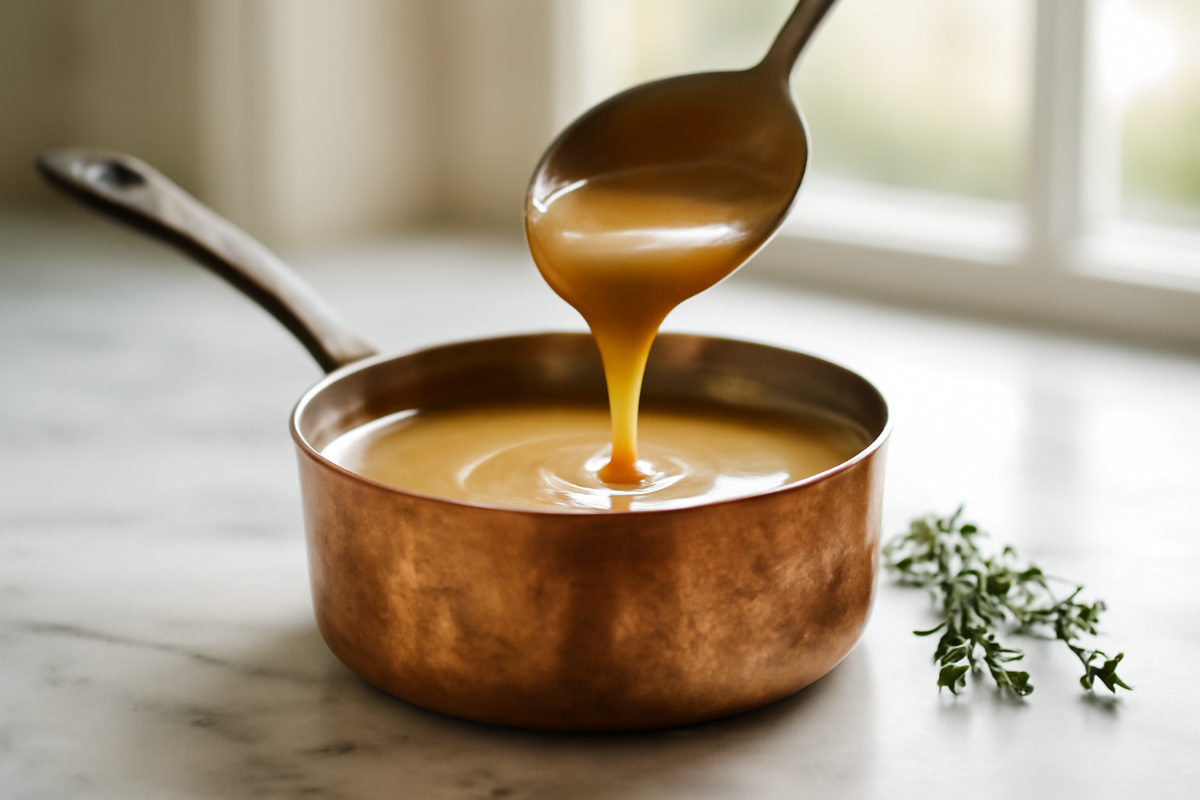
Banana shallots cooked gently in butter to a soft gold, white wine reduced down hard, and a chicken stock gravy finished with thyme and strained smooth.
- Contains meat
- shallot
- thyme
- roast chicken
- strained
- white wine
- Prep
- 15 min
- Cook
- 35 min
- Total
- 50 min
- Serves
- 4
- Difficulty
- Medium
Shallots are sweeter and finer than onions and they deserve better than being treated like small versions of them. Here they only go as far as pale gold, which keeps their delicate flavour intact, and the gravy gets strained so what lands on the plate is silky rather than stringy. This is the one for a roast chicken or a pork loin when you want something a bit more refined.
Ingredients
Makes about 400ml, enough for four plates
Scaled amounts are rounded to something you can actually measure. Season at the end and trust your mouth over the maths.
Kit
- Saucepan
- Fine sieve
- Whisk
Method
Melt the butter in a saucepan over a low heat and add the shallots with a pinch of salt and two of the thyme sprigs. You want a bare sizzle, nothing more.
Cook very gently for 20 minutes, stirring often. The aim is soft, sweet and pale gold, not brown. Shallots have more sugar than onions so they catch quickly, and once they go dark they turn bitter in a way brown onions do not.
Stir in the flour and cook for 2 minutes, keeping it moving so it stays blond. You are after a pale roux here, in keeping with the rest of the gravy.
Pour in the wine and whisk. It will seize and go claggy for a moment. Keep whisking over a medium heat for 2 to 3 minutes until it smooths out and the raw alcohol smell has gone.
Add the hot stock in two goes, whisking between, then drop in the remaining thyme. Simmer gently for 10 minutes so the thyme has time to give itself up.
Pour the lot through a fine sieve into a clean pan, pressing the shallots hard with the back of a ladle to squeeze out every bit of flavour, then discard the pulp and thyme stalks. What is left is glossy and pale bronze.
Bring it back to a simmer, whisk in the vinegar to lift it, and season with salt and white pepper. Black pepper works fine too, it just shows up as specks.
Tips worth knowing
- Banana shallots are far less faff than round ones because there are fewer to peel. If you only have round shallots, drop them in boiling water for 30 seconds first and the skins slip off.
- Pressing the shallots through the sieve is where half the body comes from. A gentle pour gives you a thin gravy, a firm press gives you a proper one.
- Save the strained shallot pulp and stir it through mashed potato or a cheese sauce rather than binning it.
- White pepper suits a pale gravy better than black, both in flavour and because it does not speckle.
Change it up
- Leave it unstrained and add a splash of double cream at the end for a rustic shallot sauce that suits pork chops.
- Replace the wine with the same volume of extra stock plus a teaspoon of lemon juice for an alcohol free version that keeps the acidity.
- Swap the thyme for tarragon and use it with roast chicken and new potatoes.
Keeping and reheating
Keeps 3 days in the fridge. It can split slightly on reheating because of the butter, so warm it slowly and whisk it back together. Freezing is fine for 2 months.
Questions people ask
Can I use onions instead of shallots?
You can, but you will lose the point of the recipe. Onions are sharper and less sweet, so if you swap them in, cook them five minutes longer and add a pinch of sugar to get somewhere near the same balance.
What do I serve shallot and thyme gravy with?
Roast chicken is the obvious one, and it is very good with a pork loin, chicken and leek pie, or plain grilled chicken breasts that need help. It is too delicate for beef or lamb, which want something darker.
Do I have to strain it?
No, but the texture is the reason this recipe exists. If you like the shallots in, slice them finer at the start and skip the sieve, and you will still get a good gravy, just a chunkier one.