Onion Gravy with Port
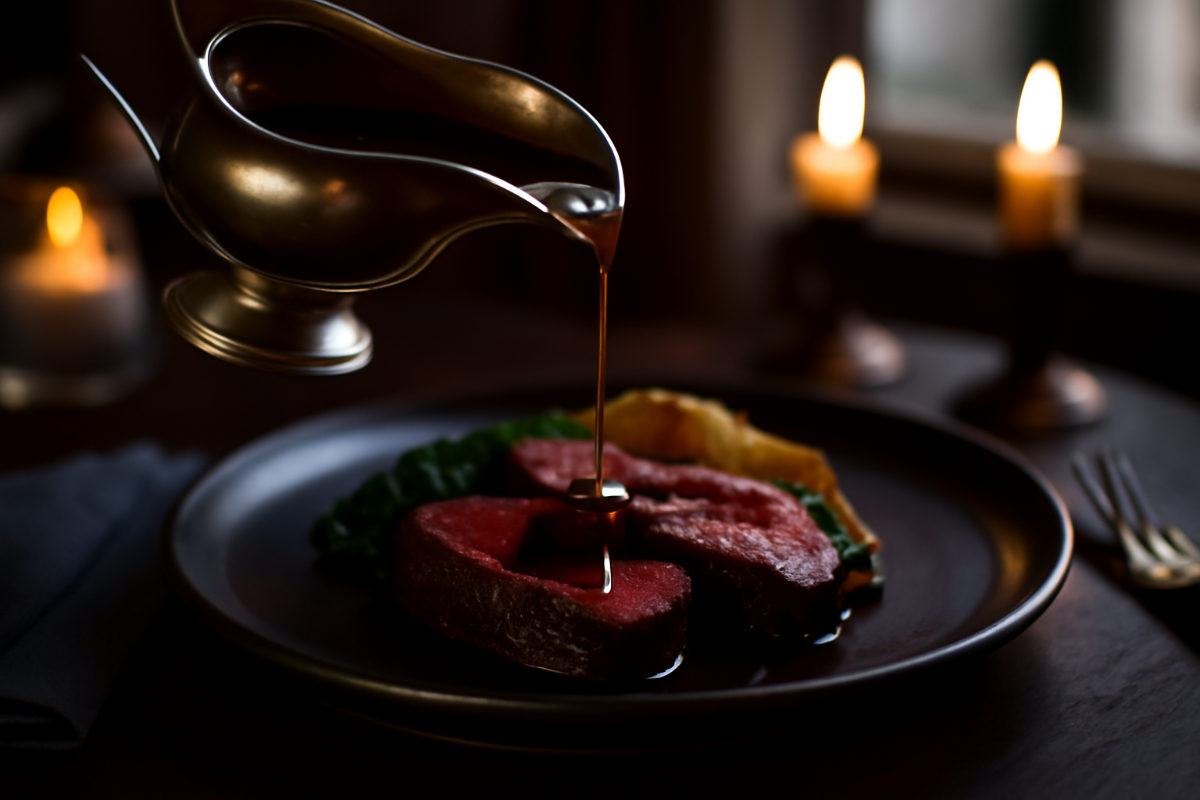
Shallots and onions cooked together, ruby port reduced to a syrup, a spoon of redcurrant jelly, and the whole thing strained smooth.
- Contains meat
- port
- venison
- roast beef
- strained
- special occasion
- Prep
- 15 min
- Cook
- 55 min
- Total
- 1 hr 10 min
- Serves
- 6
- Difficulty
- Medium
Port makes a gravy taste expensive. Reduce it properly and it goes from sweet and alcoholic to dark, fruity and slightly resinous, which is exactly what venison, roast beef and duck all want alongside them. This is the smartest gravy in the collection and the only one that gets strained until there is nothing left to chew on.
Ingredients
Makes about 500ml, enough for six plates
Scaled amounts are rounded to something you can actually measure. Season at the end and trust your mouth over the maths.
Kit
- Saucepan
- Fine sieve
- Ladle
Method
Melt the butter in a saucepan over a medium low heat, add the shallots and onion with a pinch of salt, and cook for 25 minutes until soft and a light nut brown. They are going to be strained out later, so their only job is to flavour the liquid, which means you do not need to take them as dark as usual.
Turn the heat up, pour in the port and let it bubble hard for 10 to 12 minutes. It should reduce by about two thirds and go syrupy enough to leave a trail behind the spoon. This step is the whole recipe. Under reduced port tastes raw and boozy in the finished gravy.
Add the stock, thyme, bay and redcurrant jelly, and bring to a simmer. Stir until the jelly has melted completely.
Simmer uncovered for 20 minutes so the liquid reduces by around a quarter and picks up everything the onions have to give. There is no flour in this one, so reduction is doing all the thickening.
Strain the lot through a fine sieve into a clean pan, pressing the solids firmly with a ladle to extract every drop, then discard what is left in the sieve.
Bring back to a simmer for 5 minutes to tighten it further. It should be dark, glossy and just thick enough to coat the back of a spoon without being gluey.
Stir in the vinegar, then taste and season. Whisk in a small knob of cold butter at the very end if you want extra shine.
Tips worth knowing
- Ruby port is the right style. Tawny is nuttier and drier and gives a less vivid result, while vintage port is a waste of money in a saucepan.
- Reduce the port on its own hard rather than gently. You want it concentrated, not simmered for an hour, which dulls the fruit.
- For an alcohol free version, use 250ml of red grape juice with a tablespoon of balsamic vinegar and reduce it the same way. It is genuinely close.
- Press the strained solids hard. That is where a good third of the body in the finished gravy comes from.
Change it up
- Add six crushed juniper berries and a strip of orange peel with the stock for a version made for venison.
- Stir in 100g of halved sautéed chestnut mushrooms after straining for a gravy that suits a beef Wellington.
Keeping and reheating
Fridge for 5 days, freezer for 4 months. It reheats beautifully, which makes it a sensible one to make the day before a big meal. Add the finishing knob of butter after reheating, not before.
Questions people ask
What is the best port for gravy?
An inexpensive ruby port. It has the bright fruit and colour you want and it stands up to reduction. Tawny is drier and nuttier and gives a duller gravy, and there is no benefit to using anything expensive because reduction flattens the subtleties anyway.
Can I make port gravy without alcohol?
Yes. Use the same volume of red grape juice with a tablespoon of balsamic vinegar and reduce it by two thirds exactly as you would the port. You get the same dark fruit sweetness and the vinegar supplies the acidity the alcohol would have carried.
Why strain onion gravy?
For texture. A strained gravy is silky and coats the food evenly, which suits a special occasion plate of venison or beef far better than something with onion strands in it. You lose nothing in flavour as long as you press the solids hard through the sieve.