Sauce Chasseur
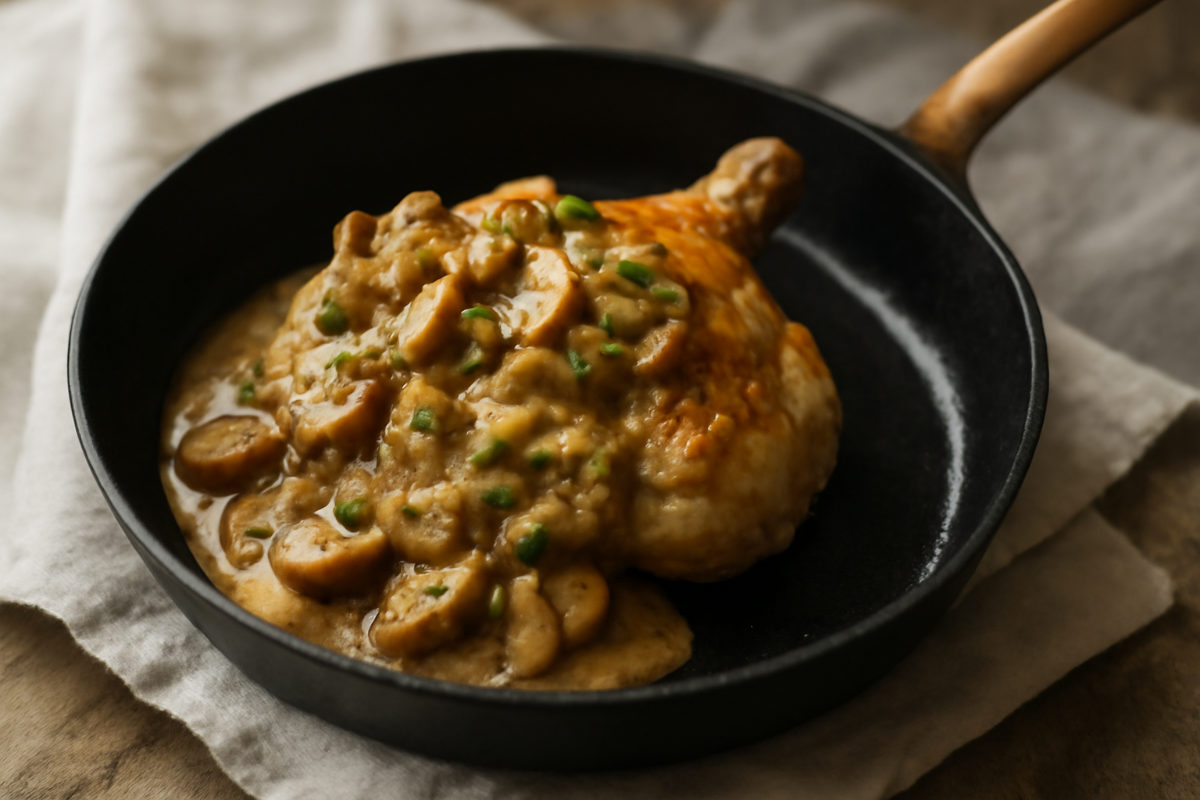
Hunter's sauce: mushrooms and shallots in white wine and tomato with a beef stock base, finished with tarragon and butter.
- Contains meat
- french
- mushroom
- white wine
- tarragon
- Prep
- 10 min
- Cook
- 30 min
- Total
- 40 min
- Serves
- 4
- Difficulty
- Medium
Chasseur means hunter, and this is the sauce that traditionally went with whatever came back from the woods. It is a brighter, lighter thing than most French brown sauces, because white wine and tomato do the heavy lifting rather than red wine. Tarragon at the end is what makes it recognisable, so do not leave it out.
Ingredients
Makes about 400ml, enough for four
Scaled amounts are rounded to something you can actually measure. Season at the end and trust your mouth over the maths.
Kit
- Wide frying pan
- Wooden spoon
- Whisk
Method
Heat the 30g of butter with the oil in a wide frying pan over a high heat. Add the mushrooms in a single layer and leave them undisturbed for two minutes before stirring. Cook for six or seven minutes until the liquid has boiled off and they are properly golden.
Turn the heat down to medium, add the shallots and cook for four minutes until soft. Add the garlic for the last thirty seconds only.
Pour in the white wine and the brandy if using, and let it bubble hard for three or four minutes, scraping the base, until the pan is almost dry and the smell of alcohol has gone.
Stir in the chopped tomatoes and tomato puree and cook for three minutes until the tomato has broken down and darkened slightly.
Add the stock, bring to a simmer and cook uncovered for twelve to fifteen minutes until reduced by about a third. It should be glossy and just thick enough to cling to a spoon without being pasty.
Taste and season. If it is too sharp from the wine and tomato, a small pinch of sugar will settle it.
Take the pan off the heat, whisk in the cold butter until the sauce shines, then stir through the tarragon and chervil. Add the herbs last, because tarragon simmered for any length of time goes flat and slightly medicinal. Serve immediately with chicken, rabbit, pork or steak.
Tips worth knowing
- Give the mushrooms a hot pan and room. If they steam in their own liquid the sauce loses the toasted mushroom flavour that carries the whole thing.
- Fresh tarragon and dried tarragon are not interchangeable here. If you only have dried, use half a teaspoon and add it with the stock rather than at the end.
- For a non-alcoholic version, replace the wine with 150ml of white grape juice plus 1 tbsp of white wine vinegar, and leave out the brandy.
- This sauce is at its best made in the pan you cooked the meat in, with the browned bits scraped up when the wine goes in.
Change it up
- Use wild mushrooms, or a small handful of dried porcini soaked in hot water with the soaking liquid strained into the stock, for a deeper autumnal version.
- Stir in 3 tbsp of double cream at the end for a rounder sauce that suits chicken breast.
- Leave out the tomato and double the mushrooms for something closer to a classic mushroom sauce, though it is then no longer a chasseur.
Keeping and reheating
Fridge for four days, freezer for three months, though the mushrooms soften on freezing. Reheat gently and whisk in fresh butter and herbs at the end each time.
Questions people ask
What is chasseur sauce served with?
Traditionally game, rabbit and chicken, which is where chicken chasseur comes from. It also goes well with pork chops, veal and a plain grilled steak. It is versatile because the tomato and wine keep it lighter than most brown sauces.
What is the difference between chasseur and diane sauce?
Chasseur is white wine, tomato and tarragon on a brown stock base. Diane is built on brandy, cream, mustard and Worcestershire sauce, so it is richer, sweeter and much creamier. Both contain mushrooms, which is where the confusion comes from.
Can I make chasseur sauce ahead?
Yes, up to the point before the finishing butter and herbs go in. Cool it, keep it in the fridge for up to four days, then reheat gently and finish with fresh butter, tarragon and chervil just before serving.