Rioja Gravy for Lamb
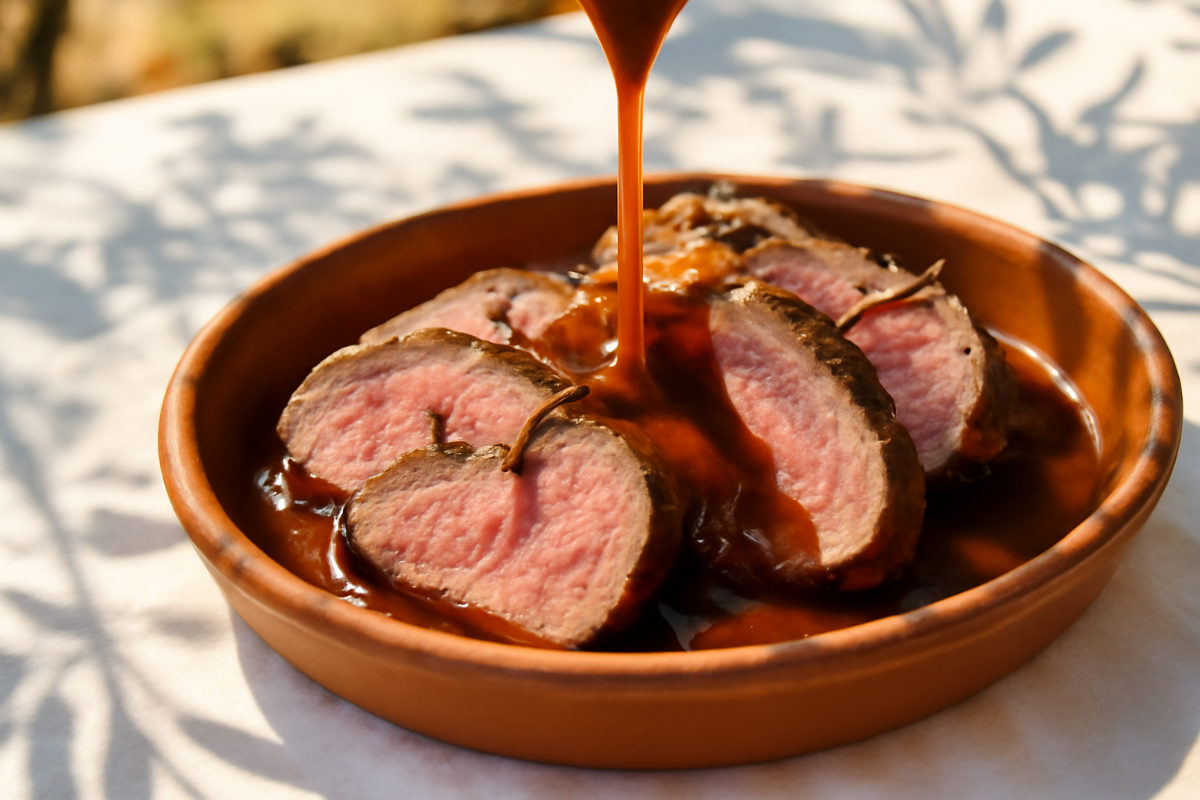
Spanish red reduced with garlic, smoked paprika and rosemary into a warm, savoury gravy made specifically for roast lamb.
- Contains meat
- Rioja
- lamb
- Spanish
- smoked paprika
- Prep
- 10 min
- Cook
- 30 min
- Total
- 40 min
- Serves
- 6
- Difficulty
- Medium
Rioja is aged in American oak, which gives it a coconut and vanilla note that happens to sit beautifully with lamb fat. Add garlic and a little smoked paprika and you have a gravy that tastes Spanish without turning into a stew sauce. Use a Crianza, there is no point opening a Gran Reserva for this.
Ingredients
Makes about 550ml, enough for six plates
Scaled amounts are rounded to something you can actually measure. Season at the end and trust your mouth over the maths.
Kit
- Roasting tin
- Whisk
- Sieve
Method
Rest the lamb and pour off all but three tablespoons of the fat from the tin. Put the tin over a medium heat and cook the onion for eight minutes until soft and golden.
Add the garlic and cook for a minute more, then stir in the paprika and let it toast for thirty seconds only. Paprika burns fast and once it is bitter the gravy is beyond saving.
Scatter in the flour and cook for two minutes, scraping the caramelised lamb juices off the base.
Pour in the Rioja gradually, whisking to keep it smooth. Add the rosemary and orange peel.
Boil hard for ten minutes until reduced by half and the wine has stopped smelling sharp. Tempranillo has firm tannins and they need this concentration to turn from drying to velvety, so do not cut the time short.
Whisk in the hot lamb stock, bring back to a simmer and cook for ten minutes until the gravy has thickened and turned deep brick brown.
Fish out the rosemary and orange peel, then strain through a sieve into a warm jug.
Stir in the sherry vinegar, season and serve. The vinegar cuts through the lamb fat, which is exactly what a rich roast lamb needs.
Tips worth knowing
- Crianza is the sweet spot, aged enough to have softened but not so expensive that you resent pouring it into a tin. Reserva is fine if it is what is open.
- The orange peel is worth doing. It is barely detectable on its own but the gravy tastes noticeably flatter without it.
- For a non-alcoholic version, reduce 350ml of red grape juice with 1 tbsp of sherry vinegar and a strip of orange peel by half. The sherry vinegar is important here since Rioja's whole character is savoury rather than fruity.
- If you can, brown a few lamb bones in the tin before the onion goes in. Twenty minutes at 200C gives you a stock and a gravy in one pan.
Change it up
- Add 100g of chopped chorizo with the onion for a much bolder gravy, and reduce the paprika since the chorizo brings its own.
- Stir in a tablespoon of quince paste or membrillo at the end for a sweeter Spanish finish.
- Swap the rosemary for a teaspoon of dried oregano and a bay leaf for a more Mediterranean flavour.
Keeping and reheating
Four days in the fridge, three months frozen. The paprika sinks as it stands, so whisk it well when reheating. Add the vinegar fresh after reheating.
Questions people ask
What red wine goes best with lamb gravy?
Rioja, a Spanish Garnacha or a southern French red. You want something with fruit and moderate tannin that stands up to lamb fat. Very heavy Cabernet Sauvignon can taste harsh once reduced, and light Pinot Noir gets lost.
How long should I reduce red wine for gravy?
Until it has lost half its volume and stopped smelling of alcohol, which is usually eight to twelve minutes at a proper boil. Taste it before the stock goes in. If it makes your mouth pucker, keep going.
Can I make this without a roasting tin of lamb fat?
Yes. Use three tablespoons of olive oil in a heavy pan and add a teaspoon of tomato puree with the paprika for depth. You will want a good lamb stock to make up for the missing pan juices.