Parmesan Cream Gravy
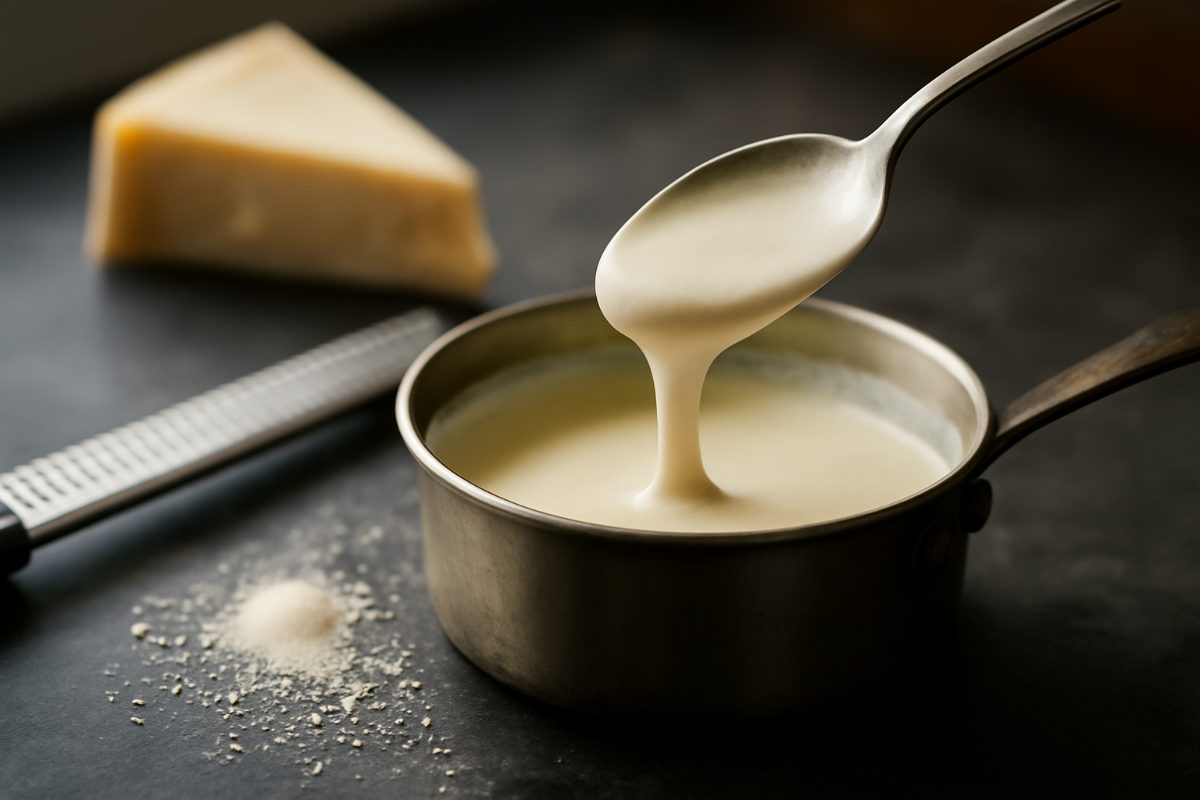
Chicken stock simmered with a Parmesan rind for depth, reduced with cream and garlic, then finished off the heat with finely grated Parmesan.
- Contains meat
- Gluten free
- parmesan
- chicken
- pasta
- cheese rind
- Prep
- 5 min
- Cook
- 30 min
- Total
- 35 min
- Serves
- 4
- Difficulty
- Easy
The rind is the part most people throw away and it is worth more than the cheese you grate on top. Simmered in stock for twenty minutes it gives up an enormous amount of savoury flavour for nothing. The grated cheese then goes in off the heat at the end, because Parmesan is hard and low in moisture and will turn stringy if you boil it.
Ingredients
Makes about 300ml, enough for four plates
Scaled amounts are rounded to something you can actually measure. Season at the end and trust your mouth over the maths.
Kit
- Small saucepan
- Fine grater
- Tongs
Method
Put the Parmesan rind and the chicken stock in the saucepan and bring it to a bare simmer. Leave it for twenty minutes with the lid ajar, until the stock has reduced to around 250ml and smells strongly savoury. Lift the rind out with tongs and discard it.
In a separate pan, or the same one after pouring the stock into a jug, melt the butter over a low heat and cook the sliced garlic for two minutes without any colour. Browned garlic is bitter in cream and there is no fixing it.
Pour the Parmesan stock back in and simmer for three or four minutes to bring it back together.
Add the double cream and hold it at a very gentle simmer for four minutes until it thickens slightly and coats the back of a spoon. Taste it, but do not salt it yet. Parmesan carries around 1.6 grams of salt per hundred grams and it will do most of the seasoning for you.
Take the pan completely off the heat and let it settle for twenty seconds. Grate in the Parmesan and stir until it has melted in, which takes under a minute in a hot pan.
If you put a Parmesan sauce back on direct heat after the cheese has gone in, it will separate into oil and grit. It is a hard, aged cheese with very little moisture, which makes it far less forgiving than a young one.
Grate in the nutmeg, grind in a lot of black pepper and serve at once over chicken, pasta or roasted vegetables.
Tips worth knowing
- Grate the Parmesan on the fine side of the grater, not the coarse. Fine shreds dissolve almost instantly in residual heat, while thick shavings need more warmth than you can safely give them.
- Traditional Parmigiano Reggiano is made with animal rennet, so it is not vegetarian. If that matters, use an Italian style vegetarian hard cheese, which behaves almost identically in this sauce.
- Keep rinds in a bag in the freezer. They last months and turn a cube based stock into something that tastes homemade.
- Room temperature cheese melts far better than fridge cold cheese. Take it out when you start the stock.
Change it up
- Add a handful of chopped flat leaf parsley and the zest of a lemon at the end, after the cheese, for a brighter sauce over pasta.
- Stir a spoonful of the starchy water from cooking pasta into the finished sauce to loosen it and help it cling.
- Use vegetable stock and a vegetarian hard cheese to make it meat free, and add a teaspoon of white miso for the depth the chicken stock would have given.
Keeping and reheating
Two days in the fridge. It sets thick and can go slightly grainy when reheated, so warm it very slowly with a splash of stock and whisk hard. Do not freeze, as hard cheese sauces separate badly on thawing.
Questions people ask
Can you boil Parmesan sauce?
No. Parmesan is aged and low in moisture, so heating it past melting point makes the proteins clump and the fat separate out. Add it with the pan off the heat and stir until smooth, and do not return it to the hob afterwards.
What can I do with Parmesan rinds?
Simmer them in stock, soup or a tomato sauce for twenty minutes and then take them out. They release a lot of savoury depth. Keep them in a freezer bag as you finish each piece of cheese and you will always have one.
Is Parmesan vegetarian?
Genuine Parmigiano Reggiano is not, because its rules require animal rennet. Several supermarkets sell an Italian style vegetarian hard cheese made with microbial rennet, which grates, melts and tastes close enough for a sauce like this.