Garlic Cream Gravy
A whole head of garlic simmered soft in stock until sweet and mellow, mashed to a puree and finished with double cream and a little thyme.
- Vegetarian
- Gluten free
- garlic
- chicken
- roast potatoes
- slow
- Prep
- 10 min
- Cook
- 30 min
- Total
- 40 min
- Serves
- 4
- Difficulty
- Easy
Raw garlic in a cream sauce is harsh and one note. Simmer the cloves whole in stock for twenty minutes first and they turn sweet, almost nutty, and mash down into something that thickens the sauce all by itself. It is very good with roast chicken, lamb steaks or a pile of roast potatoes.
Ingredients
Makes about 350ml, enough for four plates
Scaled amounts are rounded to something you can actually measure. Season at the end and trust your mouth over the maths.
Kit
- Small saucepan with a lid
- Fork or potato masher
- Fine sieve
- Wooden spoon
Method
Peel the garlic cloves but leave them whole. Melt the butter in the saucepan over a low heat and turn the cloves in it for two or three minutes without letting them brown at all. You want them to go slightly translucent, not golden, because browned garlic turns bitter in cream.
Pour in the stock, add the thyme and bay, put the lid on and leave it at a low simmer for twenty minutes. The cloves are ready when a knife tip goes through one with no resistance at all, like a cooked new potato.
Fish out the thyme stalks and the bay leaf. Mash the cloves against the side of the pan with a fork until they break down into the liquid. It will look cloudy and slightly grainy at this stage, which is correct.
Turn the heat up and reduce the liquid to about 200ml, which takes five or six minutes. Reducing now, with no cream in the pan, means you can boil it as hard as you like.
Stir in the lemon juice and season with salt and white pepper. Acid always goes in before the cream. Squeezed into a finished cream sauce it curdles it, but stirred into the hot stock first it has something to buffer it.
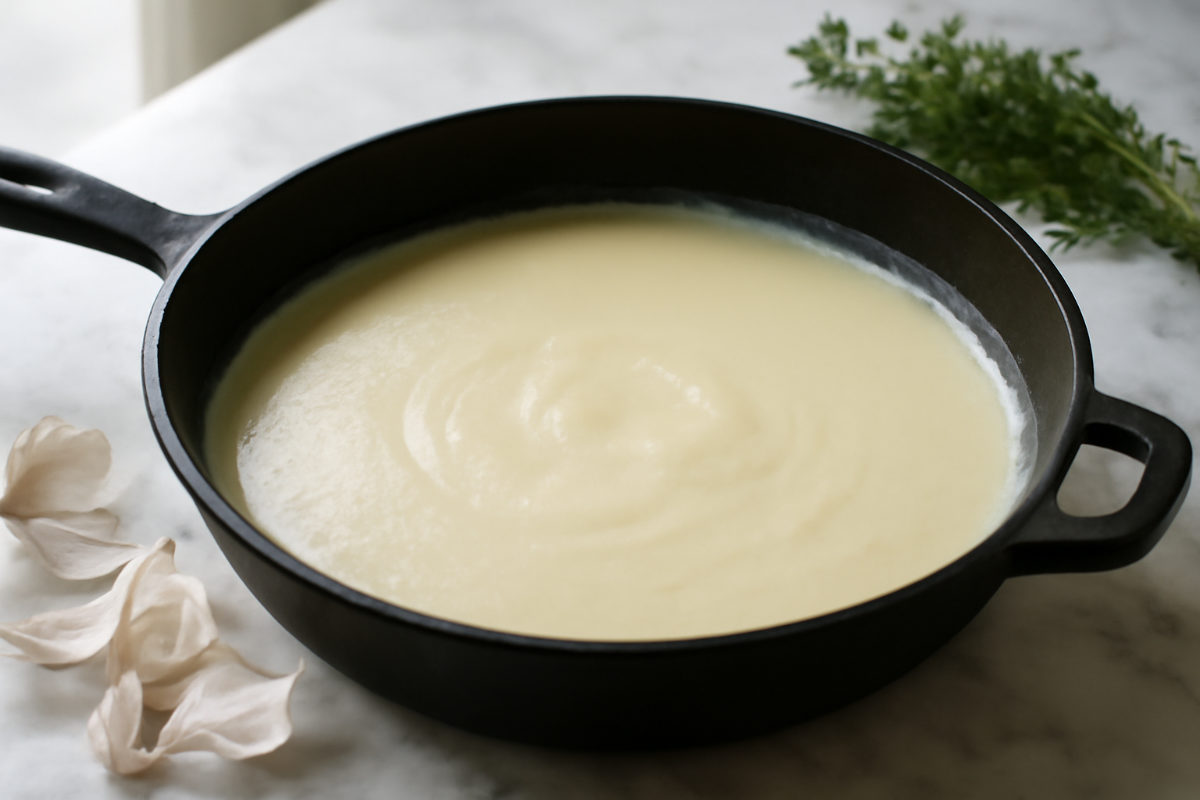
Drop the heat to its lowest setting, pour in the double cream and warm it through for three minutes at a bare simmer until it thickens slightly and turns ivory rather than white.
For a silky sauce, push it through a fine sieve into a warm jug, pressing the garlic solids with the back of a spoon. For a rustic one, leave it as it is. Either way, serve it hot.
Tips worth knowing
- Do not be tempted to brown the garlic at the start. Browned garlic tastes fine in a stir fry and bitter in a cream sauce, and there is no way to take it back out.
- A whole head of garlic sounds mad and is not. Twenty minutes of simmering converts the sharp sulphur compounds into much sweeter ones, so the finished sauce tastes rounded rather than pungent.
- White pepper rather than black keeps the sauce looking clean. Black pepper works just as well on flavour if you do not mind the speckles.
- If you want it thicker, mash a couple of extra cloves into it rather than adding flour. The garlic puree is a good thickener in its own right.
Change it up
- Roast the whole head in foil at 190C for forty minutes instead of simmering it, then squeeze the cloves out for a deeper, sweeter, caramelised version.
- Add a tablespoon of grated Parmesan off the heat at the end, which makes it richer and better suited to pasta or gnocchi.
- Stir in a handful of chopped wild garlic leaves in spring, off the heat, for a fresher green flavour.
Keeping and reheating
Keeps four days in the fridge and actually improves overnight as the garlic settles. Reheat slowly with a splash of stock, stirring. It freezes reasonably well for two months, though it is worth blitzing it with a stick blender after thawing to bring it back together.
Questions people ask
How do you stop garlic tasting bitter in a sauce?
Keep it away from high heat. Bitterness comes from browning, so cook the cloves gently in butter without colour, or simmer them whole in stock. Slow, wet cooking makes garlic sweet, while fast, dry heat makes it harsh.
Can I use garlic paste or granules instead?
You can, but you will not get the same sauce. The body in this recipe comes from mashed cooked cloves, which thicken the liquid. If you only have paste, use two teaspoons, cook it gently in the butter and thicken with a teaspoon of cornflour instead.
Why does lemon juice curdle cream sauce?
Acid causes the proteins in dairy to clump together, and heat speeds that up. Adding lemon to a finished hot cream sauce gives you both at once. Stir the acid into the stock first, reduce it, then add the cream to a well buffered pan.