Korean Gochujang Gravy
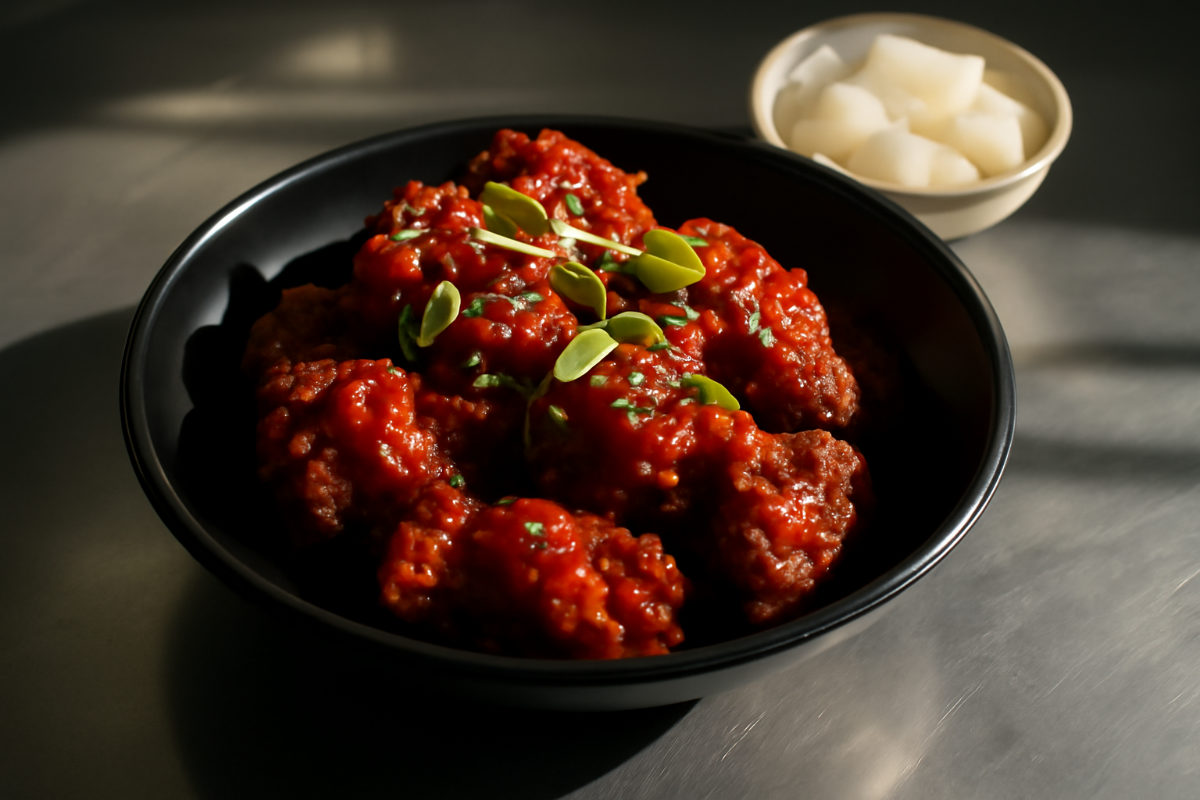
A sweet, savoury and gently fiery gravy built on gochujang and grated pear, with soy, sesame and garlic behind it.
- Contains meat
- Dairy free
- korean
- gochujang
- spicy
- sesame
- Prep
- 10 min
- Cook
- 15 min
- Total
- 25 min
- Serves
- 4
- Difficulty
- Easy
Gochujang is a fermented chilli paste, thick and dark red, more savoury and sweet than it is hot. Made into a gravy it gives you something with real depth that still tastes bright, and grated pear does the same job here it does in bulgogi marinade: sweetness plus a bit of tenderising enzyme. This is very good over fried chicken, pork belly or rice.
Ingredients
Makes about 400ml, enough for four
Scaled amounts are rounded to something you can actually measure. Season at the end and trust your mouth over the maths.
Kit
- Saucepan
- Box grater
- Whisk
Method
Heat the oil in a saucepan over a medium heat. Add the garlic and ginger and cook for one minute, stirring, until fragrant but not coloured.
Add the grated pear and cook for three minutes until it softens and gives up its liquid, which will start to reduce and go syrupy at the edges of the pan.
Turn the heat down to low and add the gochujang and gochugaru. Fry the paste gently for two minutes, stirring constantly. It will darken and start to smell toasty rather than raw, and this step is what separates a good gochujang sauce from one that tastes like paste stirred into stock.
Add the soy sauce, rice vinegar and honey and stir until the honey has dissolved.
Pour in the hot stock in two goes, whisking to break up the paste completely. Bring to a simmer.
Simmer uncovered for six or seven minutes until slightly reduced and the raw fermented edge has softened into something rounder.
Stir the cornflour slurry and pour it in while stirring. Cook for one minute more until the gravy turns glossy and coats a spoon. Take it off the heat.
Stir in the sesame oil, taste, and adjust with more honey if it is too sharp or more vinegar if it is too sweet. Scatter over the sesame seeds and serve over fried chicken, rice bowls or grilled pork.
Tips worth knowing
- Frying the gochujang for a couple of minutes before any liquid goes in makes a real difference. Straight from the tub it tastes flat and slightly raw in a sauce.
- Gochujang brands vary hugely in heat and sweetness. Start with two tablespoons if yours is unfamiliar, then taste and build up.
- Grated apple works if you cannot find a suitable pear, though it is a little sharper. Tinned pear in juice, drained and mashed, is another decent stand in.
- This is not gluten free as written. Most gochujang contains wheat, and so does standard soy sauce. Gluten free gochujang exists but you have to look for it.
Change it up
- Add 1 tbsp of doenjang, Korean fermented soybean paste, with the gochujang for a deeper, saltier and more savoury gravy.
- Stir in 3 tbsp of double cream at the end for a rosé style sauce that suits pasta or chips surprisingly well.
- Use vegetable stock and maple syrup instead of honey for a vegan version, and check your gochujang, since most are already vegan.
Keeping and reheating
Keeps a week in the fridge and the flavour rounds out after a day. Reheat gently with a splash of stock. Freezing works for two months, though the cornflour texture loosens, so a quick simmer brings it back.
Questions people ask
How spicy is gochujang gravy?
Moderate rather than fierce. Gochujang is a fermented paste made with glutinous rice as well as chilli, so it is savoury and sweet as much as hot. Three tablespoons in 400ml of stock gives a warmth most people find comfortable, and the gochugaru is where you dial the heat up or down.
What is the difference between gochujang and gochugaru?
Gochujang is a thick fermented paste sold in tubs, sweet and savoury with body. Gochugaru is dried coarse chilli flakes, bright red and fruity, with no fermentation or sweetness. Recipes often use both because they do different jobs.
Where can I buy gochujang in the UK?
Korean and general Asian supermarkets always have it, and larger Tesco, Sainsbury's and Waitrose branches now stock it in the world food aisle. It also keeps for months in the fridge once opened, so a tub is a sensible buy.