Horseradish Cream Gravy
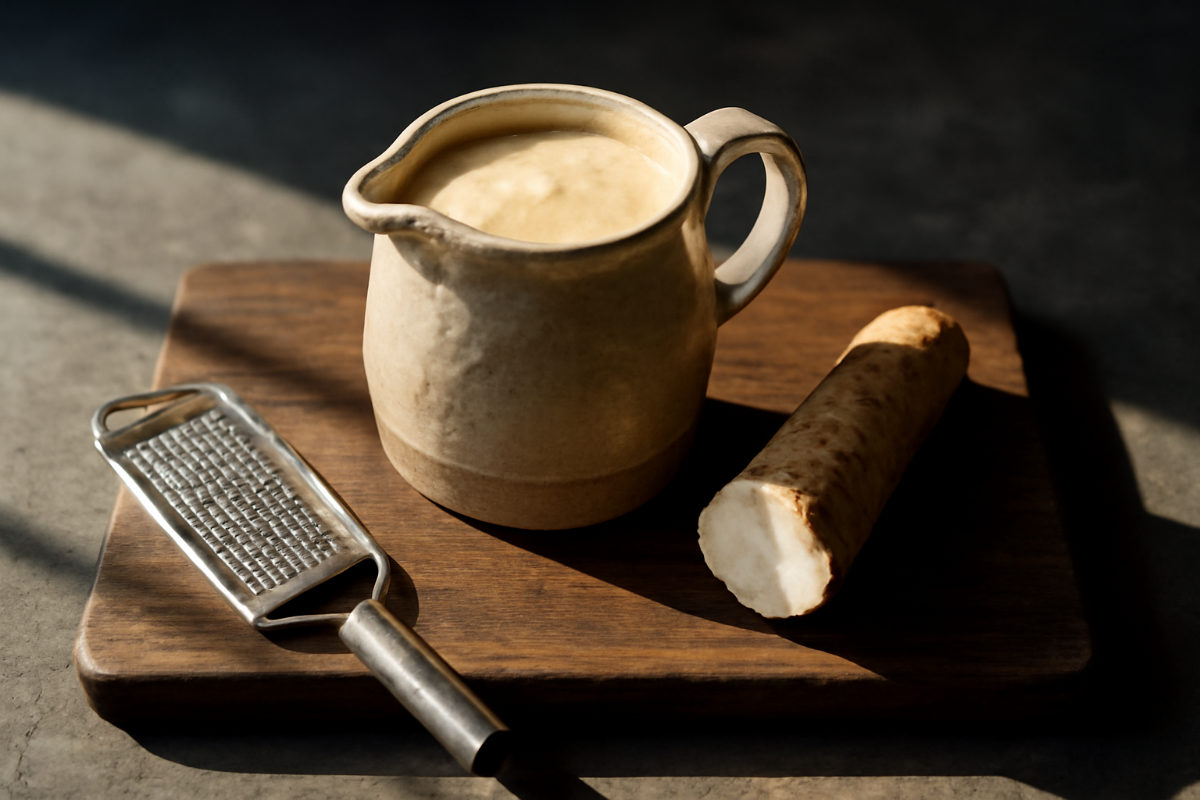
A rich beef gravy reduced hard and then finished off the heat with double cream and fresh grated horseradish, so the heat survives to the plate.
- Contains meat
- horseradish
- roast beef
- sunday roast
- sharp
- Prep
- 8 min
- Cook
- 18 min
- Total
- 26 min
- Serves
- 6
- Difficulty
- Easy
Horseradish loses its bite fast in a hot pan, which is why so many horseradish sauces taste of nothing but cream. Build a proper beef gravy first, then take it off the hob and grate the horseradish straight into it. Serve it with roast beef, steak, or a jacket potato if nobody is watching.
Ingredients
Makes about 400ml, enough for six plates
Scaled amounts are rounded to something you can actually measure. Season at the end and trust your mouth over the maths.
Kit
- Saucepan
- Fine grater
- Whisk
Method
Grate the horseradish last, not first. Peel a short length of root and grate it finely at the moment you need it, at arm's length, because the fumes are genuinely sharp. Grated root loses half its punch within twenty minutes of sitting on the board.
Melt the dripping in the saucepan over a medium heat, stir in the flour and cook for a minute until it smells toasted and turns the colour of a digestive biscuit.
Whisk in the hot beef stock a third at a time, getting the pan smooth after each addition before adding the next. Bring it up to a simmer.
Add the mustard and the cider vinegar and simmer for five minutes until it is glossy and coats a spoon. The vinegar goes in here rather than at the end because acid dropped into a warm cream sauce splits it, but acid simmered into a floury stock base does nothing but sharpen it.
Taste and season. It should be a shade saltier and sharper than you want the finished sauce to be, because the cream will soften both.
Take the pan off the heat and let it stop bubbling. Stir in the double cream, then the grated horseradish, and do not put it back on the hob. The heat still in the pan is more than enough to warm both through.
Taste one more time. Horseradish varies enormously in strength, so add the last tablespoon only if it needs it. Serve within ten minutes for the fullest heat.
Tips worth knowing
- Heat is the enemy of horseradish. The compound that gives it its kick breaks down at simmering temperature within a couple of minutes, which is why cooked horseradish sauces taste flat and sweet.
- Fresh root is worth the trouble but a decent jar of hot creamed horseradish is a fair stand in. Use about three tablespoons and cut back the cream slightly, since the jar already contains some.
- Grate the root over the pan rather than a board so nothing is lost, and wash the grater straight away before the oils dry onto it.
- If the sauce sits and goes mild, grate in another teaspoon just before serving. It is the only reliable way to bring the heat back.
Change it up
- Fold in two tablespoons of soured cream at the end alongside the double cream for a sharper, more traditional roast beef sauce.
- Stir in a tablespoon of chopped chives and a teaspoon of lemon zest for a fresher version that suits cold beef and smoked mackerel.
- Use half beef stock and half the liquor from a beetroot jar for a pink, faintly sweet variation that goes with venison.
Keeping and reheating
Keeps two days in the fridge but loses heat every hour it sits. Reheat very gently without boiling and refresh with a little more grated horseradish before serving. Do not freeze it, as the horseradish flavour vanishes completely.
Questions people ask
Why does my horseradish sauce lose its heat?
Because it got hot. The heat in horseradish comes from a compound formed when the root is cut, and it degrades quickly above about 60C. Add it off the heat, at the last minute, and never let the sauce simmer afterwards.
Can I use creamed horseradish from a jar?
Yes. Use around three tablespoons of a hot creamed horseradish in place of the fresh root, and reduce the double cream to 75ml since the jar already carries dairy and vinegar. Stir it in off the heat exactly the same way.
What do you eat horseradish cream gravy with?
Roast beef first and foremost, especially rib or topside. It is also very good with steak, with roast beetroot and with a plate of leftover beef and mash. A spoonful stirred into shepherd's pie gravy is not a bad idea either.