Regional British and Irish Gravies
Highland Venison Gravy
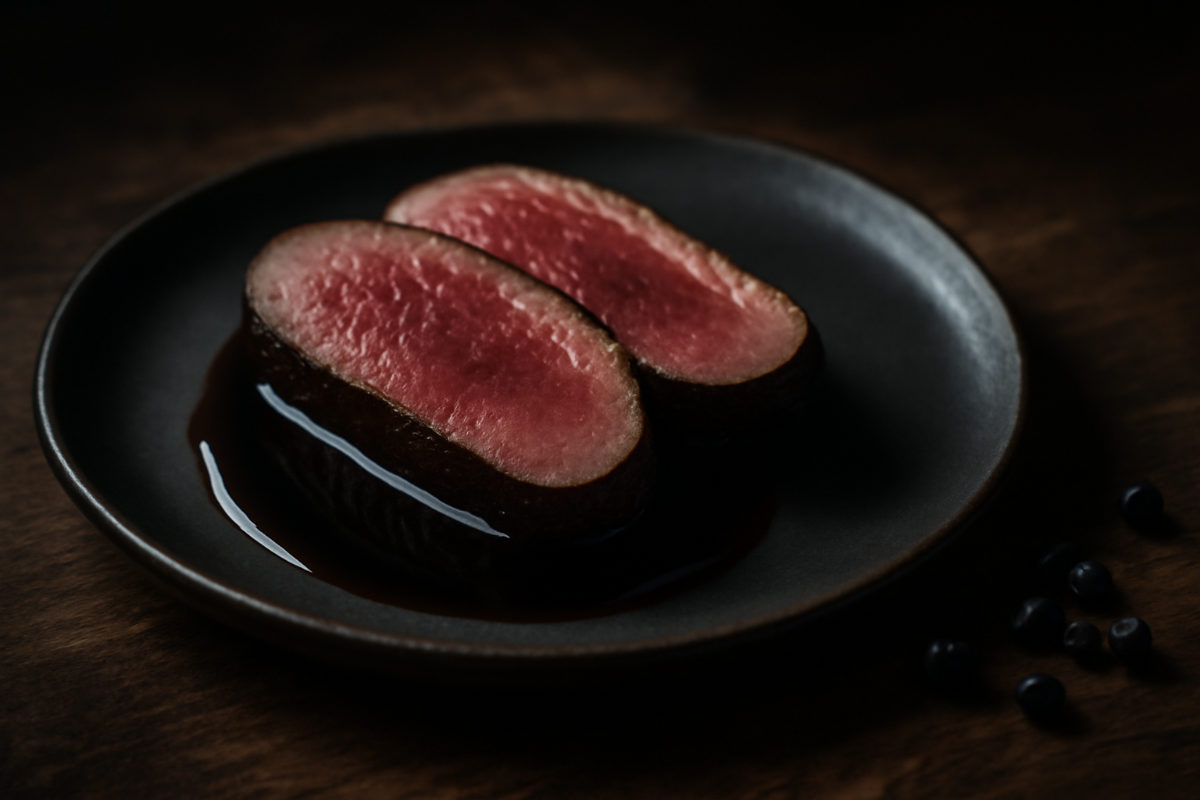
A dark, glossy venison gravy with juniper, thyme and a splash of whisky, reduced hard and finished with cold butter.
- Contains meat
- Gluten free
- scottish
- highland
- venison
- juniper
- whisky
- Prep
- 10 min
- Cook
- 40 min
- Total
- 50 min
- Serves
- 6
- Difficulty
- Medium
Venison from the Highlands is lean, dark and strongly flavoured, and it needs a gravy that can stand up to it without smothering it. This one leans on juniper, which grows wild across the same hills, and a small measure of whisky added at the end. It is a reduction rather than a floury gravy, so it comes out shiny and concentrated and you do not need much of it.
Ingredients
Makes about 400ml, enough for six plates
Scaled amounts are rounded to something you can actually measure. Season at the end and trust your mouth over the maths.
Kit
- Heavy based saucepan
- Fine sieve
- Pestle and mortar
Method
Heat the dripping in a heavy pan and cook the shallots over a medium heat for 6 minutes until soft and lightly browned. Add the crushed juniper and thyme and cook for another minute so the spices bloom in the fat.
Pour in the wine and boil hard for 4 minutes until it has reduced to a syrupy couple of tablespoons. Scrape the base as it goes, because that concentrated residue is where the flavour lives.
Add the stock, bring to a boil, then reduce to a steady simmer and cook uncovered for 20 to 25 minutes until it has reduced by roughly half. There is no flour here, so this is where all the body comes from.
Test it by dipping a spoon in and drawing a finger across the back. If the line holds clean, you are there. If it fills in, keep reducing.
Strain through a fine sieve into a clean pan, pressing the shallots to get everything out, and put it back on a low heat.
Whisk in the jelly until it dissolves, then take the pan off the heat completely and add the whisky. Adding it off the heat keeps the aroma, which is the entire reason it is in there.
Whisk in the cold butter one cube at a time, keeping the pan off direct heat. The gravy will go noticeably glossier and thicker. Season, and serve it warm rather than piping hot so it does not split.
Tips worth knowing
- Crush the juniper with the flat of a knife or a pestle rather than chopping it. Whole berries barely give anything up and ground juniper goes bitter.
- Whisky off the heat, always. Boiled whisky loses its perfume and leaves a harsh note behind, so treat it like a finishing ingredient.
- Butter mounted in at the end is the technique that makes restaurant gravies look the way they do. Keep it cold, add it slowly, and never let the pan boil afterwards.
- Any bones or trimmings from the venison, roasted hard and simmered in the stock for an hour beforehand, will double the quality of this gravy.
Change it up
- Leave the whisky out and add a teaspoon of sloe or blackcurrant syrup instead for a gravy with the same dark fruit note and no alcohol.
- Add 100g of sliced wild or chestnut mushrooms with the shallots and leave them in rather than straining, for a rougher, earthier gravy.
- Swap the redcurrant jelly for bramble jelly and add a handful of fresh blackberries in the last 5 minutes of reduction.
Keeping and reheating
Keeps 4 days in the fridge and freezes for 3 months, but freeze it before the butter goes in. Reheat gently and mount fresh butter through at the end, since the emulsion does not survive reheating well.
Questions people ask
What flavours go with venison?
Juniper, thyme, bay, dark fruit like blackberry, redcurrant or rowan, and a little something bitter such as red wine or stout. Venison is lean and gamey, so a gravy with fat and a touch of sweetness balances it better than a plain meat gravy.
Can I make venison gravy without wine?
Yes. Replace it with an extra 150ml of stock and a tablespoon of balsamic vinegar, reduced right down at the same stage. You are after concentrated acidity, and the vinegar delivers it.
Why does my reduction gravy taste too salty?
Because reducing by half doubles the salt that was already in the stock. Use unsalted or low salt stock when you plan to reduce hard, and only season right at the end once the volume is where you want it.