Regional British and Irish Gravies
Cumberland Sausage Gravy
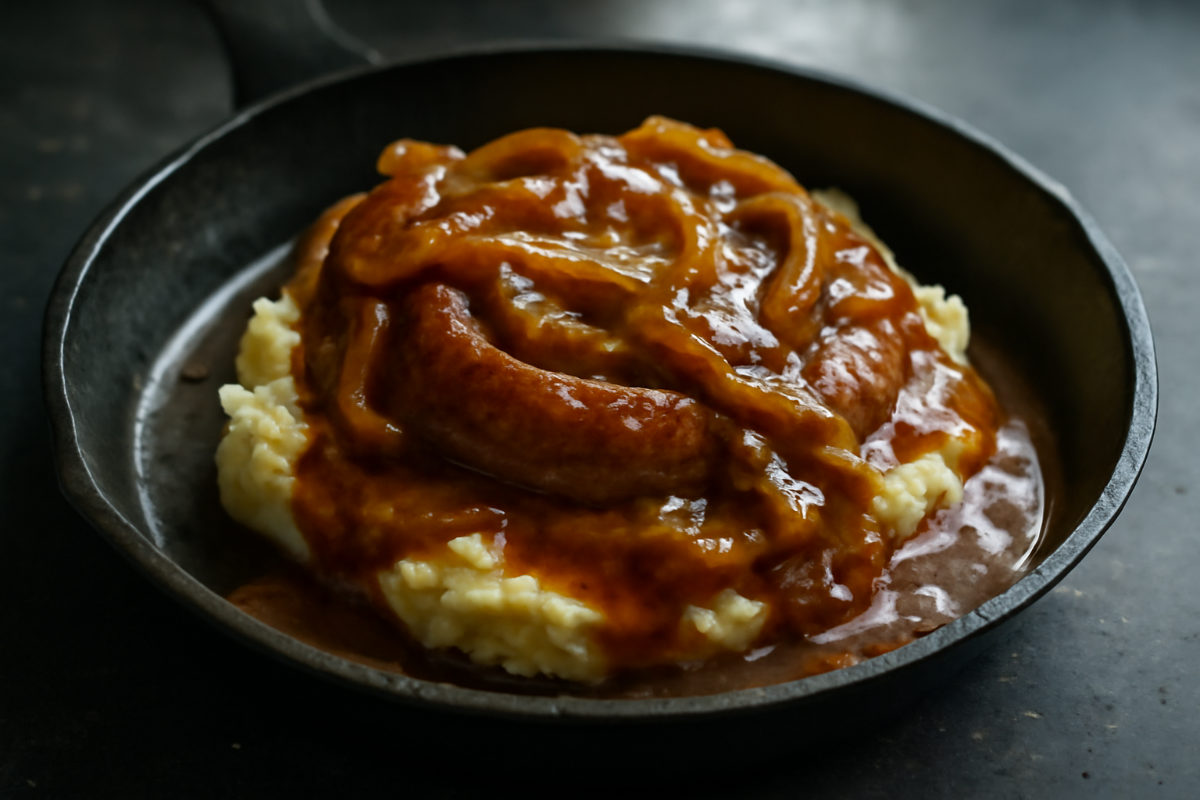
A peppery pan gravy made in the fat from a coiled Cumberland sausage, with sage, mace and a spoon of apple to match the seasoning in the meat.
- Contains meat
- cumbria
- sausage
- pan gravy
- mace
- sage
- Prep
- 5 min
- Cook
- 30 min
- Total
- 35 min
- Serves
- 4
- Difficulty
- Easy
A proper Cumberland sausage is a long coil, coarse cut, and heavily seasoned with pepper, mace and herbs. Any gravy that goes with it needs to work with that rather than fight it. This one is built in the pan the coil comes out of, and it picks up the same spicing so the plate reads as one dish. Cumberland sausage has protected status, so if the label says Traditional Cumberland Sausage it really is made up there.
Ingredients
Makes about 400ml, enough for four plates
Scaled amounts are rounded to something you can actually measure. Season at the end and trust your mouth over the maths.
Kit
- Large frying pan
- Whisk
Method
Fry the sausage coil in a dry pan over a medium heat, 8 minutes a side, turning it once with two fish slices so it does not break apart. It should be deep brown all over and the pan should have a good slick of fat and brown residue in the base.
Lift the sausage onto a plate and keep it warm. Pour off all but about 2 tablespoons of fat, leaving every scrap of the brown stuff behind.
Add the onion and apple to the pan and cook over a medium low heat for 12 minutes, stirring and scraping. The apple should collapse completely and the onion should be soft and gold.
Stir in the flour, mace and sage and cook for 2 minutes. Mace is the note that says Cumberland, so do not be tempted to swap it for nutmeg, which is sweeter and coarser.
Pour in a third of the stock and whisk hard, working the brown residue off the base. Add the rest in two goes, whisking each time, and bring to a simmer.
Simmer for 8 to 10 minutes until it thickens enough to coat a spoon and the apple has vanished into it. The gravy should look slightly rough and flecked, not glassy.
Add the cider vinegar, then season with salt and a heavy hand of black pepper. Slide the sausage back in, cut into portions, and let it sit in the gravy for 2 minutes before serving.
Tips worth knowing
- Cook the coil whole and cut it after. Cutting it first lets the juices out into the pan too early and you lose the crust.
- Two long skewers pushed through the coil at right angles make it far easier to turn without it unwinding.
- If the pan residue is very dark, deglaze with a splash of water first and taste it. Bitter residue will make bitter gravy, and it is better to wipe the pan and start the onions in fresh fat.
- Black pepper is not optional here. Cumberland sausage is a peppery sausage and a bland gravy next to it just tastes wrong.
Change it up
- Deglaze with 100ml of dry cider before the stock for a sharper gravy, or stick with the cider vinegar version above if you are avoiding alcohol.
- Add a teaspoon of wholegrain mustard at the end for something to cut the fat if you are serving it with mash and buttered cabbage.
- Stir in a tablespoon of redcurrant jelly for a sweeter gravy that suits it served with mash on a cold night.
Keeping and reheating
The gravy alone keeps 3 days in the fridge and freezes for 3 months. Keep the sausage separate if you can, since it firms up better reheated in a pan than sitting in liquid.
Questions people ask
What makes a sausage a Cumberland sausage?
Coarse cut pork, a high meat content, a long coil rather than links, and heavy seasoning with pepper and usually mace or nutmeg. Traditional Cumberland Sausage carries protected geographical status, so that name means it was made in Cumbria.
Can I make sausage gravy without the sausage fat?
You can, using butter and oil, but you lose most of what makes it a pan gravy. If you are baking the sausages instead, pour the tray juices into the pan when you add the stock and you will get most of it back.
Why does my sausage gravy taste greasy?
Too much fat left in the pan before the flour went in. Two tablespoons is plenty for two of flour. Any more and the fat has nothing to bind to, so it separates out and floats on top.