Regional British and Irish Gravies
Cornish Pasty Gravy
A peppery beef and swede gravy for dipping a pasty into, heavy on the white pepper the way the filling itself is.
- Contains meat
- cornish
- pasty
- swede
- white pepper
- beef
- Prep
- 10 min
- Cook
- 30 min
- Total
- 40 min
- Serves
- 4
- Difficulty
- Easy
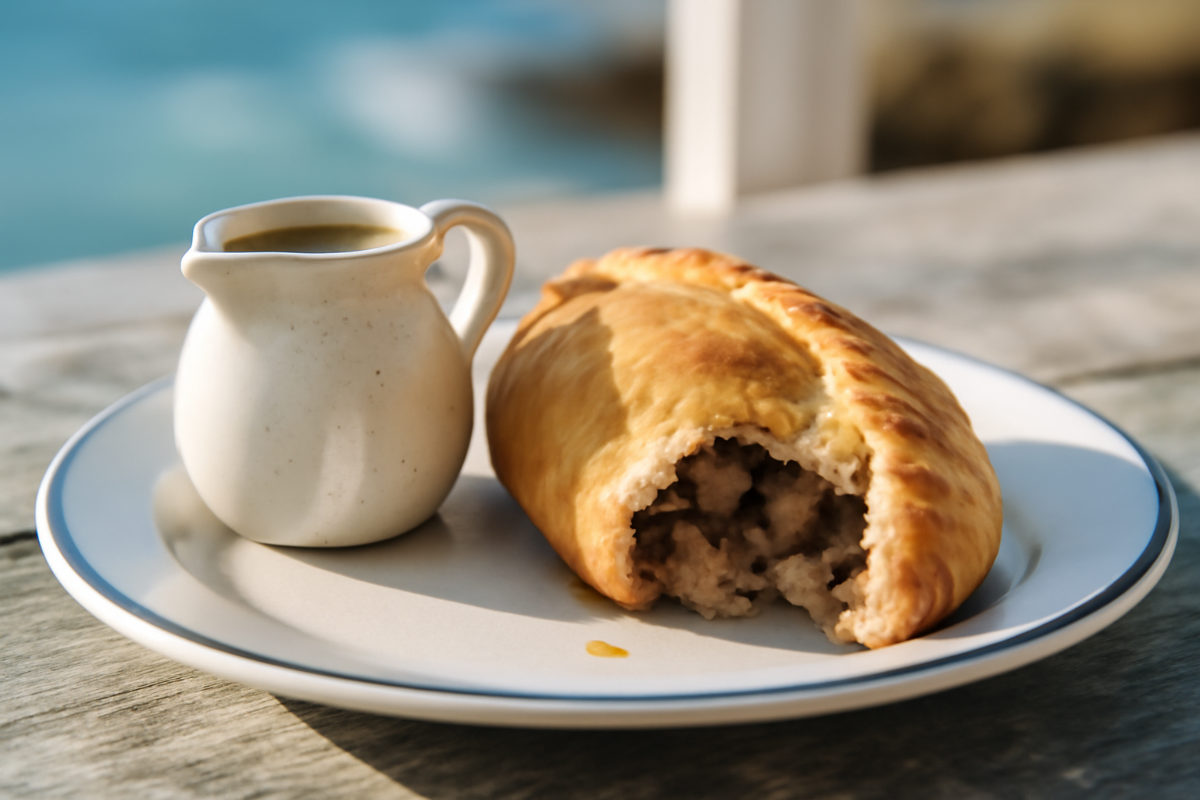
A proper Cornish pasty has beef, swede, potato and onion, and enough white pepper to make itself known. Purists eat it dry in the hand and that is fair enough. But a pasty on a plate with gravy is a Cornish tea time standard too, and the gravy should taste like the inside of the pasty rather than like a Sunday roast. This one is built around swede and white pepper for exactly that reason.
Ingredients
Makes about 400ml, enough for four pasties
Scaled amounts are rounded to something you can actually measure. Season at the end and trust your mouth over the maths.
Kit
- Saucepan
- Coarse grater
- Whisk
Method
Melt the butter in a saucepan over a medium low heat and sweat the onion for 8 minutes until soft and translucent with no colour on it. Pasty filling is never browned, so the gravy should not be either.
Add the grated swede and cook for 6 minutes, stirring, until it softens and smells sweet and slightly sulphurous. That smell is right and it mellows as it cooks.
Stir in the flour and cook for 2 minutes.
Pour in half the hot stock, whisking until smooth, then the rest. Bring to a simmer.
Simmer for 12 minutes, stirring now and then. The swede shreds break down and thicken the gravy from the inside, so it ends up with a soft, slightly rough body rather than a slick one.
Add the Worcestershire sauce and the white pepper. Start with three quarters of a teaspoon, taste, and go to the full teaspoon if it is not making itself heard. A pasty gravy that is not peppery is missing the point.
Stir in the cream if using, season with salt, and take it off the heat. Serve it in a jug so people can dip or pour as they like, and keep it just thin enough to dunk a corner of pastry into without it sticking.
Tips worth knowing
- White pepper, not black. It is what goes in the pasty and it has a different heat, hotter and slightly fermented, that black pepper does not replicate.
- In Cornwall the yellow root vegetable in a pasty is called turnip even though it is swede. Buy swede, whatever the recipe you are reading calls it.
- If you have baked the pasties yourself, scrape any juices that have leaked onto the tray into the gravy. That is concentrated filling and it is worth having.
- Keep it loose. A thick gravy makes the pastry go soft in seconds, while a thinner one lets you dip without ruining the crimp.
Change it up
- Add 100g of finely diced skirt beef with the onion and cook it slowly for 30 minutes before the flour goes in, for a gravy with meat in it.
- Leave out the beef stock and use a strong vegetable stock with a teaspoon of Marmite for a version to go with a cheese and onion pasty.
- Add a peeled and finely diced potato with the swede and simmer until it collapses, for a thicker gravy closer to the pasty filling itself.
Keeping and reheating
Keeps 3 days in the fridge. Freezes for 2 months, though the swede goes a little grainy, so blitz it briefly with a stick blender after reheating if that bothers you.
Questions people ask
Do Cornish people eat pasties with gravy?
Some do and some are firmly against it. Eaten in the hand a pasty needs nothing, but served on a plate at teatime gravy is common enough. It is not a settled matter and you will get an argument either way.
What makes a Cornish pasty gravy different?
The white pepper and the swede. Those two are what define the filling, so a gravy built on them tastes like part of the same dish rather than something borrowed off a roast dinner.
How do I stop the pasty going soggy with gravy?
Serve the gravy separately in a jug and keep it thin. Pour it around the pasty on the plate rather than over the top, so the crimp and the top stay crisp while you dip the end.