Regional British and Irish Gravies
Devon Roast Pork and Cider Gravy
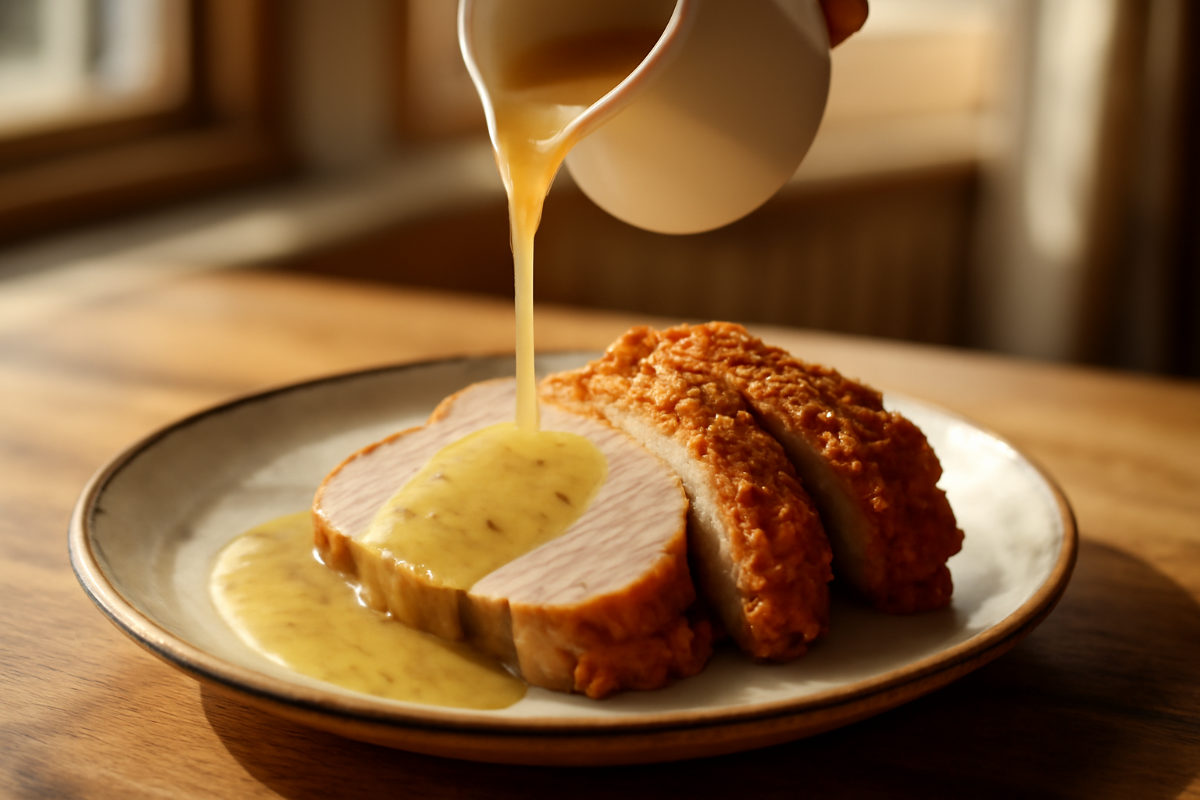
Roasting tin pork gravy loosened with dry Devon cider and finished with a spoon of cream, sharp enough to cut through crackling.
- Contains meat
- devon
- west country
- cider
- roast pork
- tin gravy
- Prep
- 5 min
- Cook
- 20 min
- Total
- 25 min
- Serves
- 6
- Difficulty
- Easy
The West Country grows the apples and presses the cider, and pork with cider is about as Devon as a plate gets. The gravy is made straight in the tin the joint came out of, so it carries all the roast flavour, and the cider gives it the acidity that fatty pork needs. A little cream at the end softens it without turning it into a cream sauce.
Ingredients
Makes about 550ml, enough for six plates
Scaled amounts are rounded to something you can actually measure. Season at the end and trust your mouth over the maths.
Kit
- Roasting tin
- Whisk
- Sieve
Method
Lift the pork out of the tin and rest it. Pour off all but about 3 tablespoons of fat, keeping the onion and every bit of caramelised juice in the bottom.
Set the tin over two hob rings on a medium heat. When the fat starts to shimmer, stir in the flour and cook for 2 minutes, working it into the sticky brown bits with a whisk.
Pour in the cider and whisk hard. It will hiss and go thick and lumpy for a moment, then smooth out as the residue lifts. Scrape every corner of the tin.
Let the cider bubble for 4 minutes to cook off the raw alcohol and take the sharp edge off. Dry cider is very acidic and this step matters more than it does with wine.
Add the stock a third at a time, whisking, then bring to a gentle simmer and cook for 8 minutes until it thickens to a light coating consistency.
Strain through a sieve into a pan if you want it smooth, pressing the onion through. Return to a low heat.
Stir in the mustard, cream and sage, warm through without boiling, and season. Add any juices that have run out of the resting pork last. Taste it against a bit of crackling: it should be noticeably sharp, because the fat will flatten it on the plate.
Tips worth knowing
- Roast the joint on a bed of sliced onion and a couple of halved apples. They catch the fat, stop the base burning and go straight into the gravy.
- Use a dry cider. Sweet cider plus roast pork gives you something closer to a dessert sauce, and there is no rescuing it once it is in.
- Do not boil the gravy after the cream goes in. It will not split immediately but it will thin out and lose its silkiness.
- If the cider has left it too sharp, a pinch of sugar or a teaspoon of apple sauce balances it faster than more cream.
Change it up
- For a version without alcohol, use 300ml of cloudy apple juice with 2 teaspoons of cider vinegar, and reduce it for a couple of minutes longer.
- Leave the cream out and add a peeled, grated Bramley apple with the stock for a sharper, lighter gravy.
- Add 100g of sliced leeks to the tin with the flour for a thicker, sweeter gravy that suits pork belly.
Keeping and reheating
Keeps 3 days in the fridge. Freezing is possible but the cream can go slightly grainy, so if you plan to freeze it, leave the cream out and add it fresh when you reheat.
Questions people ask
What cider is best for pork gravy?
A dry still cider from the West Country, the sort sold in a plastic flagon or a proper bottle rather than a sweet fizzy one. Anything you would drink cold on its own without wincing is usually about right.
Can I make cider gravy without the roasting tin?
Yes, build it in a saucepan with butter instead of pork fat and a good stock. It will not have the roast depth, so add a teaspoon of Worcestershire sauce and brown the onions properly to make up for it.
Why has my cider gravy curdled?
The cream was added to something too hot or too acidic and boiled. Take the pan off the heat before the cream goes in and never let it boil afterwards. If it has already split, a stick blender will usually bring it back.