Regional British and Irish Gravies
Gravy for Rag Pudding
A rich beef and onion gravy for a steamed Oldham rag pudding, thick enough to sit round the suet crust without soaking straight through it.
- Contains meat
- oldham
- lancashire
- rag pudding
- suet
- beef gravy
- Prep
- 10 min
- Cook
- 40 min
- Total
- 50 min
- Serves
- 4
- Difficulty
- Easy
Rag pudding comes from Oldham: minced beef and onion wrapped in suet pastry and boiled in a cloth, which is where the name comes from. The pudding itself is fairly plain, so the gravy has to do the work. It needs to be dark and beefy and on the thicker side, because a thin gravy just dissolves the suet crust into the plate before you have got halfway through.
Ingredients
Makes about 500ml, enough for four puddings
Scaled amounts are rounded to something you can actually measure. Season at the end and trust your mouth over the maths.
Kit
- Saucepan
- Whisk
- Sieve
Method
Heat the dripping in a saucepan over a high heat and brown the mince in one layer for 4 minutes without stirring, then break it up and give it 2 minutes more. This small amount of mince is here purely to give the gravy a meaty backbone, so let it get properly dark.
Turn the heat down, add the onions and cook for 15 minutes until soft and deeply golden, scraping the base as they go.
Stir in the flour and tomato purée and cook for 2 minutes until the whole lot looks dark and pasty.
Add a third of the hot stock and whisk until smooth, then the rest, along with the Worcestershire sauce, Marmite and bay leaf.
Simmer uncovered for 15 to 20 minutes, stirring now and then, until it has reduced by about a fifth and thickened properly. Drag a spoon through: the channel should hold for a second before closing.
Fish out the bay leaf. Push about half the gravy through a sieve and stir it back in if you want it smoother while keeping some onion, or leave it rough. Rag pudding is not a delicate dish.
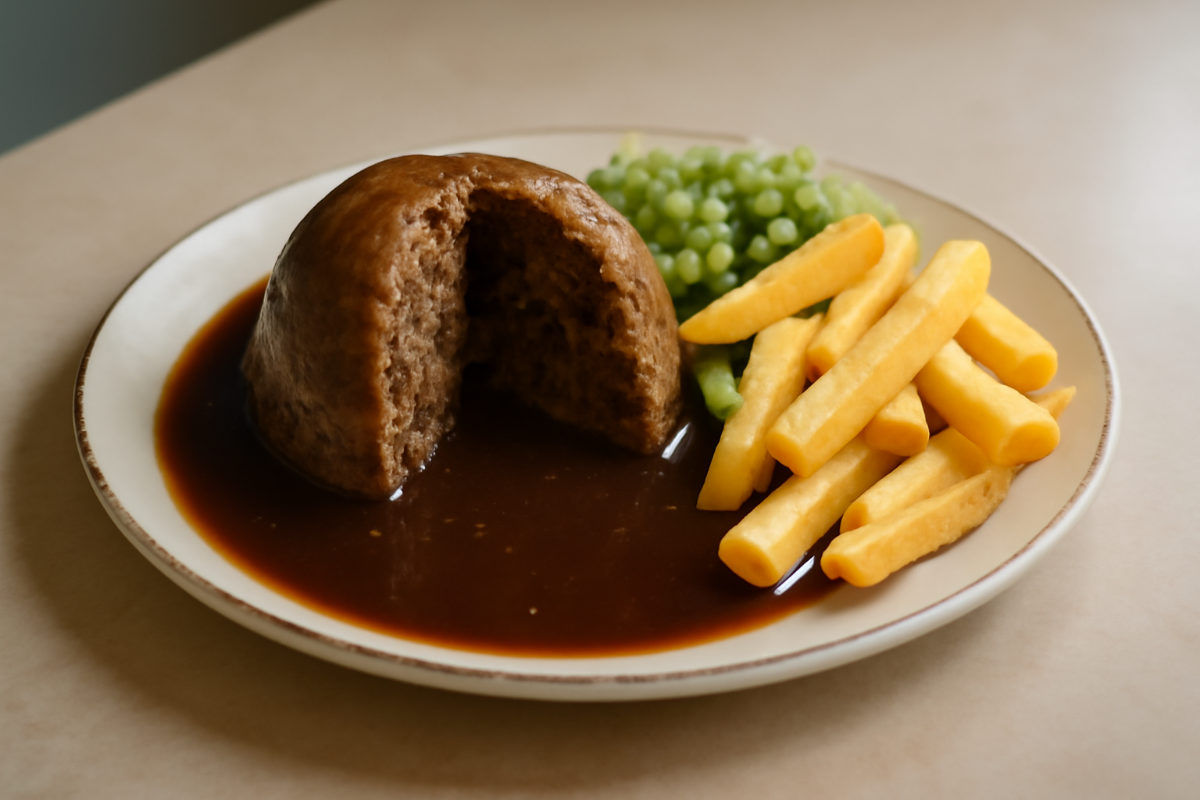
Season with salt and plenty of pepper. Serve the pudding cut open on the plate with the gravy poured around it rather than over the top, so the crust stays intact and you dip into it.
Tips worth knowing
- Pour the gravy round the pudding, not over it. A steamed suet crust turns to paste in a couple of minutes under hot gravy.
- If the pudding has been boiled in a cloth, the water it cooked in is not worth keeping, unlike a stew. Build the gravy separately.
- A splash of the gravy stirred into the mince filling before you wrap the pudding stops the inside going dry.
- Chips and mushy peas are the usual accompaniment in Oldham, and the gravy needs to be thick enough to survive contact with both.
Change it up
- Add 150g of quartered mushrooms with the onions and leave them in, for a steak and mushroom pudding feel.
- Swap 150ml of the stock for stout for a darker, slightly bitter gravy, or add a teaspoon of black treacle instead if you would rather skip the alcohol.
- Add a tablespoon of pickled onion vinegar at the end for a sharper gravy, which is exactly the sort of thing that would have been to hand.
Keeping and reheating
Keeps 4 days in the fridge and freezes for 3 months. It sets firm because of the flour and the reduced onion, so reheat with a splash of stock and whisk it back to a pouring thickness.
Questions people ask
What is a rag pudding?
Minced beef and onion wrapped in suet pastry and boiled in a cloth, associated with Oldham in Lancashire. The cloth, or rag, is where the name comes from. It is close kin to a steak pudding but simpler and cheaper.
How thick should gravy for a suet pudding be?
Thicker than roast gravy. It needs to sit around the pudding on the plate rather than run away from it, and thick gravy is slower to soak into the crust so you get to eat it before it collapses.
What do you serve with rag pudding?
Chips and mushy peas is the standard in Oldham, or mash and peas at home. Either way there needs to be a lot of gravy, because the pudding, the chips and the peas all want some.