Easter Lamb Gravy with Mint
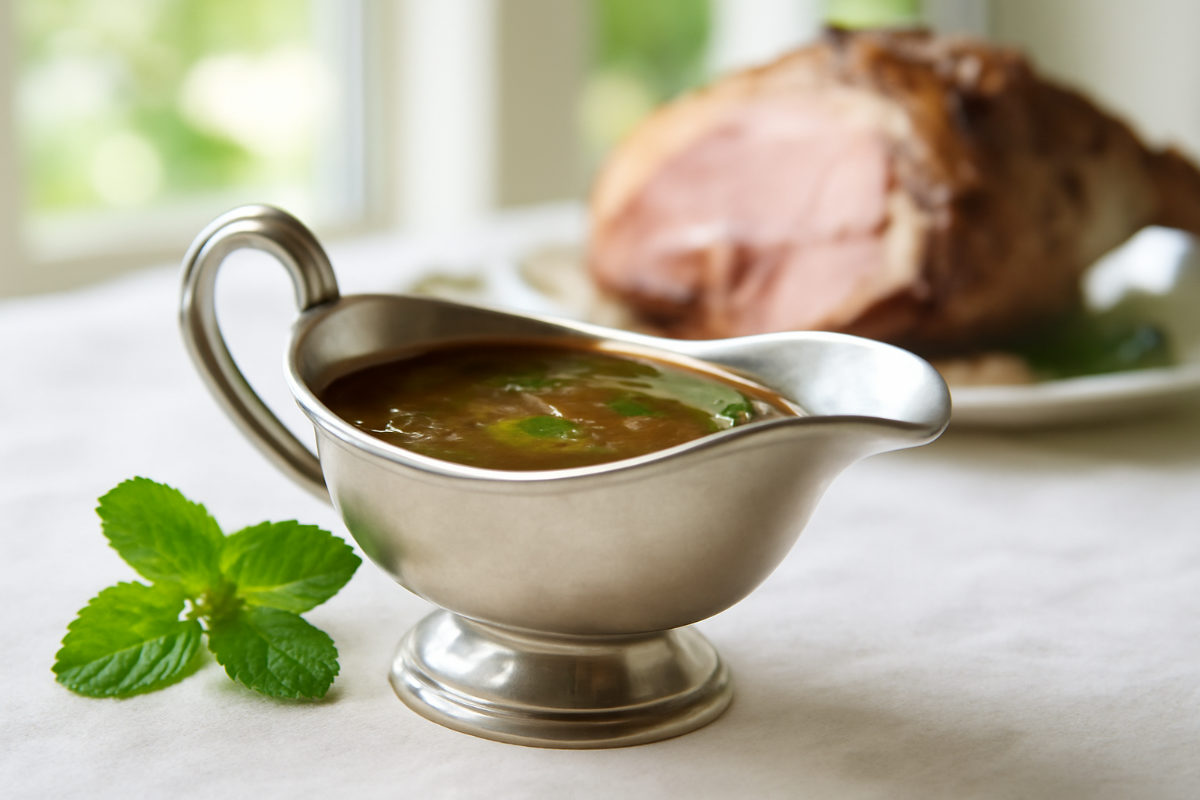
Roast lamb pan gravy deglazed with white wine, rounded with redcurrant jelly and finished with fresh mint stirred in off the heat.
- Contains meat
- lamb
- easter
- mint
- pan gravy
- Prep
- 10 min
- Cook
- 20 min
- Total
- 30 min
- Serves
- 6
- Difficulty
- Easy
Easter lamb usually arrives with a bowl of vinegary mint sauce on the side, which is fine but does nothing for the gravy. Putting the mint in the jug instead gives you one thing that works rather than two that argue. The redcurrant jelly is not optional, it is what stops the vinegar and the lamb fat falling out with each other.
Ingredients
Makes about 650ml, enough for six plates
Scaled amounts are rounded to something you can actually measure. Season at the end and trust your mouth over the maths.
Kit
- Roasting tin
- Whisk
- Fine sieve
- Warm jug
Method
Move the lamb to a warm board and cover it loosely. A leg wants thirty minutes of rest, a rack fifteen. Tip the roasting tin and spoon off the fat until about three tablespoons remain, along with all the dark sediment and any garlic or rosemary that roasted underneath.
Put the tin over a medium heat and soften the shallots in the fat for four minutes. They will pick up colour fast from the residue, so keep them moving and do not let them catch.
Stir in the flour and cook for two minutes until it darkens and smells toasty. Lamb fat browns a roux quicker than butter does, so watch it.
Pour in the wine and whisk hard. Scrape the tin base clean as it bubbles and let it reduce by half, about three minutes, until the sharp winey smell has gone.
Add the hot stock in three goes, whisking each smooth, then bring it to a simmer and cook for eight to ten minutes until it thickly coats a spoon. Stir in the redcurrant jelly and let it dissolve.
Strain into a clean pan through a fine sieve, add the juices from the resting board and bring it back to a simmer for one minute so those juices are properly cooked.
Take the pan off the heat, add the vinegar, taste and season. Only now stir in the chopped mint. Boiled mint goes the colour of pond water and loses everything that made it worth adding, so it goes in at the very last second before pouring.
Tips worth knowing
- Chop the mint just before it goes in. Mint chopped ten minutes early oxidises and turns black at the cut edges.
- Roast the lamb on a bed of onion halves and whole garlic cloves. They caramelise underneath and give the gravy a base that a bare tin cannot.
- If your lamb was very fatty, let the gravy settle off the heat for two minutes and drag a folded sheet of kitchen paper across the top to lift the film of fat.
- Keep a spoonful of gravy back before you add the mint if any of the family are mint refusers. It is a common household dispute.
Change it up
- Swap the wine for 150ml of extra stock with a tablespoon of cider vinegar and an extra teaspoon of redcurrant jelly.
- Use half mint and half flat leaf parsley for a greener, less sweet finish that suits a slow cooked shoulder.
- Stir in a teaspoon of anchovy paste with the flour for a saltier, deeper gravy. Lamb and anchovy is an old British pairing and it does not taste of fish.
Keeping and reheating
Best made and eaten the same day because of the fresh mint. If you want to keep it, make it up to the end of step six, cool quickly and refrigerate for three days or freeze for three months, then add fresh mint after reheating to a rolling boil.
Questions people ask
Can you put mint sauce in gravy?
You can, but use it as a seasoning rather than an ingredient. A teaspoon of bought mint sauce stirred in at the end brings vinegar and sugar with it, so taste before you add anything else. Fresh mint plus a little vinegar gives you a cleaner result.
What stock is best for lamb gravy?
Lamb stock if you have it, but it is rarely worth making a special trip for. A good beef stock is a better match than chicken, and roasting the lamb bone in gives you enough lamb flavour from the tin residue alone.
Why does my lamb gravy taste greasy?
Lamb fat has a high melting point, so it clings to the tongue more than beef or chicken fat does. Pour more of it off at the start than you think you need, and finish with the vinegar, which cuts through the coating sensation.